
The Hakka people are ethnically Han Chinese1. The term we use to distinguish them, 'Hakka', literally 'guest families' (客家 - kè jiā in Mandarin), reflects their 'outsider' status. The Hakka people migrated southward in five major waves, starting from the northern Shanxi and Shandong provinces. This migration exposed them to other Chinese cultures, from which they borrowed elements of language, dress, and food preparation, and it happened over centuries.
4th century
Migration from Shanxi and Shandong provinces.
Shanxi migrants set up camp in northern Jiangxi province; the Shandong population settled in Jiangsu province.
10th century
The fall of the Tang Dynasty provokes another southward move.
The clans settled in Fujian and pushed further south into Jiangxi.
12th-13th century
The start of the Yuan Dynasty caused another migration wave.
Populations reached Guangdong province.
Late 17th century
Various uprisings compel the fourth migration.
Hakka travelled yet further south, deeper into Guangdong and into Guangxi provinces, with some going inland, towards Chongqing.
Late 19th-20th century
The Taiping Rebellion and clan wars push many of the Hakka people out of mainland China.


Hakka People: Origins and Migrations
At the start of the Hakka People story, the word 'hakka' didn't feature. They were Han Chinese with settlements along the Yellow River.
Historical Background
Today, China is a peaceful, united country; the same cannot be said for most of its history, though. Throughout most of its 5,000 years of being, warriors vied to expand their land holdings and, ultimately, claim supreme leadership.
To the people living on the plains along the Yellow River (黄河 - huánghé), the ones we identify as Hakka today, the violence grew too close. Many left their homelands in the 4th century, when the 'five barbarians' from the north swept southward in a conquering frenzy.
These were the Xiongnu, Jie, Xianbei, Qiang, and Di tribes. They were five non-Han groups that were instrumental in collapsing the Western Jin Dynasty (265–316 of the Current Era - CE).
What Compelled the Migrations?
Chinese are wise in comprehending ... what is inevitable and inescapable and therefore only to be borne.
Pearl S. Buck, author
Like all human migrations since time immemorial, the Hakka people migrated to escape violence and/or to improve their living conditions. That is true for the initial migration from their Yellow River homes, as well as subsequent migrations.
These migrants endured substantial discrimination and outright abuse pretty much everywhere they tried to settle3. As a result, those who chose to stay in a particular location typically set up their homes on the fringes of already existing societies. The clans that couldn't see any hope for safety or prosperity in that locale moved on.
You'll note from the timeline above that most Hakka migrations coincided with dynasty changes. Those times were often turbulent, with local rulers taking their chance at improving their political and social standing. Often, those improvements came at the expense of 'lower' populations, particularly outsiders like the Hakka.
The Hakka-Punti Clan War
No event chronicles Hakka persecution more thoroughly than this 'war'. In many ways, it revolved around the same discriminations the Hakka people faced since their first migration from their homelands. It was all about the competition for the most fertile lands and the growing Hakka presence in the region.
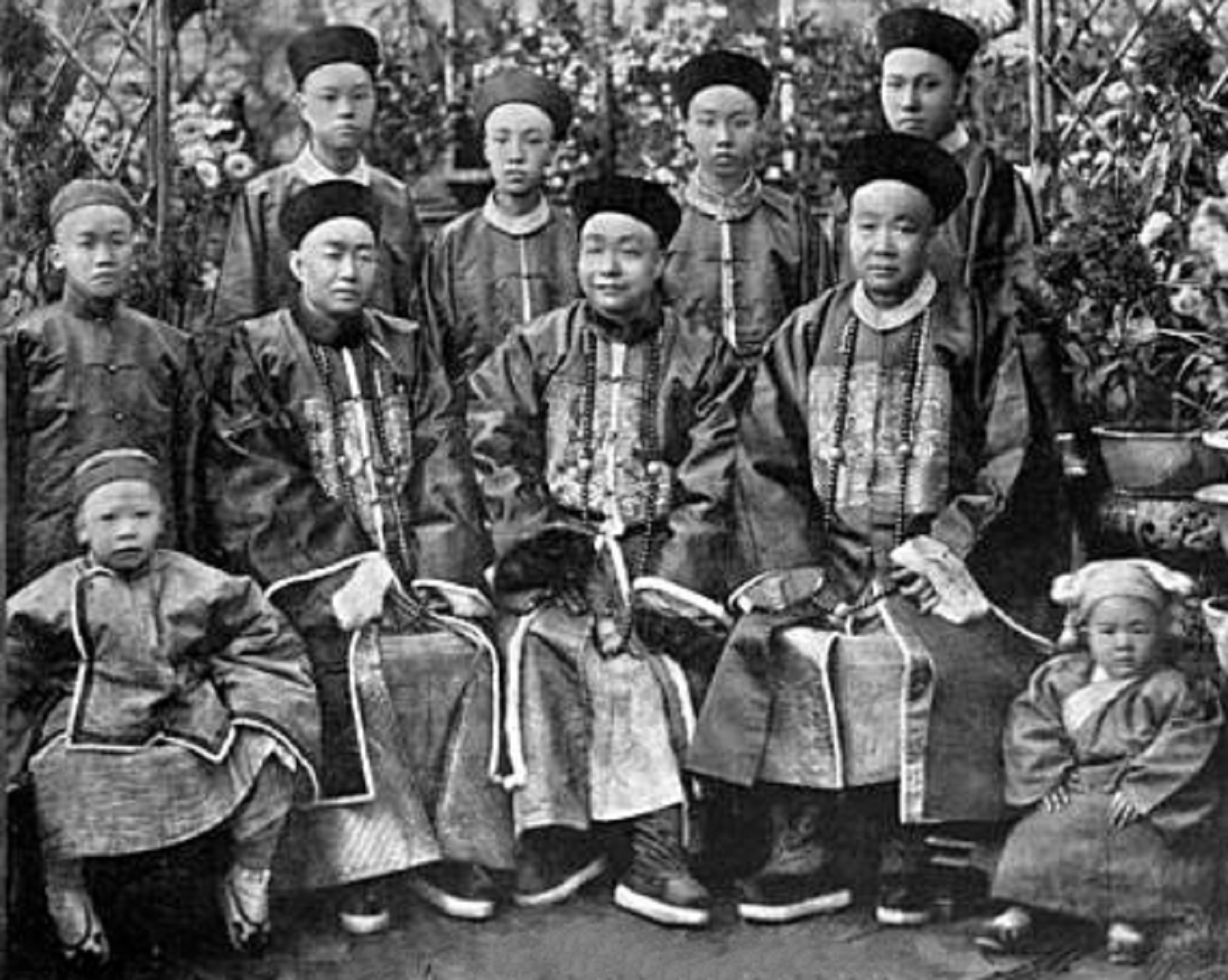
Starting in 1855, the Punti, literally 'natives' (本地 - běn dì) let their resentment of the outsiders boil over. It was because the incoming Qing Dynasty leaders welcomed Hakka people down from the mountainous regions around Guangdong, where they had settled. The natives resented that their best land parcels were given to outsiders whose populations kept growing.
And then, when nothing but military action would quell the native rebels against the new emperor, the Hakka fought alongside the imperial army. This Red Turban Rebellion became the true flashpoint between the two tribes4.
Both sides exercised substantial violence but the Punti had more people and more resources at their disposal. Over the 13 years this conflict lasted, hundreds of thousands of lives were lost. Many Hakka voluntarily pulled up roots - their final migration, while others were sold as chattel overseas.
It was this conflict that formally gave the Hakka their name to tell them apart from the native residents of Guangdong and Fujian provinces.
The Hakka Language
As a rule of thumb, various Chinese peoples' languages are not mutually intelligible. That means that someone from Guizhou could not understand a person speaking the Wuhan dialect, for instance. The linguistic differences are about as broad as those between Mandarin and Chinese.
Still, the Hakka language bears some similarity to other regional dialects, particularly the Gan tongue. This is the language of people in Anhui, Hubei, Hunan, and Fujian provinces. Otherwise, it stands as a distinct linguistic pattern.
Phonology and Tones
The Hakka language is distinct among Chinese dialects for its tone, cadence, and phonology6. Without getting too technical, these are the primary differences between Hakka language and standard Mandarin.
Hakka tongue
- six tones (Yin Ping, Yang Ping, Shang, Qu, Yin Ru, Yang Ru)
- plosive letters (b, d, g, k, p, t) mostly feature at word endings
- pitch changes with syllable combinations
- Meixian is representative but not standard
Mandarin
- five tones (flat, rising, falling-rising, falling, 0-tone)
- has much greater plosives usage
- meaning is much more tone-reliant
- pǔtōnghuà (普通话) is the standard
Dialectical Variations
Because the Hakka People are ethnically Han, their language and culture merit no special consideration, like the other Chinese minority ethnicities receive. However, the Chinese government recognises the Hakka language as distinctive and, thus, accords it certain protections.
In fact, the Hakka language itself is not one universally spoken tongue. It too has sub-dialects, mostly reflecting the cultural exchange with the people of the region they live in.
Beyond these, several sub-sub-dialects exist, equally reflective of the region they're spoken in. Of all these, the Chinese government recognises the Meixian dialect as representative of the Hakka language. The Guangdong provincial government created a romanisation of Meixian to make it easier to learn2, much like the pinyin system for Mandarin.
Linguistic Classification
Authorities classify Hakka as a Sinitic language, belonging to the Sino-Tibetan family of languages. It is distinct from Shanghainese (Min language), Hokkien (Wu language), and Mandarin. As mentioned above, Hakka is not mutually intelligible with other Chinese tongues, even if it borrows from them.
Despite living in the same geographical region, Meixian speakers understand little of the Cantonese tongue, and vice versa. But Cantonese has nevertheless influenced the Hakka language, mainly because the two dialects occupy the same space.
Hakka Traditions and Cultural Identity
If you don't bind your feet, no one will marry you.
Anonymous
For a millennium, young girls in China submitted to a systematic disfigurement to ensure their future economic stability. As females were typically not allowed to earn their living, marriage was their only path to financial security. Women with tiny, bound feet were the norm from the Tang Dynasty (618-907 CE) until the practice was abolished in 19495.
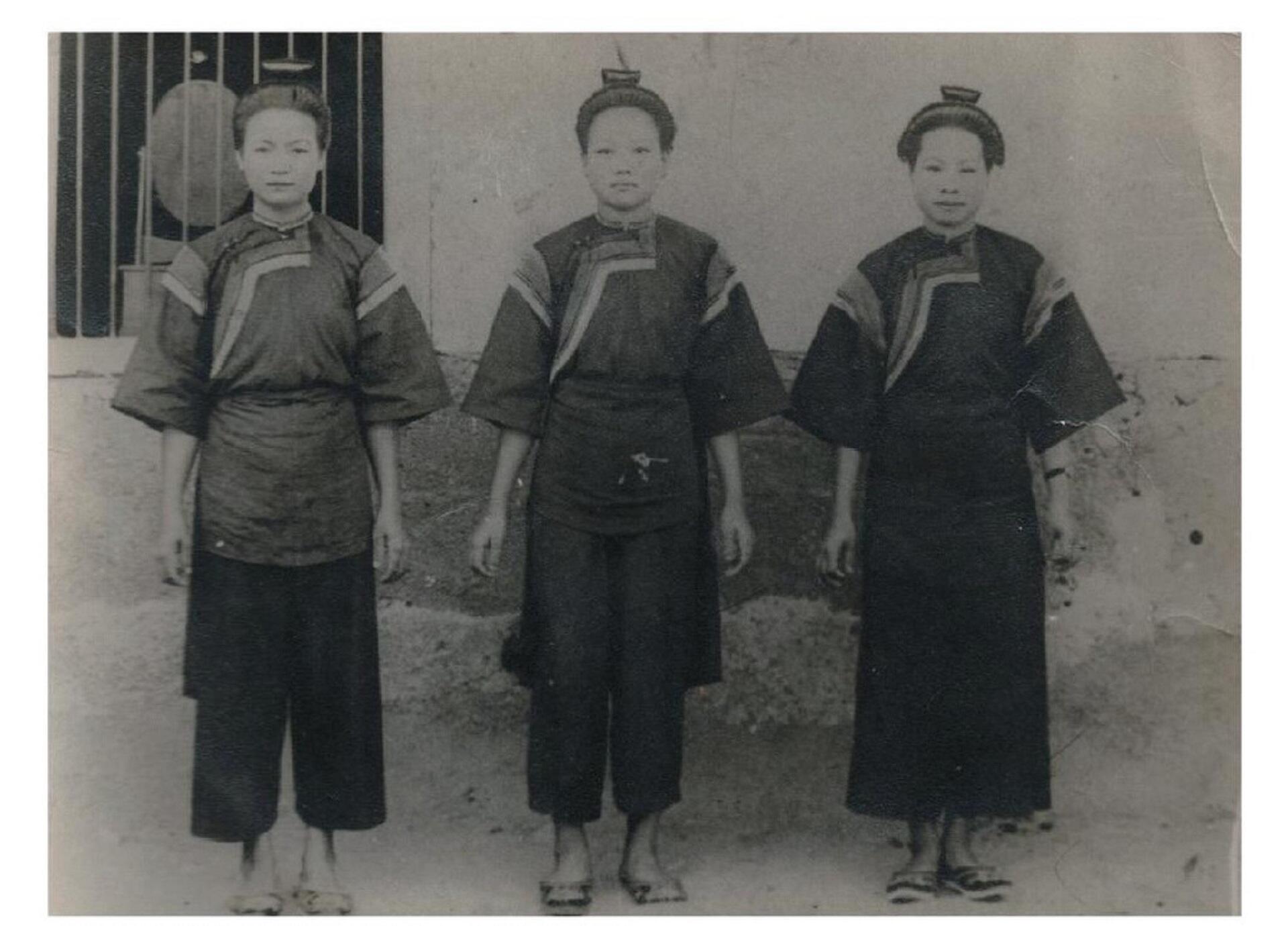
Those 'lotus blossoms' were the standard across most of China, but not for Hakka women. In their culture, women were on par with men. Not only did they farm and fish, but they also ran their communities' administrative matters. That's because the men would often migrate for work or serve in the military, leaving the women to manage matters at home.
Unique Architecture
Either by tradition or forced to by circumstance, Hakka People have long lived in large, multi-space buildings called tulou. These fortress-like structures are typically U-shaped or circular, and reach up at least 3 storeys, with much of life happening outdoors. Access to each dwelling is from balconies that run the entire length of each floor.
In the hilarious Stephen Chow film, Kung Fu Hustle, you get the idea what living in a tulou is like. And if your ear is particularly well tuned, you'll hear bits of the Shanghainese dialect, particularly in the gangster scenes.
Customs and Festivals
Like most Chinese ethnicities, the Hakka people practise ancestor worship, which makes the Tomb Sweeping Festival (清明 - qīng míng) one of their most important observances.
Centuries of forced migrations have made it hard for Hakka people to maintain their traditions. Furthermore, the sparse lands they were historically relegated to gave them little to carve their existence out of. So, joining public service - government work or military - became a part of the Hakka fabric.
But that doesn't mean the Hakka people are completely devoid of celebrations. Besides observing standard Chinese festivals such as Lunar New Year, the Hakka have their own occasions to dance and sing. This chart details the most important of these events.
| 🎉 Festival name | 🙋♂️ What it celebrates | 🔍 How to celebrate | 📆 When to celebrate |
|---|---|---|---|
| Tianchuan Festival (天穿节) Sky-mending festival | The goddess Nuwa mends the sky to save humanity. | eat fried rice cakes | The 2nd day of the first Lunar month |
| Zhongyuan Festival Ghost Festival | The period when the earthly, heavenly, and underworld gates open so spirits can commune with the living. | burn ghost money make food offerings burn incense pray to ancestors | the 14th-15th night of the lunar calendar's seventh month |
| Lantern Festival 'son cake' competition | the birth of sons | make and eat the largest 'new son' cakes | in conjunction with Lantern Festival |
Hakka Chinese Diaspora
A millennium of migration makes for a lot of people moving, but it was the Hakka-Punti Clan Wars that sent the most Hakka people abroad.
Today, Hakka people coexist alongside people speaking the Hokkien dialect of Taiwan. But, as you read above, several were sold into slavery, with many landing in Taiwan.
When Japan took over Taiwan in 1895, the Hakka people living there were forced to relocate yet again. Many made their way to Singapore, Indonesia, Malaysia, and Vietnam. Substantial Hakka communities reside there still today.

In the eternal quest to earn their living, many Hakka men answered the call from the United States. It was looking for cheap labour to build its transcontinental railroad. They fared there about as well as anywhere else, meaning they were marginalised and ultimately excluded from society, this time by law. Still, a sizeable Hakka population has made its home in the Americas.
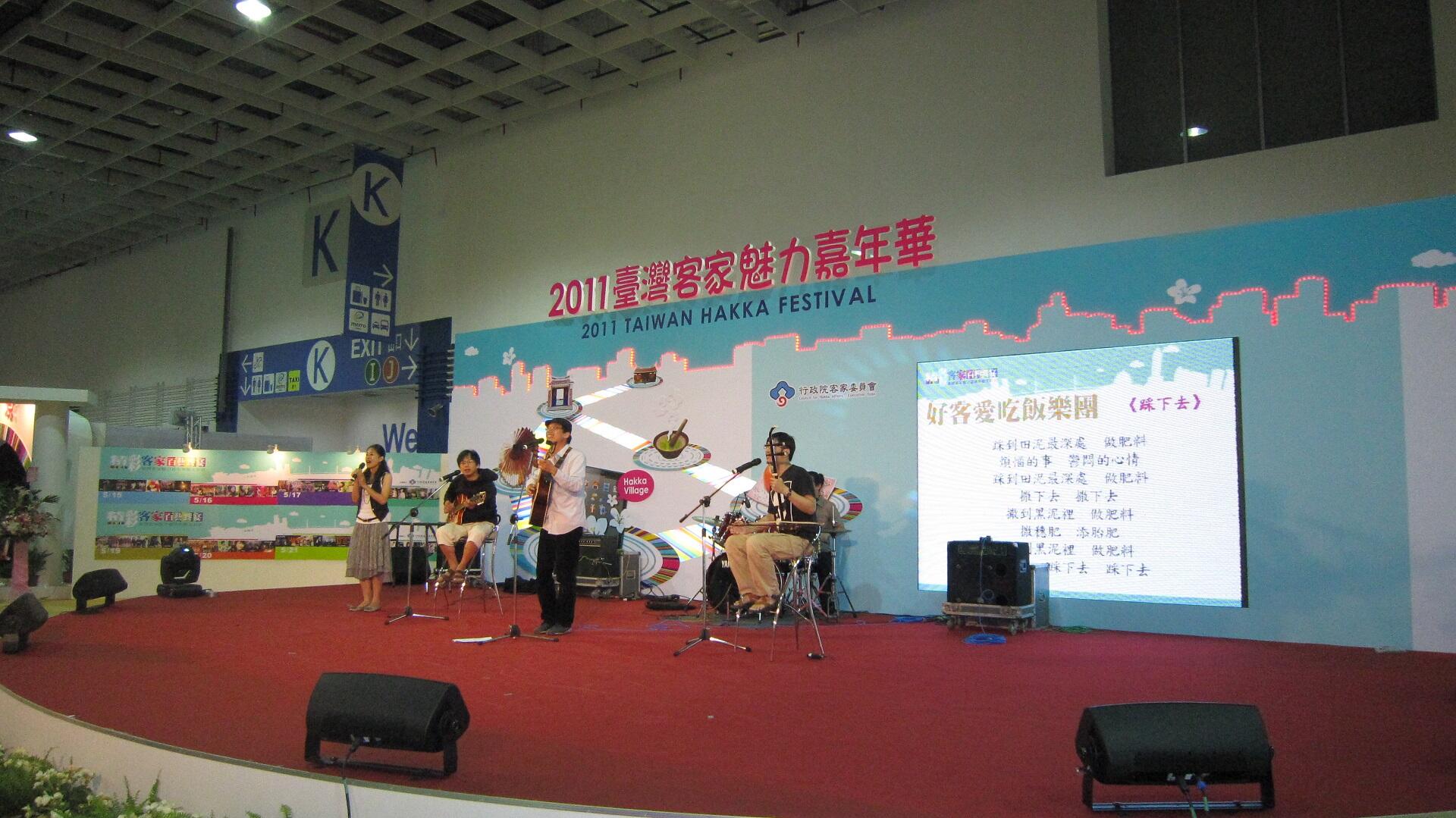
Today, peace reigns, more or less, for the Hakka diaspora. Around the world, native populations are growing to appreciate the distinctive Hakka culture, and perhaps even take part in it. This clip shows a Hakka festival underway in Taiwan, where the largest Hakka population outside of China resides.
References
- Hays, Jeffrey. “HAKKA | Facts and Details.” Factsanddetails.com, 13 June 2026, factsanddetails.com/china/cat5/sub30/item1689.html. Accessed 13 June 2026.
- djshin. “THE HAKKA LANGUAGE.” Learning SA Chinese, 5 Mar. 2013, sachinese.wordpress.com/2013/03/05/the-hakka-language/. Accessed 13 June 2026.
- “Hsieh 1929: Origin and Migrations of the Hakkas.” Pages.ucsd.edu, Jan. 2024, pages.ucsd.edu/~dkjordan/chin/HsiehHakkaHistory.html. Accessed 13 June 2026.
- Malik, Vishul. “June 17, 1854 CE – Red Turban Rebellion Begins in Guangdong Province, China.” MapsofWorld.com, 2 Dec. 2022, www.mapsofworld.com/on-this-day/june-17-1854-ce-red-turban-rebellion-begins-in-guangdong-province-china/. Accessed 13 June 2026.
- McDermott, Josephine. “Big Lives, Small Feet: Photographing China’s Bound Women.” BBC News, 23 Mar. 2015, www.bbc.com/news/world-asia-china-31964279. Accessed 13 June 2026.
- “Hakka (Linguistics) - Academic Kids.” Academickids.com, 2026, academickids.com/encyclopedia/index.php/Hakka_(linguistics). Accessed 14 June 2026.
Summarise with AI:
Did you like this article? Leave a rating!

 Loading...