
China has always been home to many different peoples and languages. Yet when we talk about speaking 'Chinese', we're often referring to something much more varied than a single language.
Take someone from Beijing, someone from Shanghai and someone from Hong Kong. They may all speak a variety of Chinese, but that doesn't mean they would necessarily understand one another.
That's because Chinese is an umbrella term for numerous related languages and regional varieties, with differences in pronunciation, vocabulary and sometimes grammar.
There are 7 to 10 major Chinese dialect groups, depending on the classification system, but hundreds of regional dialects and local varieties exist. Traditional classifications recognise seven major groups, while some modern linguists distinguish ten. Because each group includes numerous local varieties, there is no universally agreed number of Chinese dialects.
So, what are the main types of Chinese languages, and where are they spoken? Here's a quick guide to the major groups, followed by a closer look at what makes each one distinctive.


What Are the Main Types of Chinese Languages?
Chinese is made up of several related language groups, each containing its own regional varieties. Linguists have traditionally recognised seven major groups: Mandarin, Yue, Wu, Min, Hakka, Xiang and Gan.
Some modern classifications distinguish additional groups, including Jin, Huizhou and Pinghua. But the traditional seven-group classification is a useful starting point for understanding the main types of Chinese languages and where they're spoken.
| Language group | Familiar varieties | Principal regions |
|---|---|---|
| Mandarin | Standard Mandarin, Beijing Mandarin, Sichuanese | Northern, northeastern and southwestern China |
| Yue | Cantonese, Taishanese | Guangdong, eastern Guangxi, Hong Kong and Macau |
| Wu | Shanghainese, Suzhounese | Shanghai, Zhejiang and southern Jiangsu |
| Min | Hokkien, Teochew, Fuzhounese | Fujian, Taiwan and parts of southeastern China |
| Hakka | Meixian Hakka and other regional varieties | Guangdong, Fujian, Jiangxi, Taiwan and diaspora communities |
| Xiang | Changsha Xiang, Shuangfeng Xiang | Mainly Hunan |
| Gan | Nanchang Gan and other regional varieties | Mainly Jiangxi and neighbouring areas |
The regions above are broad associations, not fixed linguistic borders. Some classifications recognise more than seven major groups.
Mandarin
Mandarin is the largest and most widely spoken Chinese language group. It covers much of northern and northeastern China and extends into large areas of the southwest. However, Mandarin isn't one identical form of speech used everywhere. The language spoken locally in Sichuan, for example, has its own pronunciation and vocabulary, even though it belongs to the Mandarin group.
Mandarin language group
An umbrella group containing numerous regional forms, including Beijing and southwestern Mandarin varieties.
Standard Mandarin
The standardised form commonly taught in schools and used in nationwide official communication.
Standard Mandarin is the standardised variety used for national education, government and broadcasting in mainland China. Its pronunciation is based largely on Beijing speech. Most general Chinese courses teach this form, so when someone says they're 'learning Chinese', Mandarin is often what they mean.
Pǔtōnghuà (普通话) means 'common speech' and usually refers to Standard Mandarin in mainland China
Guānhuà (官话), historically associated with officials, refers to the broader Mandarin group
Hànyǔ (汉语) is wider still: it can refer to the Chinese language or languages associated with Han Chinese people, not just Mandarin.
Those terms are easy to mix up. If you're curious about the distinction, our guide to Mandarin vs Chinese explains it without requiring a background in linguistics.
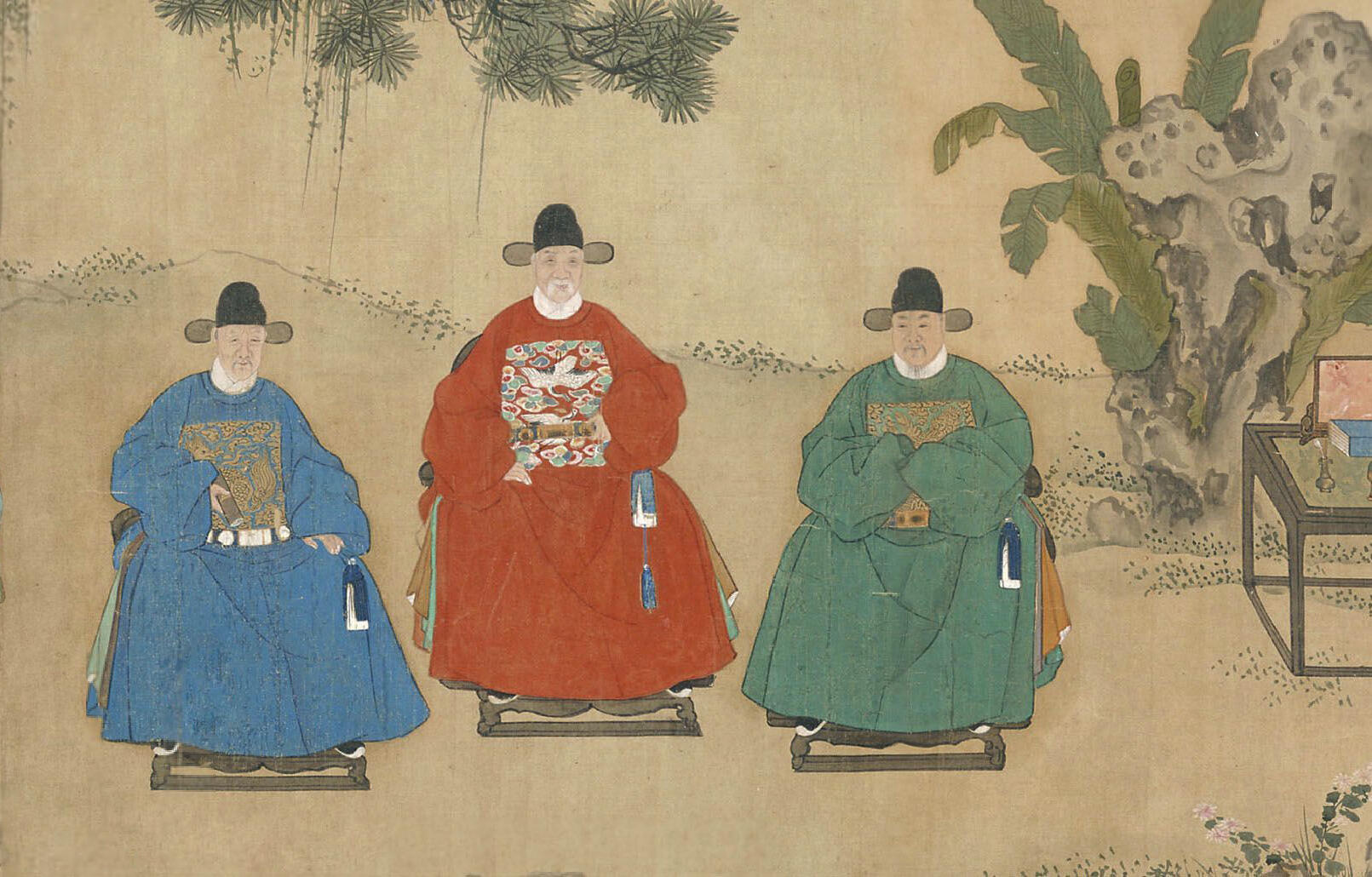
Yue (Cantonese)
People often use 'Yue' and 'Cantonese' as though they mean exactly the same thing. They're closely connected, but Yue is the broader group and Cantonese is its best-known variety. Yue also includes Taishanese and other regional forms of speech from southern China.
Cantonese is especially associated with Guangdong, Hong Kong and Macau, and it has a long history in Chinese communities overseas. The Cantonese spoken in Hong Kong and Guangzhou is closely related, although you'll hear differences in vocabulary, accent and everyday usage.
One reason Cantonese is familiar far beyond southern China is its cultural reach. Hong Kong cinema, Cantopop, television and online media have introduced Cantonese speech to audiences who may never have visited a Cantonese-speaking area.
Not generally in everyday conversation without previous learning or exposure. Mandarin and Cantonese share a historical linguistic relationship and Chinese writing traditions, but their pronunciation, vocabulary and some grammatical features differ substantially. Someone who has learnt both languages, of course, may understand both comfortably.
Despite sharing a common ancestry with Mandarin, Cantonese has a different pronunciation system, distinctive everyday vocabulary and its own grammatical conventions. Knowing Mandarin therefore doesn't automatically mean understanding a conversation in Cantonese. If its sounds or cultural connections appeal to you, there's more practical advice in our guide to learning Cantonese.
Wu
Wu Chinese is associated with Shanghai, Zhejiang Province and parts of Jiangsu Province. Its best-known variety is Shanghainese, though it's only one member of a much more diverse group. The Wu spoken in Suzhou, for example, has its own features and local history.
Shanghai
Shanghainese: a well-known variety of Wu associated with Shanghai's local identity.
Suzhou
Suzhounese: another Wu variety associated with the historic city of Suzhou.
Wu doesn't have one standard spoken form shared by everyone in the region. Its varieties differ in pronunciation and vocabulary, and some can be difficult for speakers of other Wu varieties to follow.
Shanghai's growth as a port city also brought people from different regions into contact, contributing to changes in local speech. Today, Standard Mandarin is widely used in the city, but Shanghainese remains a recognisable part of its local linguistic heritage.
There's much more to the group than the accent visitors hear in Shanghai. Our dedicated guide to Wu Chinese and Shanghainese looks more closely at the region and its language.
Min
Min is one of the most varied Chinese language groups. Its traditional centre is Fujian Province, but Min varieties are also spoken in Taiwan, parts of Guangdong and other coastal areas, as well as among overseas Chinese communities.
Hokkien is probably the name many people will recognise first. It's associated with Southern Min, particularly in southern Fujian, Taiwan and parts of Southeast Asia. But Hokkien isn't another name for all of Min. Other Min varieties include Fuzhounese, which belongs to Eastern Min, and Teochew, generally classified within Southern Min.
The variety within Min reflects a long history of population movements, regional contacts and different patterns of linguistic development. Pronunciation and vocabulary can differ substantially from one Min-speaking area to another. That means speakers of two Min varieties don't necessarily understand each other's everyday speech.
This is why it helps to ask whether someone means Hokkien, Teochew, Fuzhounese or another variety rather than assuming 'Min Chinese' describes a single standard. Our article on Min Chinese and Hokkien explores those distinctions in more detail.
Hakka
Hakka is both the name of a Chinese language group and a cultural identity closely connected with migration. The word Hakka, written 客家, is commonly translated as 'guest families'. Over centuries, movements of Han Chinese communities helped establish Hakka-speaking populations in different parts of southern China.

Today, Hakka varieties are associated with Guangdong, Fujian and Jiangxi, as well as Taiwan and overseas communities. This dispersed geography is one of the group's most interesting features. Unlike a language group centred on one major city, Hakka is spoken across communities that may be separated by considerable distances.
Hakka as a language
A distinct Sinitic group with regional varieties, including Meixian Hakka.
Hakka as cultural heritage
A heritage identity associated with family histories, migration and community traditions.
Hakka has linguistic features in common with nearby groups, including Gan, but it is generally treated as a separate group. Regional Hakka varieties also differ from one another, so even speakers with a shared cultural identity won't necessarily use identical speech.
The Xiongnu, Jie, Xianbei, Qiang, and Di tribes terrorised the Chinese lands from 304 to 316 CE. They are the reason the Hakka people fled their homelands.
For some people, an interest in Hakka is academic. For others, it's a way of understanding what grandparents say at home or reconnecting with family history. If you'd like to go further, discover the Hakka language and the communities connected with it.
Xiang
The Xiang language group is associated mainly with Hunan Province in south-central China. Changsha, Hunan's provincial capital, is an important reference point, although the speech of Changsha doesn't represent every variety in the group.
Over time, migration and contact with neighbouring regions have shaped the ways Xiang is spoken. Some varieties show particularly strong Mandarin influence; others preserve features that distinguish them more clearly. Linguists sometimes use the labels New Xiang and Old Xiang to describe broad differences, but those labels shouldn't be mistaken for two uniform languages.
Main association: Hunan Province.
Well-known variety: Changsha Xiang.
What makes it interesting: Regional differences and a long history of contact with Mandarin and other neighbouring varieties.
Think of Xiang as a family of related local forms of speech rather than a single sound shared across Hunan. Even within one province, people may use different varieties in their communities, alongside Standard Mandarin at school or work.
For travellers and language enthusiasts, Xiang is also a reminder that learning the national standard doesn't tell you everything about how people speak in their hometowns. Local vocabulary, accents and traditional expressions can carry a strong sense of place.
Gan
Gan is spoken primarily in Jiangxi Province, with varieties also found in neighbouring parts of Hunan, Hubei, Anhui and Fujian. Nanchang, the capital of Jiangxi, is associated with one of its best-known varieties.
The Gan-speaking region has experienced centuries of migration and contact with other communities. That history helped shape a language group with distinctive sound patterns and considerable regional diversity. As with Wu, Min or Xiang, not everyone who speaks a Gan variety sounds the same.
Gan is sometimes discussed alongside Hakka because the two groups share particular historical and phonological features. Still, they are ordinarily classified separately. Similarities are evidence of linguistic relationships and contact, not proof that one group simply descends from the other.
Gan
A distinct Sinitic group with regional varieties, including Meixian Hakka.
Recognised as its own Sinitic group.
Hakka
Spoken across several southern provinces and diaspora communities; Meixian Hakka is a familiar example.
Also recognised as a distinct Sinitic group.
Gan is less commonly offered as a specifically named language in general courses. If you search for a Chinese course Melbourne, you'll find general Chinese tutor listings, so check directly whether an individual teacher can actually teach Gan rather than assuming that all Chinese tutors specialise in it.
Are There More Than Seven Chinese Language Groups?
Yes. The seven-group approach is a traditional and still useful introduction, but classifications have changed as researchers have studied more regional varieties. Some modern frameworks recognise Jin, Huizhou (Hui) and Pinghua as additional major groups.
Traditional introduction
Seven groups: Mandarin, Yue, Wu, Min, Hakka, Xiang and Gan.
Some modern classifications
Ten groups: the traditional seven plus Jin, Huizhou (Hui) and Pinghua.
Jin is associated especially with Shanxi and surrounding regions. Huizhou has its centre in parts of southern Anhui and nearby areas, while Pinghua is associated particularly with Guangxi. These aren't newly invented languages: the difference lies in how scholars classify varieties that have long existed.
A 2026 scholarly overview by Giorgio Francesco Arcodia and Wen Lu describes ten commonly recognised Sinitic groups. Other approaches can draw boundaries differently. Rather than worrying about a single final number, it helps to remember that each named group contains numerous local ways of speaking.
Is Chinese One Language or a Group of Languages?
Strictly speaking, Chinese is a collection of related language varieties belonging to the Sinitic branch of the Sino-Tibetan language family. The wider family also includes Tibetan and Burmese, but those belong to other branches; they aren't Chinese dialects.
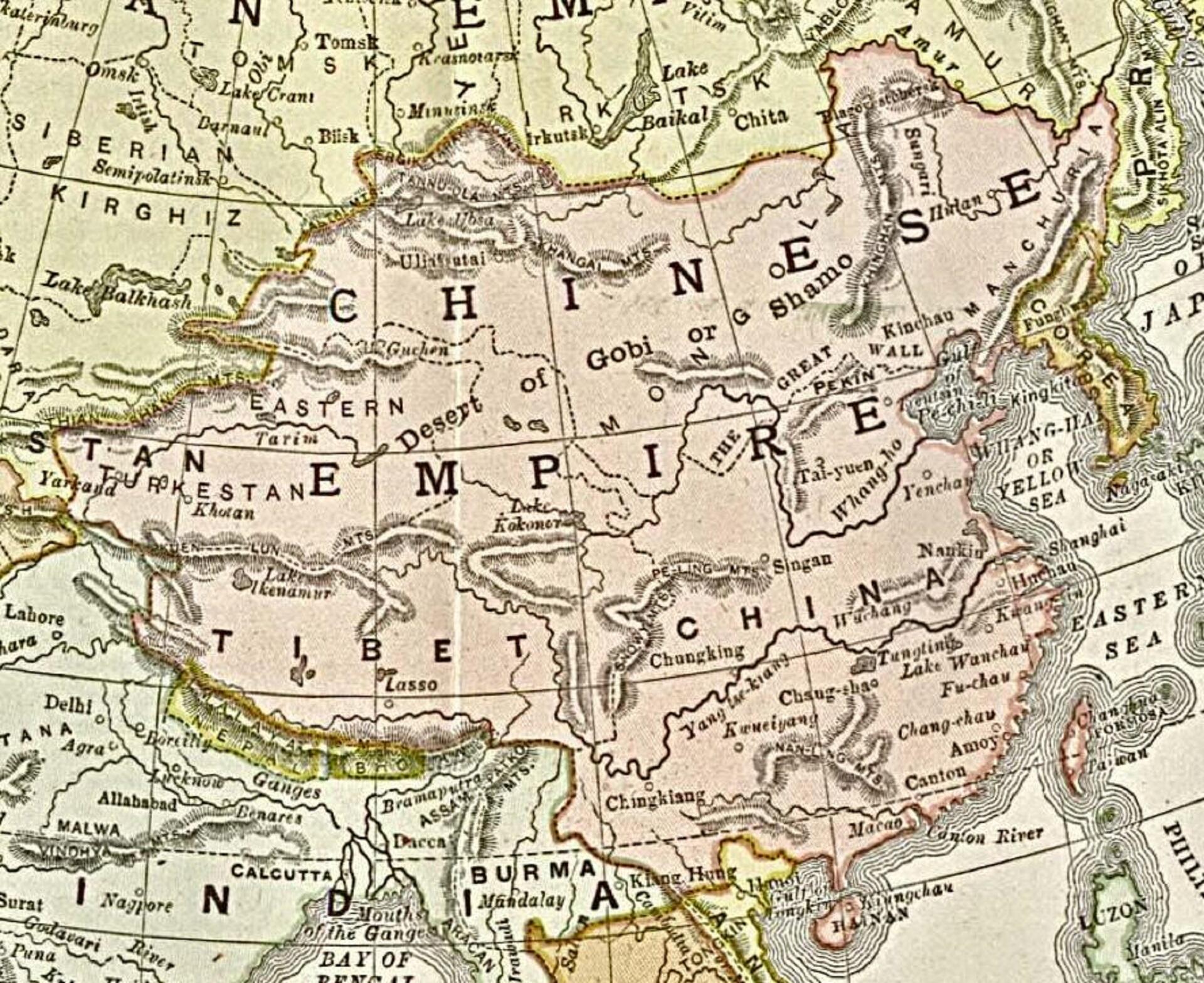
These related Sinitic languages share historical roots, although generations of change, migration and contact with neighbouring peoples have produced the differences we hear today. The term 'Chinese' is therefore useful as a broad label, but it doesn't mean that every speaker uses the same spoken language.
Sinitic
The languages of China and associated lands: Mandarin, Cantonese, Wu and all others.
Tibeto-Burman
Includes Burmese, Tibetan, and all the indigenous languages of the Himalayas and Southeast Asia.
It's also worth remembering that not every language used within China's borders is Sinitic. Uyghur and Mongolian, for instance, belong to other language families, while Tibetan belongs to Sino-Tibetan but not to Sinitic. China's language diversity is wider than the varieties covered in this guide.
What's the Difference Between a Chinese Language and a Dialect?
The words language and dialect sound straightforward until we try to draw a precise boundary between them.
Linguists often consider mutual intelligibility — whether people can understand each other without prior learning — but social, cultural and historical factors matter too.
A familiar comparison is the Romance languages. French, Spanish and Italian share Latin ancestry, yet we treat them as separate languages. Likewise, Chinese varieties share a linguistic background but may differ so much that their speakers don't understand one another in conversation.
Everyday use of 'dialect'
- Often means a local accent or regional way of speaking.
- May suggest that speakers can easily understand each other.
Linguistic perspective
- Can describe a regional variety with substantial differences in pronunciation, vocabulary and grammar.
- Mutual intelligibility varies; it is informative but not a universal pass-or-fail test for language status.
The Chinese term fāngyán (方言), commonly translated as 'dialect', is also used for varieties that can be quite distant from one another. That helps explain why you'll see both 'Chinese dialects' and 'Chinese languages' in books and articles about the subject.
How those differences developed is a fascinating subject, but it deserves a guide of its own. Our article about the history of the Chinese language follows the story over a much longer period.
Where Are the Different Chinese Languages Spoken?
As a broad rule, Mandarin varieties are widespread across northern and northeastern China and much of the southwest. Several other major groups have their traditional centres in the south and southeast. Wu is strongly associated with the Shanghai region, Yue with Guangdong and neighbouring areas, Min with Fujian and nearby coastal communities, and Xiang and Gan with Hunan and Jiangxi.
Hakka-speaking communities are spread across a number of southern provinces rather than occupying one neat, continuous region. And in cities throughout China, people can use Standard Mandarin as well as a regional language at home, in shops or among friends.
Chinese Languages in Taiwan, Hong Kong and Overseas
Chinese language communities extend far beyond mainland China. In Taiwan, Mandarin is widely used, while Taiwanese Hokkien (also called Taiwanese Taigi) and Hakka are important languages too. Taiwan is also home to Indigenous languages from other language families.
Cantonese is the predominant everyday spoken language in Hong Kong and is widely spoken in Macau. In both places, people may also use Mandarin or other Chinese varieties depending on their families, education and work.
Taiwan
Mandarin, Taiwanese Hokkien and Hakka; Indigenous languages also have a place.
Hong Kong and Macau
Cantonese is prominent, alongside Mandarin and other varieties.
Overseas communities
Hokkien, Teochew, Cantonese, Hakka, Mandarin and others, depending on community history.
Further abroad, historical migration has brought Chinese varieties to Southeast Asia, the Americas, Europe and Australia. In Singapore and Malaysia, for example, Chinese communities have longstanding connections with Hokkien, Teochew, Cantonese and Hakka, alongside widespread Mandarin use in some settings.
These associations aren't exclusive. A Taiwanese person may speak Hakka and Mandarin; a family in Singapore may use English, Mandarin and a heritage Chinese variety in different situations. The people who speak Chinese languages are often multilingual, and that everyday reality matters as much as the geography.
How Different Are the Chinese Languages from One Another?
Chinese varieties share a common linguistic history, but hearing one doesn't necessarily tell you what another will sound like. Some regional varieties are closely related, while others have developed substantial differences.
None of these differences makes one variety more authentic or advanced than another. They're simply part of the way languages change as people use them across places and generations.
Do Chinese Languages Use the Same Writing System?
Chinese characters, known as hànzì (汉字/漢字), form a shared historical writing tradition across Chinese-speaking communities. This is one reason people may recognise written Chinese even when the corresponding spoken varieties sound quite different.
But we need to distinguish the characters used to write from the words and grammatical conventions being written. Two people may read a text in Standard Written Chinese while speaking quite different languages at home.
Spoken Chinese varieties
- Mandarin, Cantonese, Hokkien, Shanghainese and others have distinct spoken features.
- Spoken language may be difficult for another variety's speakers to understand.
Written Chinese conventions
- Chinese characters form a shared tradition, although written usage varies by region and purpose.
- A shared written standard can allow communication across spoken differences.
Sharing a writing tradition therefore doesn't mean sharing identical pronunciation, grammar or everyday vocabulary. The relationship is more interesting than that.
Which Type of Chinese Should You Learn?
With so many Chinese languages to choose from, there's no single right answer. The best choice depends on who you want to speak with and what you'd like to do with the language.
In Australia, a general school Chinese course will usually focus on Standard Mandarin. The Australian Curriculum specifies Modern Standard Chinese, Pinyin romanisation and simplified characters as the main focus, while recognising that Chinese-speaking students come from diverse linguistic backgrounds.
| Your main goal | Language or variety to consider |
|---|---|
| Studying Chinese at school or in a general beginners' course | Standard Mandarin |
| Communicating with relatives from Hong Kong | Cantonese |
| Exploring family connections to Fujian or Taiwan | Hokkien or the particular variety your family speaks |
| Reconnecting with Hakka-speaking relatives | Hakka |
| Exploring local language and culture in Shanghai | Shanghainese (Wu) |
Once you've chosen your goal, you can select your Chinese course on Superprof and look for someone who teaches the specific variety you have in mind. General 'Chinese' listings commonly focus on Mandarin, so it's worth checking each tutor's profile rather than assuming a match.
It also helps to think about what you'd like to achieve first. Perhaps you want to greet older relatives in a familiar way, follow a favourite television programme or feel more comfortable travelling. A teacher who understands that goal can help you focus on useful everyday speech instead of unrelated material.
If you're based in New South Wales and want to explore local options, you can compare chinese classes Sydney while checking whether each listing covers the variety you want to learn. Wherever you live, choosing a language that genuinely interests you will make the experience more rewarding.
Sources
- Arcodia, Giorgio Francesco, and Wen Lu, Typology of Sinitic (Chinese) (2026). Academic overview of the Sinitic family, its linguistic features and the ten commonly recognised groups. https://iris.unive.it/handle/10278/5112307
- Australian Curriculum, Languages: Chinese (accessed 2026). Explains the curriculum focus on Modern Standard Chinese, Pinyin and simplified characters while recognising diverse language backgrounds. https://www.australiancurriculum.edu.au/curriculum-information/understand-this-learning-area/languages
- Tang, Chaoju, and Vincent J. van Heuven, Mutual Intelligibility of Chinese Dialects Experimentally Tested (2009). Research on variation in mutual intelligibility between Chinese language varieties. https://www.sciencedirect.com/science/article/pii/S0024384108001678
- Hong Kong Census and Statistics Department, 2021 Population Census District Profiles (2022). Official Hong Kong data distinguishing Cantonese, Putonghua and other reported usual spoken languages. https://www.census2021.gov.hk/en/district_profiles.html
- Hong Kong Polytechnic University, Introduction to Chinese Characters (accessed 2026). Describes the use and geographical distribution of traditional and simplified character forms. https://www.polyu.edu.hk/bepth/introduction-to-chinese-characters/
- Snow, Don, Cantonese as Written Standard? (2008). Scholarly discussion of written vernacular Cantonese and its relationship to Standard Written Chinese. https://benjamins.com/catalog/japc.18.2.05sno
- Zhang, Meng-Han, et al., Phonemic Evidence Reveals Interwoven Evolution of Chinese Dialects (2018). Research on the seven traditional groups, language contact and regional historical relationships. https://arxiv.org/abs/1802.05820
- Australian Bureau of Statistics, 2021 Census All Persons QuickStats: Australia (2021). Official national statistics for Mandarin and Cantonese reported as languages used at home. https://www.abs.gov.au/census/find-census-data/quickstats/2021/AUS
Summarise with AI:
Did you like this article? Leave a rating!

 Loading...