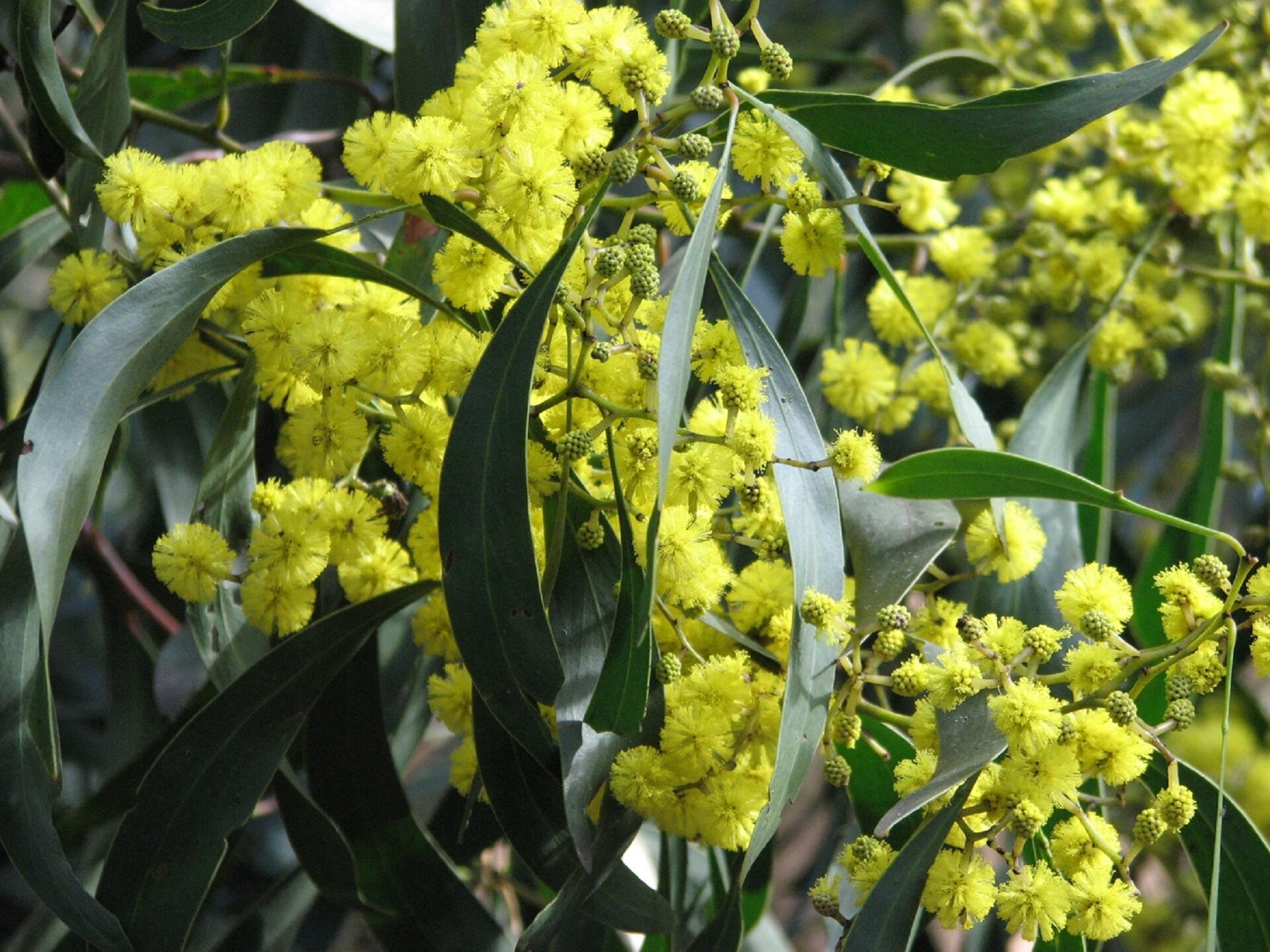

The Australian landscape is terrible in its beauty, as many native Australians can attest to. Though the stereotype that everything in Australia wants to 'neutralise' you is largely social media hype, our land does have many dangerous plants and creatures. But these native Australian flowers are harmless, especially if you only look at them. And these 10 are well worth a look.
| 🌸 Flower name | 🔎 Features | 📍 Where to find it |
|---|---|---|
| Banksia family Proteaceae | long flowers with a narrow, colourful core from which 'spikes' protrude. | Southwest western Australia and along the south-eastern coastline. |
| Bottlebrush Callistemon | Long-ish, cylindrical cores from which grow colourful 'fringes'. | Mostly along Australia's east coast. |
| Eggs and bacon shrub Dillwynia retorta | Small flowers with bright yellow outer petals with delicate, veined red cores | Southeast Queensland and throughout NSW, particularly in the Blue Mountains National Park and Ku-ring-gai Chase National Park. |
| Granite Rose Boronia repanda | A delicate mauve, four-petalled flower that look like stars. | NSW, particularly in Boonoo Boonoo National Park |
| Grevillea family Proteaceae | Flowers of various colours with typically white tendrils reaching and curling from the colourful centre. | Mainly in the southwestern region or Western Australia, NSW, Victoria, South Australia, and a few species in Queensland. |
| Kangaroo's paw family Haemodoraceae | Tubular, hairy growths with claw-like structures resembling kangaroo paws. | Southwest region of Western Australia |
| Nodding geebung Persoonia nutans | Bright yellow, droopy flowers with scalloped petals. | In NSW, particularly Agnes Banks and Windsor Downs Nature Reserves, and the Wianamatta Regional Park. |
| Quandong Santalum acuminatum | Small white or green flowers with red or yellow-brown inner faces | Across Australia's southern regions, particularly NSW's Mooball National Park. |
| Warty ziera Zieria tuberculata | Small white flowers with 4 sepals and 4 petals; the shrub's leaves are green on top and white underneath. | NSW, particularly at Gulaga National Park. |
| Wattle Acacia | Small, globular, fluffy flowers of many colours that typically grow on trees and shrubs. | All across Australia |


Banksia
Banksia counts around 170 species across Australia. They are distinctive in their composition: a long tube 'cone' from which grow 'spikes'. They grow naturally in the wild but they also add wonderful accents to cultivated gardens.
This flower family gets its name from the English botanist Sir Joseph Banks, who joined Captain Cook's first voyage to Australia.
Banksias grow across Australia, from desert landscapes to lush rainforests. These blooms are important ecological contributors, supplying a host of creatures with sustaining nectar. But they're not as hardy as one might think; they're particularly vulnerable to fire and disease. Several banksia species are now on the 'endangered' list, and conservation efforts are ongoing.
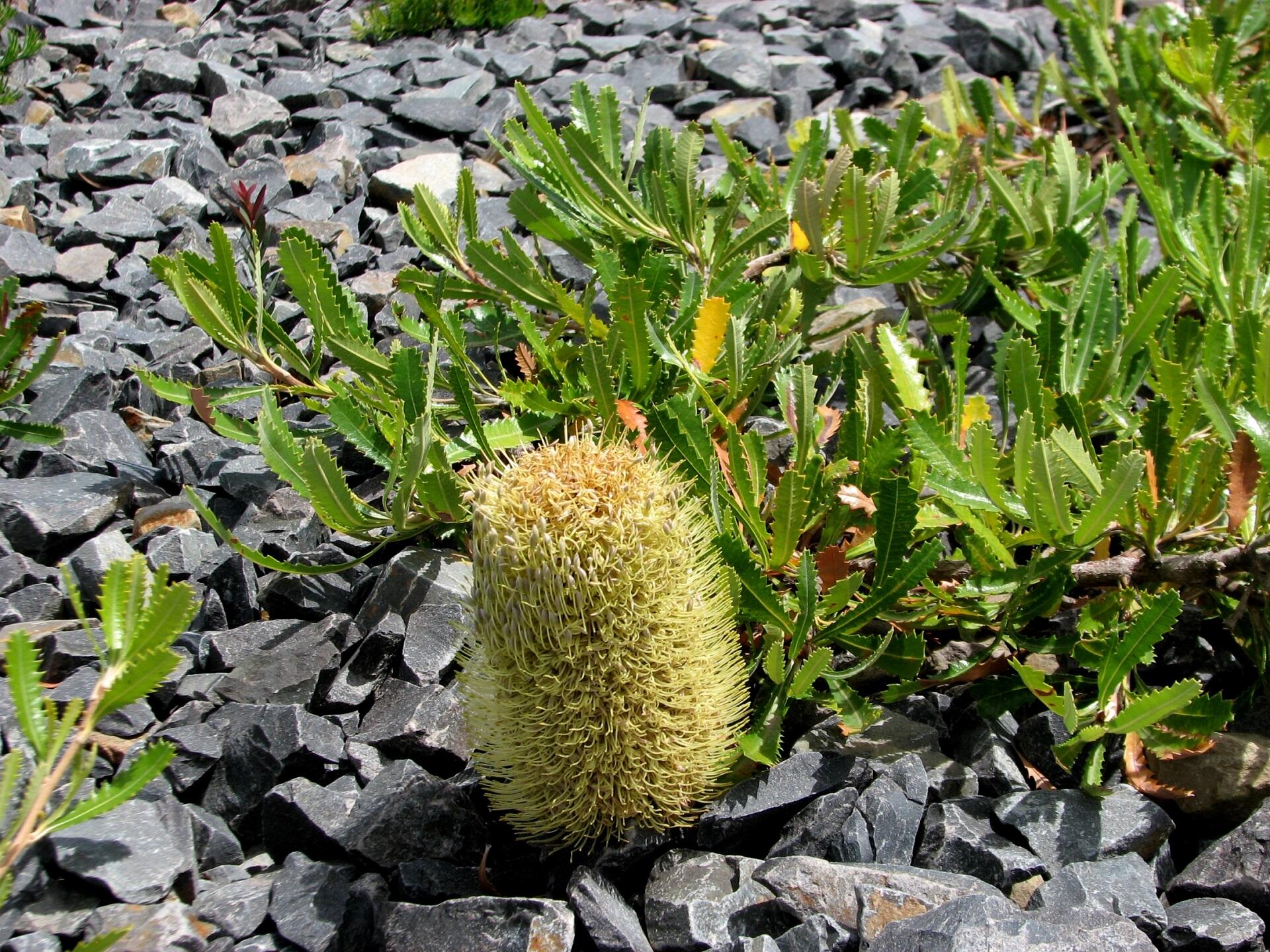
Feature Flower: Old Man Banksia
Ageing flowers are rather sad looking as they wilt and their colour fades. By contrast, the Old Man Banksia gets its name from humans' characteristics of ageing. These flowers' bark is grey and wrinkly, and their saw-toothed leaves give a further impression of bad-tempered will.
However, it remains firm and robustly upright as it reaches the end of its life cycle. In that sense, these flowers remind us of the staunch old men in our lives - our grandfathers and mentors. If you happen to hike through NSW's Blue Mountains, you'll likely run across a few of these old men.
Bottlebrush
'Callistemon' represents approximately 50 species of flowering shrubs, commonly called 'bottlebrush' for their distinctive, brush-like appearance. Some species may grow as tall as nine metres but the ones that work the best as hedges or in landscaped gardens are typically one to three metres tall.
This word is a mash-up of 'callis' - Greek for 'beauty', and 'stemon', meaning 'stamen' in Greek.
You can find bottlebrushes across Australia, particularly in the more temperate areas, like southeastern regions. In Tasmania, you can find two distinct species: the lemon bottlebrush and Tasmanian green bottlebrush. Western Australia also features two of its own species, the scarlet bottlebrush and the Albany bottlebrush.
Egg and Bacon Shrub
Let's say you're off for a day hike in south-east Queensland or the Budawangs in New South Wales (NSW).
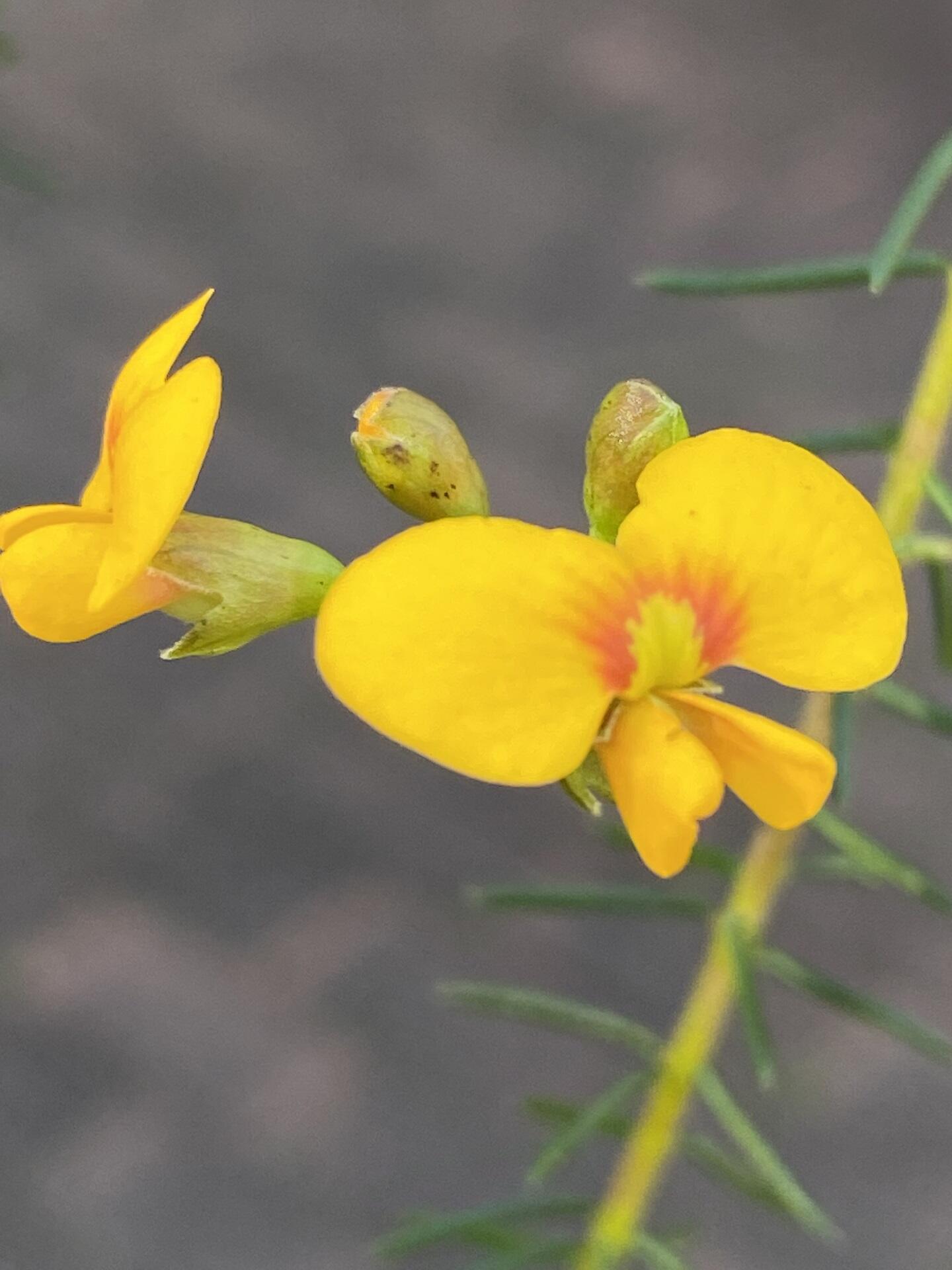
As you walk the marked path, you happen to catch something vividly yellow just ahead. Have you had breakfast yet? Because you might just come upon an egg-and-bacon shrub (don't eat it!). These bright golden buds feature delicate curls and tantalising reddish streaks near the flower's heart.
To breakfast lovers - or maybe just the hungry, they present the same colour pattern as our beloved breakfast. However, these curious flowers belong to the legume family, alongside beans and peas, not some magical, bacon-yielding genus.
Early explorers had trouble agreeing to these plants' botanical name, first naming them Pultenea retorta, then changing the name to the current Dillwynia retorta a century later. This writer was unfortunately unable to account for how they were named after breakfast foods, or who named them that.
Granite Rose
These endangered plants exist in a small patch on the border between Queensland and NSW. Their name makes it sound like this is a tough, hardy breed, a bit like The Little Prince's rose. But these blooms are far more delicate than their name lets on.
The shrub itself is relatively small, growing to a maximum height of 1.5 metres. The flowers bloom from July to October, showing off their four light-mauve-coloured petals and eight irregular stamens. The petals are hairy, looking almost felted in photos.
The Australian National Botanic Gardens in Canberra boasts a small collection of these shrubs.
Grevillea
More than 380 species are flowers native to Australia, and a few grow outside of our borders. They prefer temperate and subtropical climates, and they struggle to grow in saline soils and in swamps. But then, that's nothing new; many of Australia's iconic plants prefer dry, arid conditions.
The grevillea is keen to multiply and tends to spontaneously interbreed, leading to many hybrid species. This quality makes these shrubs a great addition to any horticultural endeavour, making them especially popular as garden plants1. As many birds and insects rely on grevillea for food, a remarkable propagation pattern has emerged.
Insect-pollinated
resulting flowers tend to be white.
Bird-pollinated
resulting flowers tend to be pink, red, or another bright colour.
However, not all is peachy with grevillea. Their fertile breeding has led to some naturalisation outside of their natural area; these plants have adapted to their new home. Unfortunately, this makes them invasive, earning them the distinction of an environmental weed in parts of Australia. Furthermore, some of the hybrids contain toxic cyanide, which puts the local ecology at risk.
As plentiful as these plants are, only one species, Grevillea australis. flourishes in Tasmania.
Kangaroo Paw
This iconic name describes several species of perennial plants native to southwestern Western Australia. We might describe these flowers as buffet for birds, as their tube-like flowers open at the top, filling their longish bodies with sweet food. The outside of those containers is hairy, and they come in many colours, the most vivid being red.
In October 1960, the red and green kangaroo paw was declared Western Australia's state emblem.
Nodding Geebung
Can you imagine a flower that looks like a half-peeled banana? That's just what this drooping bloom looks like, with its four outer petals symmetrically curled towards their stem and the stamen proudly jutting forth. The whole bloom is bright yellow, making a delightful contrast with its dark green leaves.
Unfortunately, these flowers are on the endangered list too2. Loss of habitat and rubbish dumping are two leading reasons for its status, along with fire danger and general habitat degradation.
Quandong
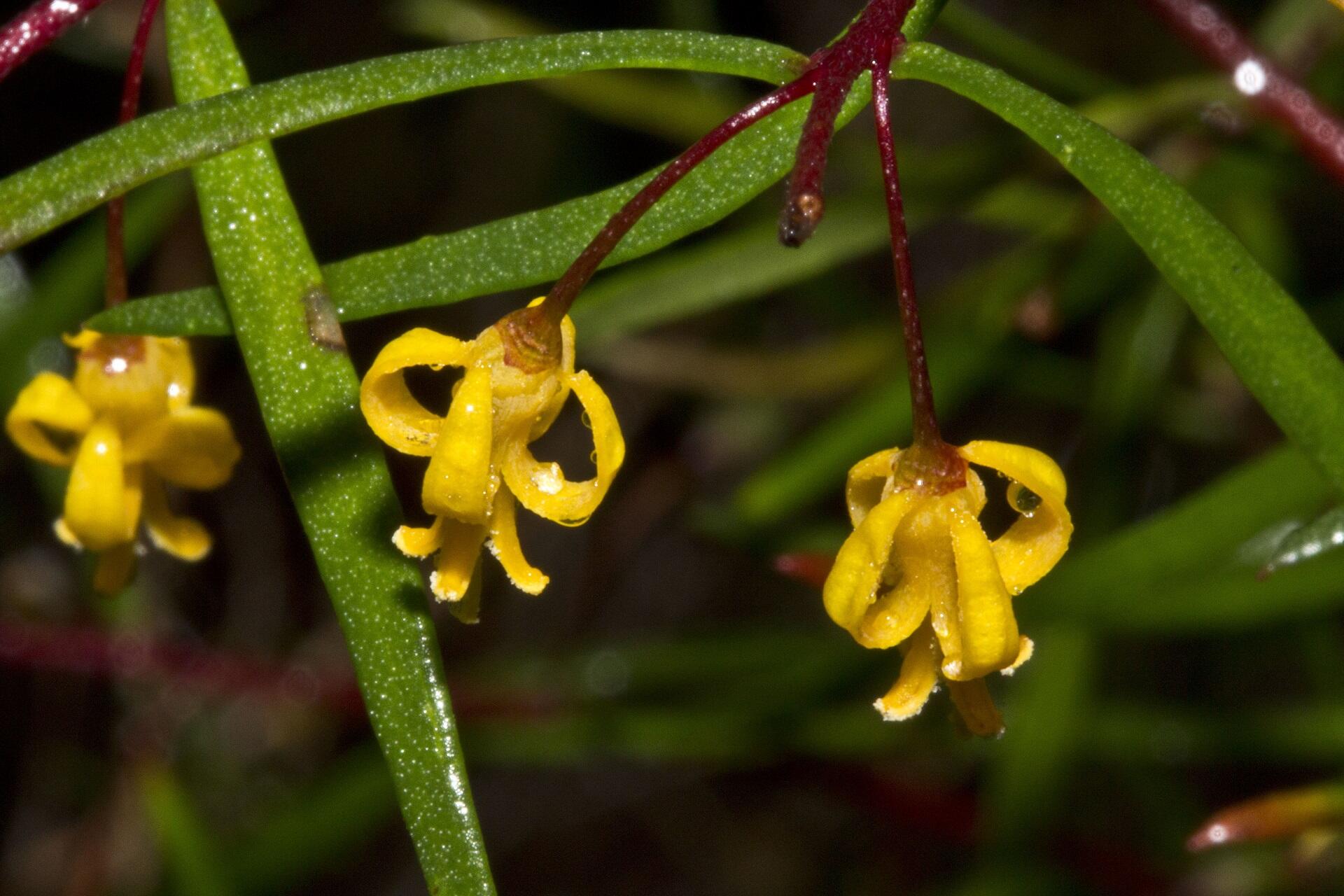
This shrub belongs to the sandalwood family, providing fine-grained, heavy wood suitable for construction as well as furniture-making. These trees also produce one of Australia's signature fruits, informally called the native peach. But it features on this list for its creamy white or green blooms.
To be fair, that's a rather simplistic description. These flowers are complex in their colour, with the petals' insides ranging more towards vivid reds and yellows. They also give off a distinctive fragrance, a bit of sweetness with a hint of tang.
Feature Flower: the Hairy Quandong
tb A conservation success story By 2013, this plant was at grave risk due to habitat clearing, weed invasion, and lack of genetic diversity. Botanists painstakingly collected seeds to encourage cross-pollination and genetic diversity3. Today, the hairy quandong is more than surviving, it's thriving!
Warty Ziera
If you happen to be on NSW's south coast - say, the Gulaga National Park, you might search for this vulnerable plant. Shrubs can be up to three metres tall, growing warty branches and leaves with microscopic hairs. Its flowers bloom from late winter to spring, small, delicate, creamy-white blooms. Each flower features
Like more than one Australian native flower on our list, this bloom's existence is under threat. Invasive species and grazing animals are particular dangers, but environmental conditions and habitat degradation are playing a role, too.
Wattle
Which Australian doesn't know that the golden wattle is our country's floral emblem? We celebrate this lovely bloom each year on 1 September; it's the flower that greeted you at the start of this article.
But Australia does not have a special claim to wattles. This genus, Acacia, is widespread throughout Africa, South America, and other parts of Asia. Still, the term 'acacia' is more and more reserved for the Australian tree species, which we call wattles.
These trees are the second most prevalent across Australia after eucalyptus trees.
You can find them in a variety of environments, from the desert to the rainforest.
Feature Flower: the Phantom Wattle
The phantom wattle stands out for its silvery-grey stems and slender branches which, in turn, bear short, silvery hairs. It prefers wet regions such as near creeks and drainage paths. It doesn't mind sharing space with other shrubs and feels most at home in rich woodlands.
Your best chance to see them bloom in the wild is in NSW's Woomargama National Park. The population is sparse, though, with only about 2,000 plants. If you happen to be in northeastern Victoria, you have a limited chance to spot them in the Burrowa-Pine Mountain National Park.
Learn More About Flowers Native to Australia With These Resources
- P, Melissa. “Why Grevilleas Are a Great Option for Your Backyard - Bioweed.” Bioweed, 21 Mar. 2023, bioweed.com.au/2023/03/21/why-grevilleas-are-a-great-option-for-your-backyard/. Accessed 19 May 2026.
- “Threatened Biodiversity Profile Search | NSW Environment, Energy and Science.” Threatenedspecies.bionet.nsw.gov.au, threatenedspecies.bionet.nsw.gov.au/. Accessed 19 May 2026.
- NSW Department of Planning and Environment. “Saving Our Species Program.” NSW Environment & Heritage, 2 May 2019, www.environment.nsw.gov.au/topics/animals-and-plants/threatened-species/saving-our-species-program. Accessed 19 May 2026.
Summarise with AI:
Did you like this article? Leave a rating!

 Loading...