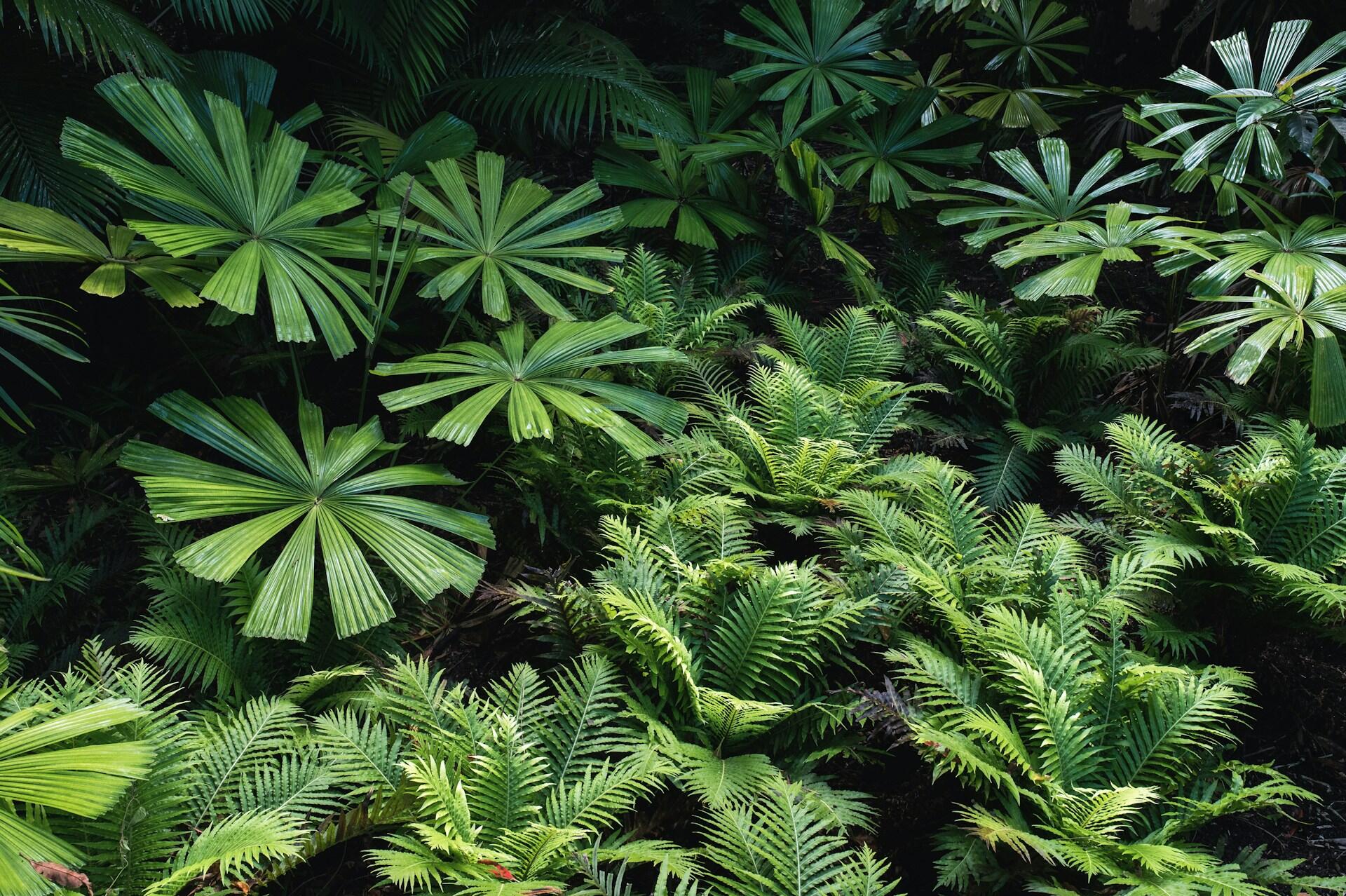

Photos and video from around Australia give outsiders the impression that our land is either a sparse, scrubland desert or a lush, cultivated environment. The truth is both of those and more: we have rainforests with spectacular old-growth trees and peculiar, spiny, prickly plants that resist any contact. We have beautiful flowers and fruit-producing plants, too. Here, we extol the virtues of these native Australian plants1.
| 🌳 Plant name | 🔍 Description | 🌏 Habitat |
|---|---|---|
| Banksia Proteaceae | Many different varieties may grow as tall as 30 metres. | Along Australia's coastlines |
| Bottlebrush Callistemon | Brush-like flowers that grow close to the ground | All across Australia |
| Black Sheoak Allocasuarina littoralis | an evergreen tree that holds up well in droughts and arid conditions. | All along the east coast, from northern Queensland to Tasmania |
| Blueberry Ash Elaeocarpus reticulatus | A rather delicate-looking, hardy tree that produces fringed white blooms and blue, olive-shaped berries. | All along the east coast, from Frasier Island to Flinders Island |
| Epacris | Sparse looking shrubs that produce long tubular blooms that hang downward. | Native to eastern and southeastern Australia |
| Eucalypts Eucalyptus Corymbia Angophora | More than 900 varieties, filtered into three classifications. Also called gum trees, they come in sizes large to small, all of which flower. | Most prevalent along the east coast states, with some found only in Western Australia. |
| Finger Lime Citrus australasica | A small tree with sharp spines, light green leaves, that produces long-ish citrus fruits with green skins. | The southeastern corner of Queensland and northern reaches of New South Wales. |
| Hakea | Shrubs that produce distinctive, often 'spiny' flowers. More than 150 species. | All over Australia, with the highest diversity of species in Western Australia. |
| Isopogon | Around 40 species, all of which produce round or cone-shaped flowers and rigid leaves. | They prefer the southern parts of Australia, mainly in Western Australia and coastal regions in the east. |
| Kangaroo Paws | Ground-level plants with dark green leaves and 'furry' flowers that look like kangaroo paws. | Native to south-western Western Australia |
| Waratah Telopea or Alloxylon flammeum | Two distinct types with seperate profiles. Each produces flowers in the spring and distinctive leaves. | Queensland and NSW, Victoria, and Tasmania |
| Wattle Acacia | They may grow as tall as 50 metres or remain as ground cover. Many develop modified leaf stems to limit water loss. The flowers typically lack petals. | More than 1,200 species grow across Australia. |


Banksia
The name 'banksia' is a general term to describe around 170 species that belong to the protea plant family. Banksia grow in all Australian environments, from arid desert conditions to lush rainforest floors.
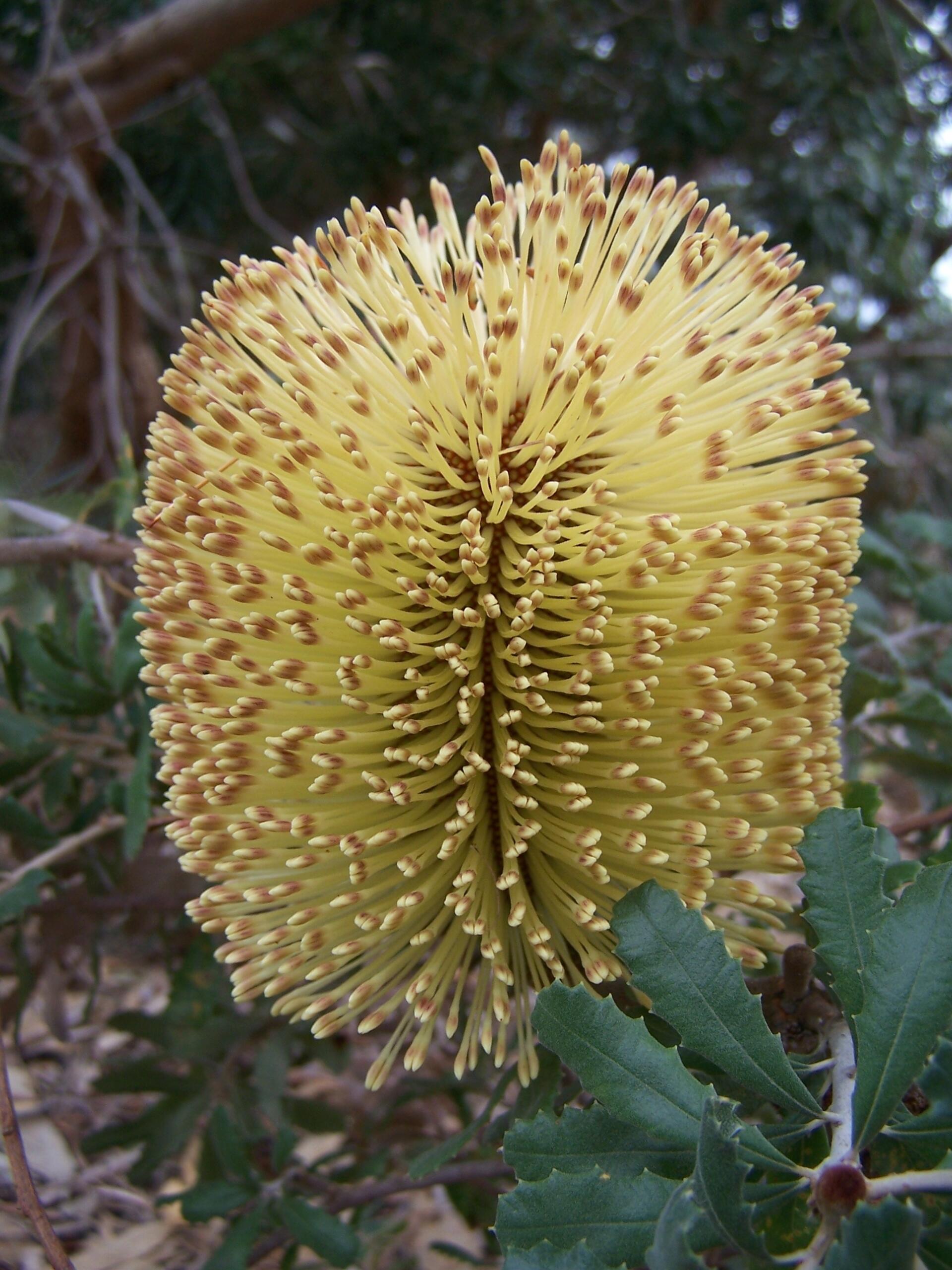
They are most prevalent in Western Australia's southern regions, where botanists record the greatest diversity.
Banksia grow to various heights. The taller species aren't necessarily suitable for garden landscapes, but the smaller, shrub-like growths make perfect garden accents. The 'birthday candle' variety (Banksia spinulosa) is a favourite for this purpose.
Banksia are easy to manage. They can be pruned to suit your landscape plan, and are generally easy to maintain, provided you don't try to cultivate them in humid conditions.
Some species prefer well-drained, sandy soils, and most thrive in areas with wet winters and dry summers.
Bottlebrush
These native Australian plants produce some of the country's most distinctive, iconic flowers. Rather than petals, they produce brush-like 'spikes' that grow in a variety of colours and shapes. Extending the family tree, these plants belong to the myrtle family, though they look nothing like the myrtles that grow elsewhere in the world.
Like the banksia, bottlebrush are uniquely suited to landscaped gardens. They're a hardy species that thrives even among weeds, and they can get by on minimal attention. Beware, though, that even mild neglect will result in poorer-looking plants, with fewer flowers and sparser leaves.
Black Sheoak
Commonly known as river black-oak, these trees can reach up to 15 metres in height, though they grow much smaller in exposed coastal areas. They are fast-growing and hardy, and they prefer poor, slightly saline soils. It is dioecious, meaning each tree is either male or female.
Male trees grow lush red flowers in the spring.
Female trees produce woody seed cones that kind of look like pinecones without the petals.
Black sheoaks fulfil important ecological functions. For one, they are the primary food source for the threatened glossy black-cockatoo, and other species, as well. But these trees are also important nitrogen fixers; they improve soil conditions and provide habitats for a host of creatures.
Blueberry Ash
If any tree could be called friendly, we might label this one as such. Once it's established, it needs little attention - always provided conditions are right for its growth. In the spring, they grace us with delicate, bell-shaped blooms and, later, treat us to blueish berries that look like olives. Even their new leaf growth is stunning: leaves emerge in bronze or pink before turning a deep, satisfying green.
Epacris
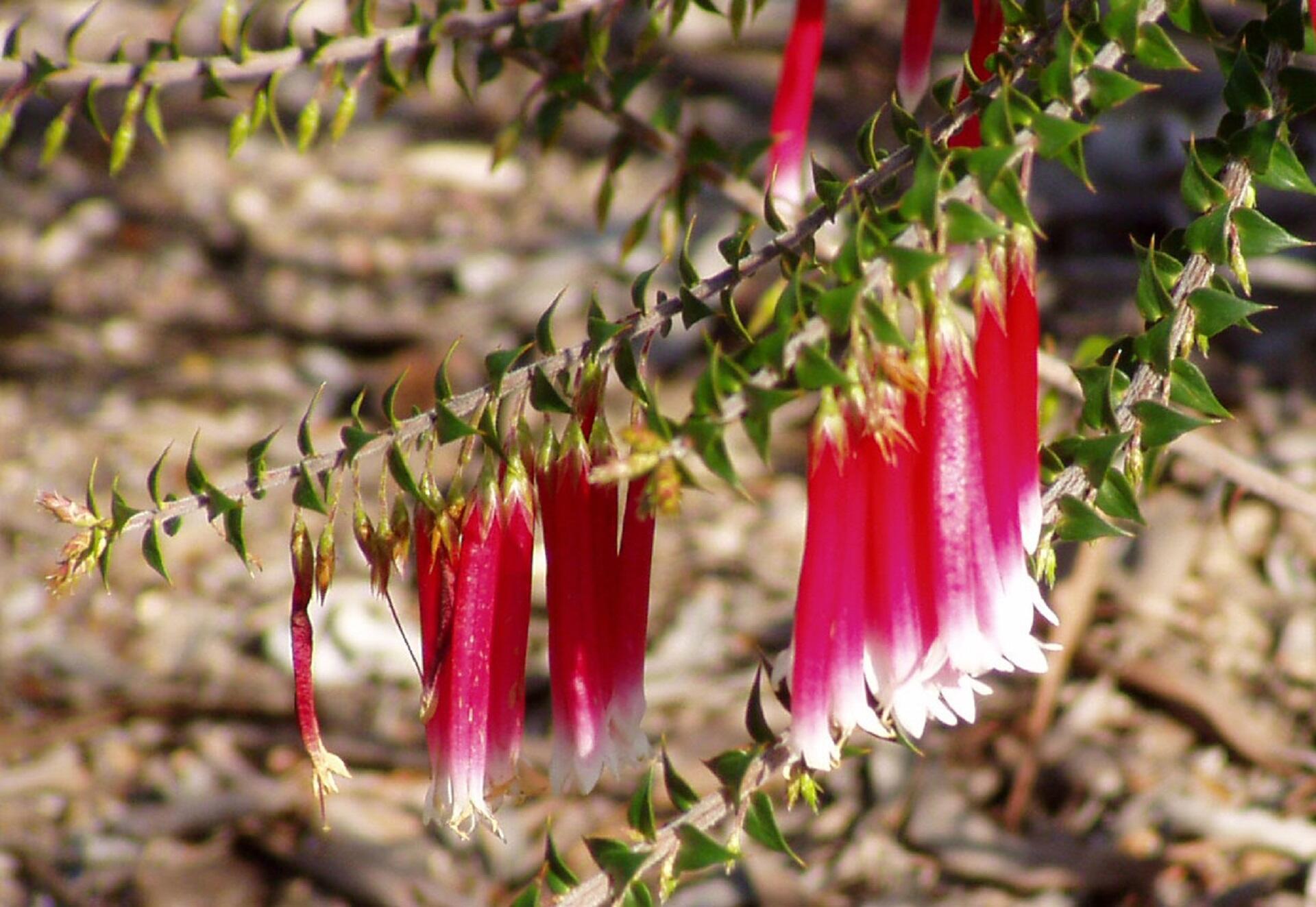
Better known as Australian heath, these shrubs are more of a high-maintenance diva than the easygoing Blueberry ash. The genus comprises roughly 40 species, with only a handful of them preferred in gardens.
Common heath
Fuchsia heath
Coral heath
As lovely as they are when in bloom, even the garden varieties are hard to grow. They require a specific soil profile: well-drained and humus-rich. They are sensitive to disturbance thanks to their fine roots, and they require specific fungi to survive. If your garden meets all these conditions, you must then ensure the plant's sun exposure and constant moisture, without waterlogging it.
Since November 1958, the common pink heath has been Victoria's state flower emblem2.
Eucalypts
This is a general name to identify Australia's gum trees. Most people call this plant group 'eucalyptus trees' even when the tree in question doesn't belong to that group. The eucalypt family is extensive; the largest in Australia, and it comprises three genera.
Eucalyptus
- about 800 species
- the one koalas like eating the leaves off of!
Corymbia
- approximately 115 species
- does not propagate well without assistance
Angophora
- around 13 species
- easily identified by their leaf arrangement
Corymbia are distinctive for their light colour; we often call them 'blondwoods', 'ghost gums' and, less precisely, flowering gums. Its seeds are typically not hardy, nor do they come true to type. So, they must be grafted to ensure species survival.
Finger Lime
Many Australian native plants produce fruit, not all of which is edible. However, the fruits from this native tree find many uses, both in the kitchen and in artisan crafts.
These are thorny trees with small, glossy leaves. They produce small, pale pink or white flowers late in the summer and into autumn. They may grow up to six metres in height but are typically kept to half that height for harvesting and cultivation purposes. For these qualities alone, finger lime trees are highly prized.
But the real reason we love them is the fruit they produce. They earn their nickname, 'caviar limes', because of their rich, caviar-like juice vesicles. They're full to bursting with zingy citrus flavour, which makes these fruits a staple of gourmet cuisine. But juice from these limes also adds accents to jams, sauces, and desserts.
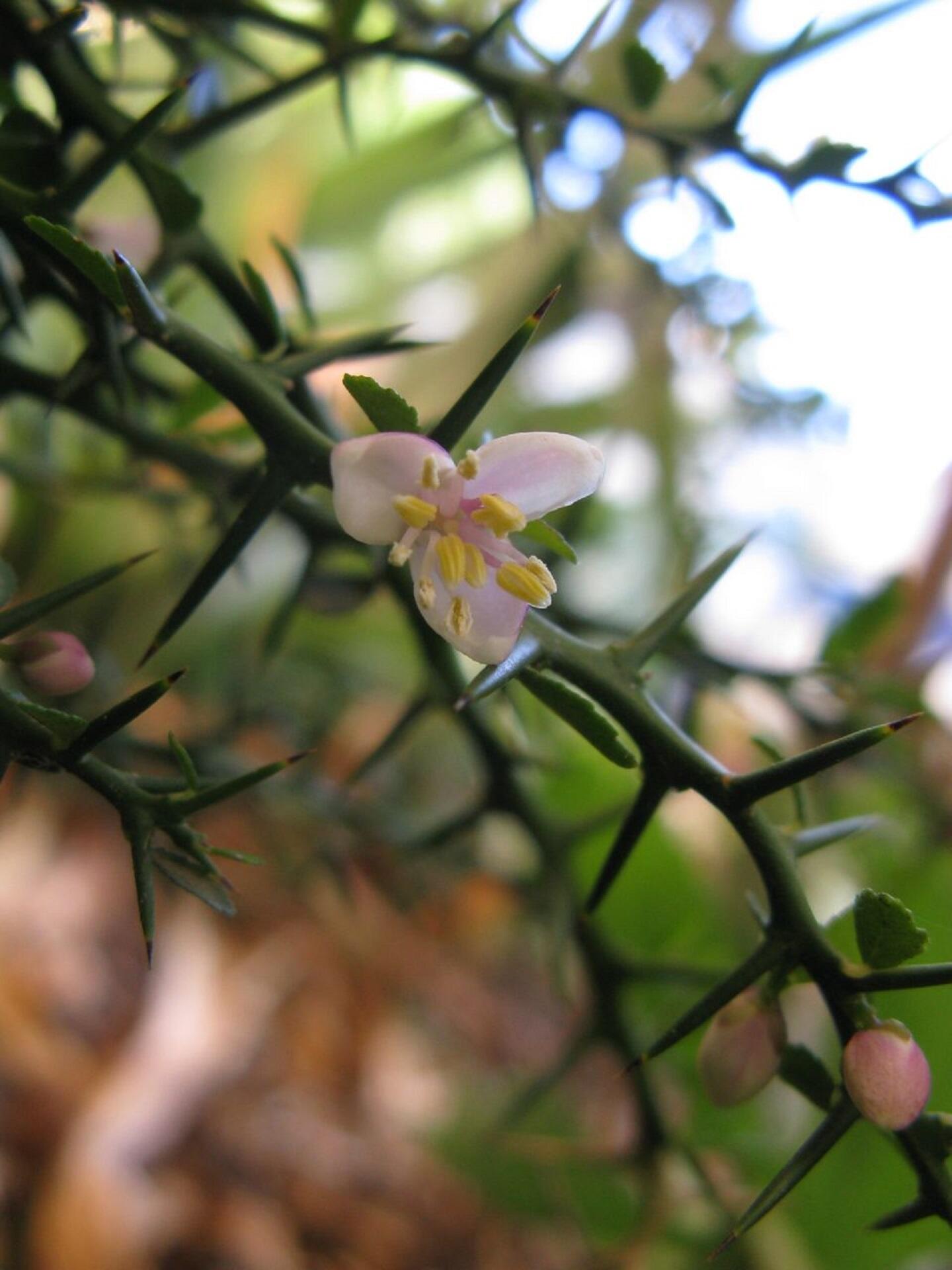
The leaves themselves are aromatic. You can crush a few leaves into a dish to let their clean, astringent scent fill the air in your room with a delicate, citrusy scent.
Hakea
These flowering plants number around 150 species that grow across Australia, with the most variety found in Western Australia. They are distinctive for their short stature - they're more shrub than tree, and their round flowers, typically in some configuration or red and white. These are the most popular Hakea varieties.
Isopogon
This is a rather selective shrub that grows only in a few areas in the southern parts of Australia. Their flower heads are either globe-shaped or cone-shaped, and their leaves are typically compounded and rigid.
Of the roughly 40 species in this family, none are particularly amenable to cultivation. They like well-drained, sandy soils, specifically the type that supports heathlands. They prefer dry summers and wet winters, and usually don't thrive in humid conditions. You're not likely to find these plants lining any city boulevard or park pathway because they are so difficult to grow.
Isopogons feature a lignotuber, a type of bulb that grows at the base of the plant.
It protects the roots from fire and allows the plant to regrow after brushfires.
Kangaroo Paws
No article about plants in Australia would be complete without mention of this ground-level native flower.
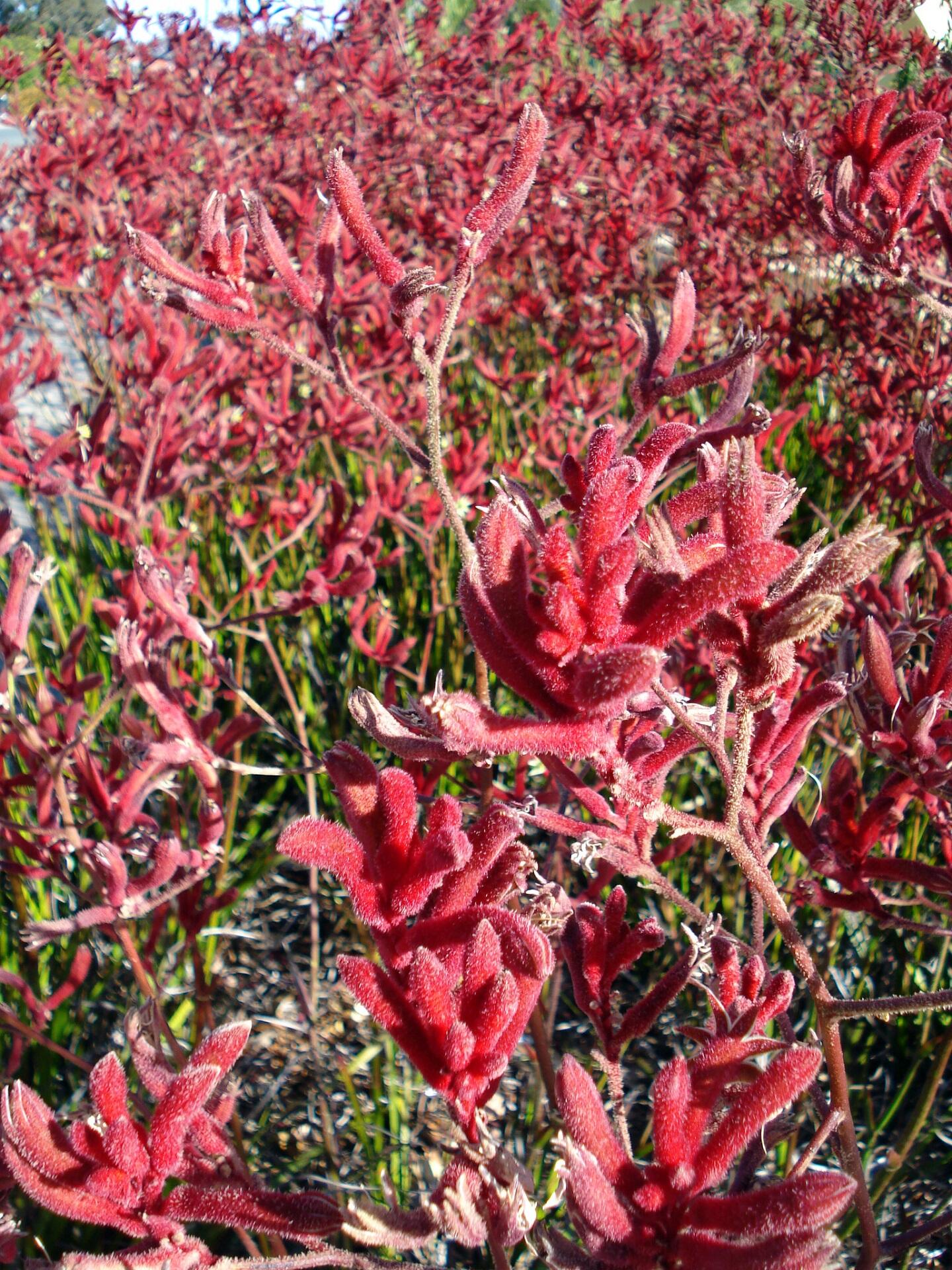
The name 'kangaroo paw' describes several species from two genera from a larger plant family. They grow from rootstalks into strappy, dark green leaves that surround remarkable flowers.
We cannot call them blooms, at least not in the traditional sense. These flowers look like velvety tubes and they come in a variety of colours - red, pink, yellow and green, most of which are natural.
Several hybrids exist that have brighter-coloured flowers and are more pest- and disease-resistant.
To date, these plants have found their way to Japan and the United States, where they've thrived and gained popularity as distinctive garden accents.
Waratah
The term 'waratah tree' refers to two different types of trees: the true waratah and the Queensland tree waratah. We typically lump them together even though they have distinctive characteristics.
True waratahs
- found in NSW, Tasmania, and Victoria
- small trees or shrubs with dark green leaves
- produces large red flowers
- blooms appear in the spring and may also be pink or white
- they're fire-protected thanks to their lignotuber
- the NSW waratah is the state's floral emblem
Queensland tree waratahs
- found in north Queensland's tropical rainforests
- a large evergreen that may grow to 30 metres
- produces glossy, lobed leaves and bright orange or red flowers
- it's slow-growing and lives for 30+ years
- also called Red Silky Oak
Though popular, it's hard to grow these trees commercially, as changes in environment negatively affect the plant. Those growers who find success create the conditions this plant prefers: full sun and warmth for the Queensland version, and sandy soils with minimal morning sun for the true watarah. And still, they're not necessarily happy to grow on demand.
This tree's name comes from the Eora people, the traditional inhabitants of the Sydney region.
Wattle
By now, you must be convinced that Australia does not lack for distinctive native trees, plants, and flowers. Yet, the wattle stands apart, if only for a rare honour4.
The Golden Wattle is Australia's national floral emblem. September 1 is National Wattle Day, when we celebrate Australian unity, resilience, and adaptation.
The Golden Wattle, and wattles in general, forge important cultural connections with Australia's Indigenous peoples. For thousands of years, Aboriginal and Torres Strait Islanders relied on the wattle for food, medicine, and tools made from the trees' hardy wood. This lovely tribute to wattles pretty much sums up our feeling for these lovely trees.
Learn More About Australian Plants With These Resources
- “Common Plant Genera & Families.” Australian Native Plants Society (Australia), anpsa.org.au/plant-guides/common-genera-families/. Accessed 18 May 2026.
- “The Symbols of Victoria | Australian Symbols Booklet.” Department of the Prime Minister and Cabinet, 2 Sept. 2022, www.pmc.gov.au/resources/australian-symbols-booklet/state-and-territory-symbols/symbols-victoria. Accessed 18 May 2026.
- “Growing Guide for Finger Limes.” Garden Express, 13 June 2025, www.gardenexpress.com.au/growing-guide/growing-guide-for-finger-limes/. Accessed 18 May 2026.
- Prentis, Brooke. “Unity and Resilience: Happy Wattle Day!” Common Grace, 28 Sept. 2020, www.commongrace.org.au/wattle_day_2020. Accessed 18 May 2026.
Summarise with AI:
Did you like this article? Leave a rating!

 Loading...