
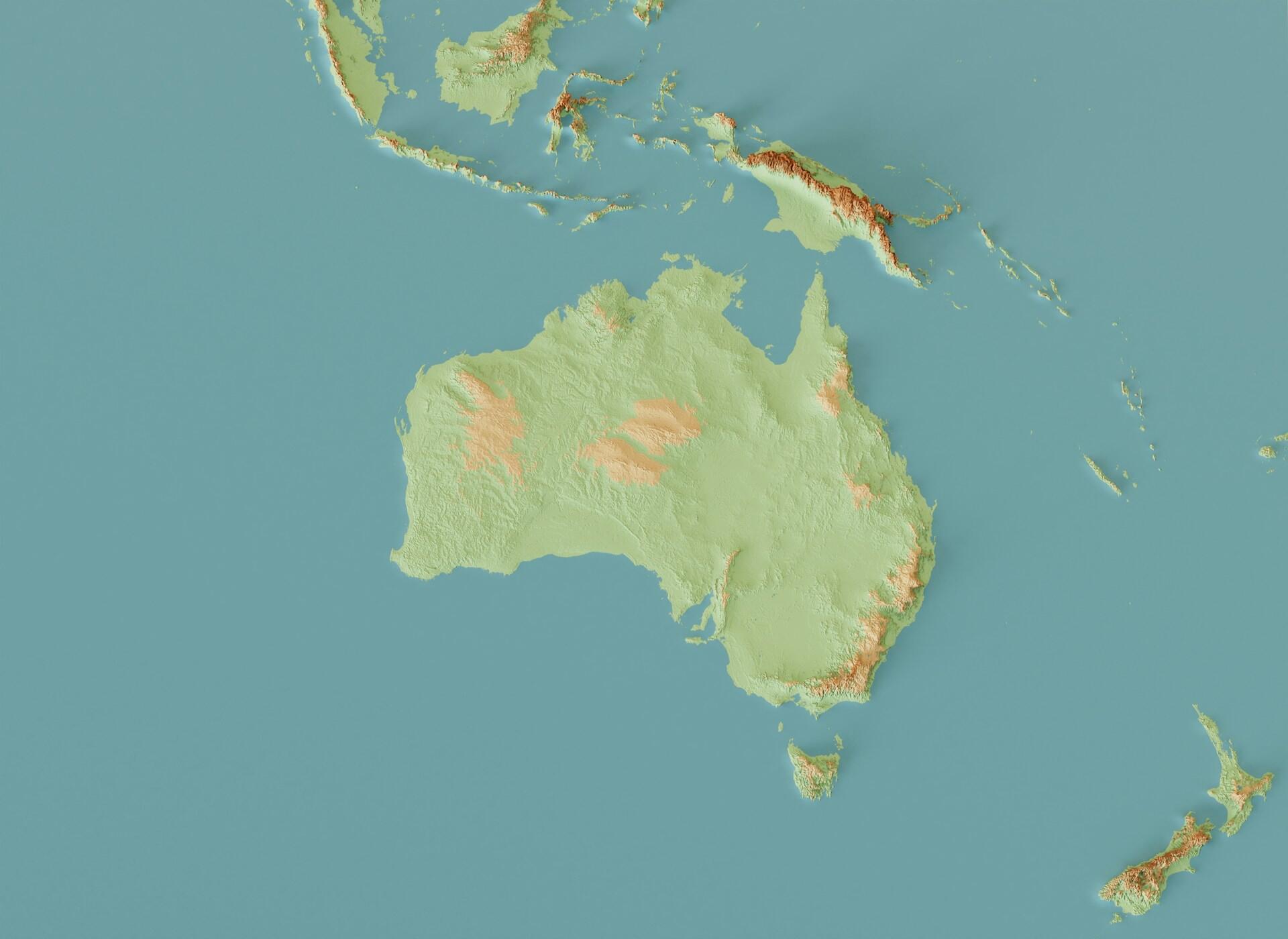

You may be asking whether Australia is a country or a continent. The answer isn't black or white, and it depends on how you're looking to classify it. Australia can be recognised as a continent and a single country. Ultimately, it comes down to politics and geography and which you're looking to use to classify Australia.
Key Takeaways
- Australia is both a country and a continent, depending on context¹
- The continent of Australia is defined by its landmass and geological structure⁴
- The country of Australia is a sovereign nation with its own government³
- Australia is the smallest of the seven continents²
- It sits on its own tectonic plate, supporting its classification as a continent⁶
- Australia includes the mainland and nearby land, such as Tasmania²
- Australia is not classified as an island despite being surrounded by water⁸
- Greenland is the largest island, showing the difference between islands and continents¹¹
- Oceania is a region that includes Australia and many Pacific islands⁹
- Oceania is not a continent but a geographical grouping used in global classifications¹⁰





Australia’s Dual Identity
One of the interesting facts about Australia is that it's often spoken about in two ways. You'll hear some people call it a continent, others a country, and others say it's both. It's worthwhile to understand right from the outset that it can be both, and you don't have to decide. In politics, a country is a recognised sovereign nation with defined borders, institutions, and governance. However, a continent is a large continuous landmass defined by geographical and geological criteria.⁴ This is why Australia appears in both lists of continents and lists of countries.¹
Australia is both a country and a continent. Geographically, it is the smallest continent on Earth, defined by its large continuous landmass and distinct tectonic plate. Politically, the Commonwealth of Australia is a sovereign nation that governs most of that landmass.
Is Australia a Continent?
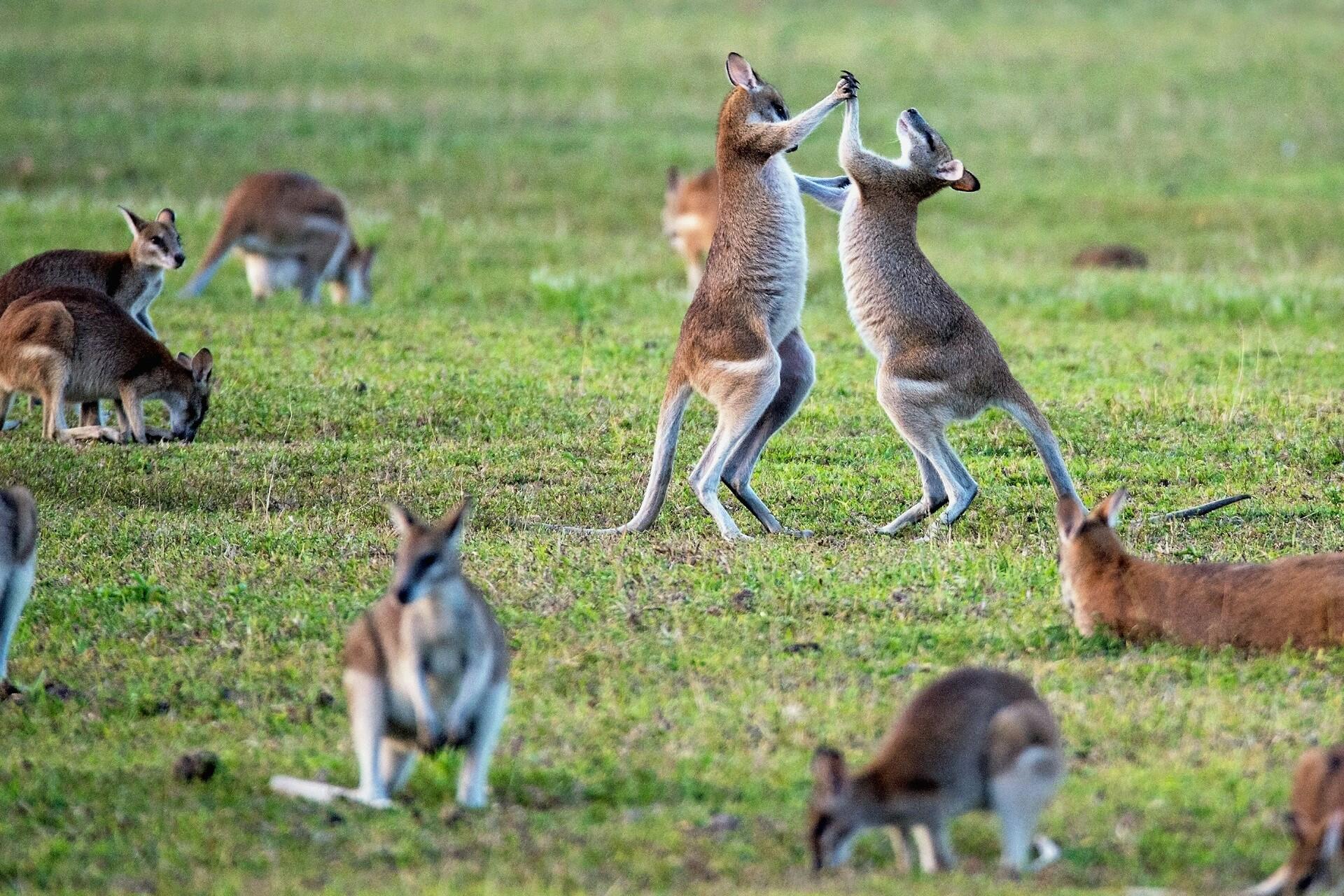
continents on Earth, depending on the convention and model you use.
Australia as a Country

Continent vs Island: Understanding the Difference
One issue with whether Australia is a continent or not is that it's surrounded by water, which means many people think of it as a big island with most of the population living on the coast. In geography, there's a clearer line between the two, because other continents are also surrounded by water. It's easier to understand how to classify Australia.¹

What Defines a Continent?
A continent doesn't have a single rule; it is instead defined by a mix of physical and scientific criteria recognised by geographers.⁵ Even then, there are different counts for how many continents there are. Generally, we look at how the landmass sits on Earth's crust, its evolution, and how it compares to others.¹
A continent is a large continuous landmass that is typically separated by oceans and sits on its own tectonic plate. An island is surrounded by water but is smaller and not considered a continent. Australia is often mistaken for an island, but because of its size and geological structure, it is classified as a continent.
Continent
- A continent is a large, continuous landmass
- Usually sits on its own tectonic plate
- Not strictly defined by size alone, but by geology and history
- Examples include Africa, Asia, and the continent of Australia
- Often separated by oceans or major geographical boundaries
Island
- An island is land completely surrounded by water and smaller than a continent.⁷
- Smaller than a continent in classification
- Not defined by tectonic independence
- Greenland is the largest island in the world and is still classified as an island rather than a continent.¹¹
- Islands can exist alone or as part of larger groups (archipelagos)
Is Australia an Island?
What Is Oceania and Where Does Australia Fit?
Oceania is used by geographers to describe an area with a shared location, culture, and history. Oceania is a way to place the already-massive Australia within a broader context. This is a good way to talk about Australia with the nearby islands and Pacific nations.¹
islands across the Pacific region
What Is Oceania?
Australia’s Location Relative to Asia and Oceania
Australia Continent vs Country: Key Differences at a Glance
It all boils down to geography or politics. Australia is a political entity. Australia, as a continent, is a geographical entity. Oceania is a broader geographical and cultural term that encompasses a larger region, but it isn't generally considered a continent. You could think of Australia, the continent, as the landmass with all the deserts and other geographical features; Australia, the country, is its people, institutions, government, etc.
Australia at a Glance
| Feature | Australia as a Continent | Australia as a Country |
|---|---|---|
| Definition | A large continuous landmass | A sovereign nation |
| Type | Geographical entity | Political entity |
| Boundaries | Defined by tectonic plate and landmass | Defined by legal borders |
| Includes | Mainland Australia and Tasmania | States and territories |
| Governance | None | Federal government |
| Global Role | One of the seven continents | Member of international organisations |
If you'd like to learn more about Australia, why not study with a Superprof tutor? You can find tutors for almost every subject and skill you can think of. With most offering their first session for free, you can even try a few out before finding your perfect fit.
References
- “Australia.” Encyclopaedia Britannica, https://www.britannica.com/place/Australia. Accessed 23 Apr. 2026.
- “Australia’s Size Compared.” Geoscience Australia, https://www.ga.gov.au/scientific-topics/national-location-information/dimensions/australias-size-compared. Accessed 23 Apr. 2026.
- “About Australia.” Australian Government Department of Foreign Affairs and Trade, https://www.dfat.gov.au/about-australia. Accessed 23 Apr. 2026.
- “Continent.” Encyclopaedia Britannica, https://www.britannica.com/science/continent. Accessed 23 Apr. 2026.
- “Continent.” National Geographic Society, https://education.nationalgeographic.org/resource/Continent/. Accessed 23 Apr. 2026.
- “Elevations.” Geoscience Australia, https://www.ga.gov.au/scientific-topics/national-location-information/landforms/elevations. Accessed 23 Apr. 2026.
- “Island.” Encyclopaedia Britannica, https://www.britannica.com/science/island. Accessed 23 Apr. 2026.
- “Is Australia an Island?” Encyclopaedia Britannica, https://www.britannica.com/story/is-australia-an-island. Accessed 23 Apr. 2026.
- “Oceania: Physical Geography.” National Geographic Society, https://education.nationalgeographic.org/resource/oceania-physical-geography/. Accessed 23 Apr. 2026.
- “Standard Country or Area Codes for Statistical Use (M49).” United Nations Statistics Division, https://unstats.un.org/unsd/methodology/m49/. Accessed 23 Apr. 2026.
- “The Largest Islands in the World.” Encyclopaedia Britannica, https://www.britannica.com/list/the-largest-islands-in-the-world. Accessed 23 Apr. 2026.
- “Why Greenland Is an Island and Australia Is a Continent.” UC Geography, University of California, Santa Barbara, https://legacy.geog.ucsb.edu/why-greenland-is-an-island-and-australia-is-a-continent/. Accessed 23 Apr. 2026.
Summarise with AI:
Did you like this article? Leave a rating!

 Loading...
