

Tracing the arc of musical development, we find the changes that define music were far faster over the last century than across its entire recorded history. Bartolomeo Cristofori built the first piano around the turn of the 18th century and, for 200 years, it remained an instrument of classical music. But then, around the 1900s, musicians developed a playing style that compelled changes in decades, not centuries. It all culminated into a genre we call pop rock, a fusion of all the styles that came before it.
1920s
The blues style of music gives rise to several other genres and sub-genres.
Jazz, ragtime, gospel blues and others.
mid-1920s-1940s
Boogie-woogie leads to swing jazz, rhythm & blues (R&B), and rock 'n' roll.
Artists include Little Richard and Jerry Lee Lewis.
1950s
Pop rock emerges from rock 'n' roll.
Chuck Berry, Elvis Presley, and the Beach Boys headline this movement.
1960s
British Invasion acts combine rock instrumentation with pop lyrics.
Top names include The Beatles, The Birds, and The Rolling Stones.
1970s-80s
Pop rock develops the soft rock and new wave genres.
Top bands: Fleetwood Mac (soft rock) and The Police (new wave).
1990s
Pop punk emerges, a more aggressive sound with harsher lyrics.
Notable artists include Green Day and Blink-182.
2000s
Alternative rock takes over the mainstream.
The wave-makers: Linkin Park and My Chemical Romance, among many others.


Defining Pop Rock Music
The term 'pop rock' itself has a rhythmic sound, and the words that make it up suggest power and dynamism. Was that term's creation serendipity - a fortunate accident, or carefully engineered for its appeal?
Origins and Etymology
The 'pop' part came from shortening 'popular' music. This style of music was defined as the music that the mainstream listened to1. It was quite apart from the blues style of music, which catered to only a relatively small part of the population. Popular music got steady radio play and, later, when television broadcasting went mainstream, popular music acts got all the screen time.
The 'rock' part came from 'rock 'n' roll', a rollicking style of music that compelled youths onto the dance floor. Early rock 'n' roll artists like Little Richard pounded out frenetic piano beats; their wild stage antics spoke of a cultural shift underway.
Pop music fused with rock energy to create pop rock, a new style of music.
From Art to Industry
For most of civilisation’s history, music has been both an art and a business. Musicians sold their talents for money, either as independent artists in the ilk of wandering minstrels or under patronage to wealthy houses. Even during music’s jazz era, the burgeoning radio period, and into television’s Golden Age (1950s), music promotion was a one-to-one affair.
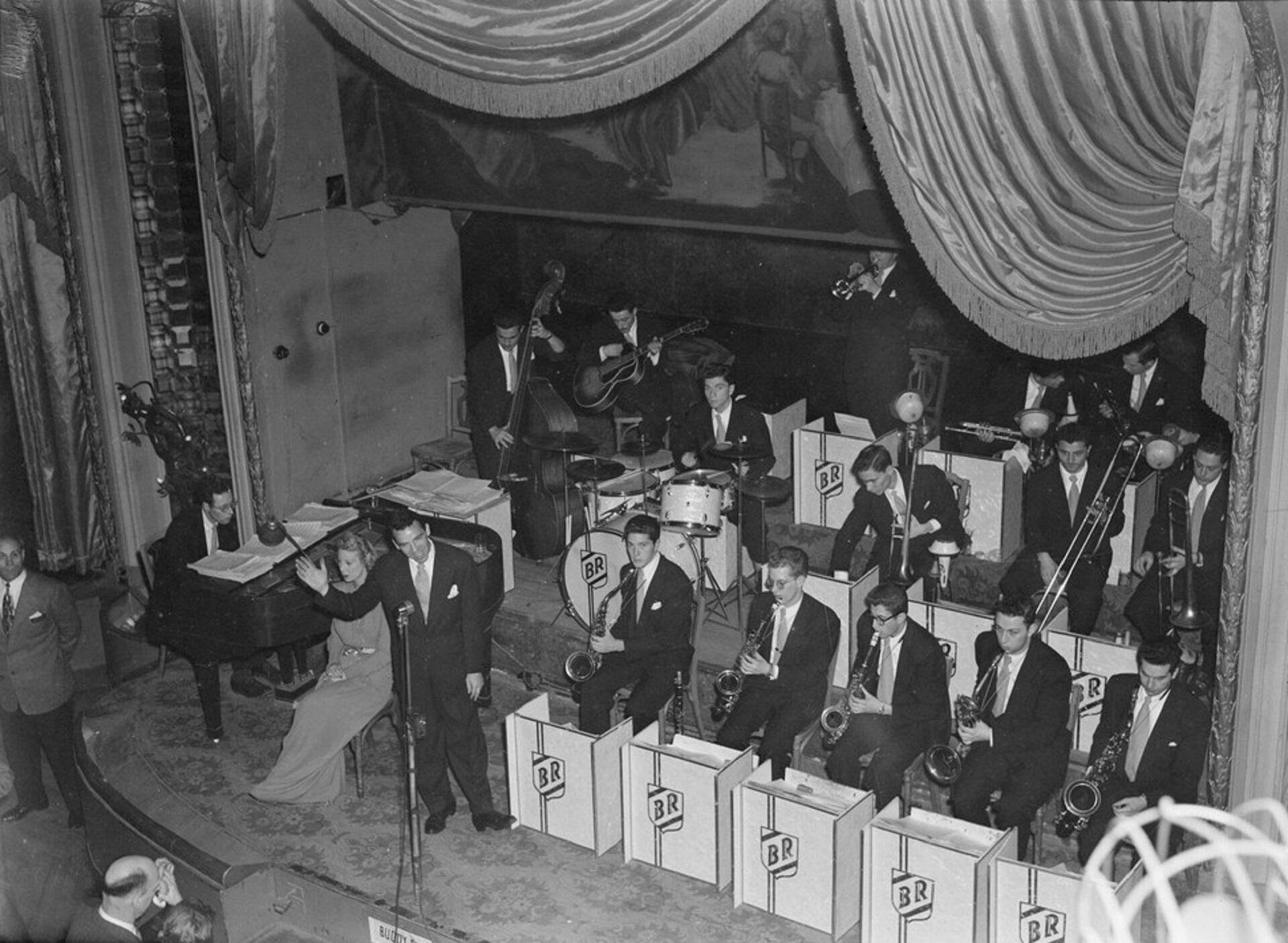
Band leaders would contract with a broadcast network or recording studio, which would take on the publishing and promotional duties. Often, television and studio production worked hand-in-hand to assure their artists’ (their investments’!) success.
All that changed in the 1950s, when music grew beyond its business roots to become an industry2.
Small recording studios that charged artists by the hour for their services became an arm of music production brands. Those brands, called labels in the music industry, cultivated talent and chaperoned artists’ careers.
The people behind the labels, the executives, had an unerring sense of where music trends were headed. They chose the songs and matched them to the artists who would turn them into hits. These are the executives who made the music stars.
| 🤵 Executive | 🏢 Label | 📅 Year founded | 🎤 Top artists |
|---|---|---|---|
| Ahmet Ertegun | Atlantic Records | 1947 | Ruth Brown, Ray Charles, The Drifters, The Coasters, Big Joe Turner, Dizzy Guillespie |
| Barry Gordy | Motown Records | 1959 | Smoky Robinson and the Miracles, Mary Wells, Marvin Gaye, Stevie Wonder, The Temptations, The Supremes. |
| Clive Davis | Arista Records | 1974 | Barry Manilow, Eric Carmen, Melissa Manchester, Bette Midler, The Grateful Dead, Aretha Franklin, Whitney Houston |
| David Geffen | Geffen Records | 1980 | Donna Summer, John Lennon/Yoko Ono, Elton John, Cher, Joni Mitchell, Neil Young, Peter Gabriel |
| Jimmy Iovine | Interscope Records | 1990 | Tupac Shakur, No Doubt, Nine Inch Nails, Primus, Limp Bizkit, Marilyn Manson, Marky Mark and the Funky Bunch |
It goes without saying that technology made the music industry possible. Radio, and later, television, gave music artists and their labels far greater reach than in-person gigs ever could. In the US, where the music scene set the standard – for better or worse, one personality stood out.
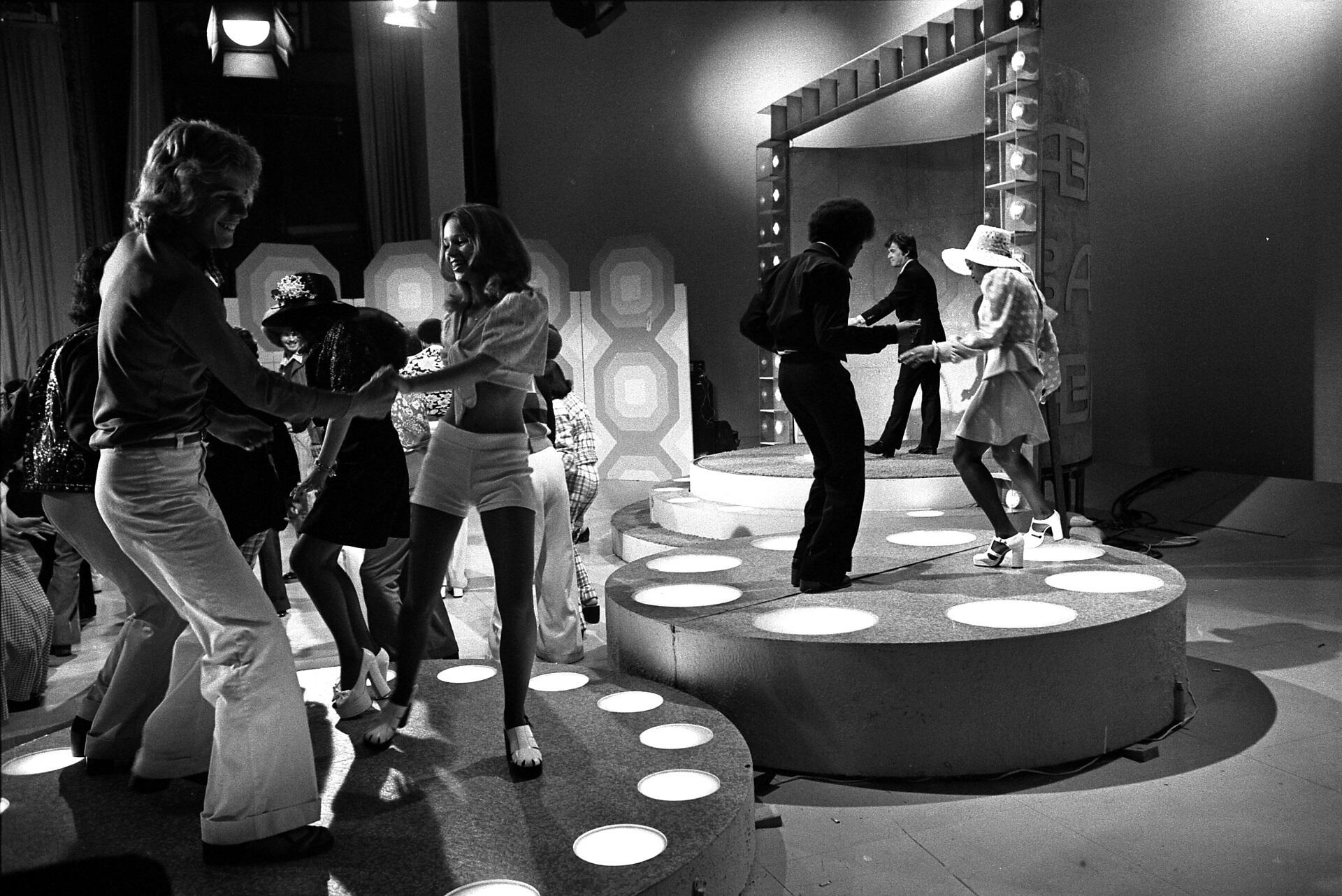
Television personality Dick Clark was instrumental in promoting music. His decades of hosting American Bandstand, a television music and dance programme, brought pop rock music into millions of households.
Dick Clark was yesteryear’s Simon Cowell. He worked closely with record industry executives, showcasing the music industry’s rising talent and promoting established recording stars’ latest hits.
Billboard Magazine's Role
Today, Billboard charts tell us which songs are the most popular. But it started out as an advertising publication, meant to introduce people to the latest products for sale. The competition was stiff for that kind of publication; stores routinely put out catalogues to boast their wares for sale. So, Billboard changed directions.
First, it dabbled in the movie industry, but Variety Magazine already had that market cornered. However, the newly established music industry had no central tallying publication. That's where Billboard found its niche.
Starting in the 1940s, Billboard tallied and published popular song titles.
It became the music industry's driving publication,.
Pop Rock Characteristics
Pre-industrialisation, boogie-woogie artists identified their genre in their song titles and through their piano playing style. Post-industrialisation, music industry insiders - the labels and Billboard, told listeners what type of music they were listening to.
They also decided which songs qualified as pop, rock, and pop rock. If you're thinking about taking piano lessons, you need to know these distinctions. These are the aspects they assigned to the genre3.
Historical Evolution of Pop Rock
If you're taking online piano lessons or piano lessons in a conservatory, you must be familiar with all the changes music has undergone. In the timeline above, you read how music itself evolved. Now, we focus on specific decades that define the pop rock genre.
The 60s: The Dawn of Pop Rock
Looking back on this decade in music, one can't help but to see the competition the US and British music pros engaged in.
In fact, British music acts won that round. Though the Beach Boys and their ilk were hugely popular, they failed to achieve the stunning global reach that British bands achieved4. In fact, the Rolling Stones song in the video above was, by all accounts, the definitive 60s song.
The 70s: Splitting Genres
Now that the pop rock genre was well and truly established, where should the music industry take it? In fact, the executives were undecided; they chose different directions for their labels.
Motown
- R&B promotion
- power ballads
- vocal groups
Arista
- contemporary
- easy listening
- popular appeal
Atlantic
- hard rock
- experimental
- jazz and soul
Across the pond, Apple Records had their hands full with the Beatles' productions. However, they weren't so full that the couldn't take on more artists. That, of course, meant diversifying its catalogue. Artists from James Taylor (soft rock) to Elton John (pop rock) signed on.
The 80s: Adding Electronics
As ever throughout music history, technology continued to help artists create new sounds and styles. This time, it was synthesisers, drum kits, and other electronically-enhanced instruments. Bands like Duran Duran, Culture Club, and Tears for Fears made the most of this bounty.
This era also saw a rise in one-hit wonders. These were artists who successfully experimented with new sounds but couldn't make them stick.
The 90s: Britpop and Other Movements
The Brits returned to the US music scene and, this time, they meant to stay. British bands had pioneered a type of alternative rock that American artists were quick to jump on. Prominent artists from both sides include:
US
- Soundgarden
- Nirvana
- Pearl Jam
- R. E. M.
- Green Day
- The Cranberries
- Weezer
- Beck
- Radiohead
- Alanis Morissette
UK
- Oasis
- Blur
- Suede
- Pulp
- The Charlatans
- Elastica
- Supergrass
- The Verve
- Cast
- Ocean Colour Scene
Besides Britpop and its American equivalent, other genres emerged during this decade. On the downside, the music and lyrics got angrier and meaner during this time5. It got more selfish, too, focusing the lyrics on the first person singular, rather than on things like dancing or love.
Did music become a reflection of rising social sentiment instead of the instrument to steer it? You might discuss this question with your teacher during your piano lessons. Be sure to point out that rising movements like pop-punk (Blink-182, Green Day and others) gave youths an outlet for their growing social frustration.

The 2000s and Beyond: Where Music Goes From Here
From the joyous, effusive period of pop rock in the 50s and 60s to the 90s' angry, anxiety-ridden strains: what a ride music has been on! Where does it go from here?
We're seeing a return to pop rock basics. Groups like Maroon 5 and Imagine Dragons have reverted back to relatable, easy-to-sing-along-with lyrics. They've gone back to the verse-chorus-verse format, and sometimes even include an instrumental (or rap) bridge.
Still, we hear electronic infusion alongside traditional instruments. We get hints of lingering anger, but it has a bit of hope woven in. This must be down to indie music influences. The more this style fuses with alternative rock, the more introspective popular music is likely to become.
Online music access has loosened the music industry's grip.
These days, artists can self-publish their recordings, making them directly available to their audiences. This has effectively decentralised the music industry6, returning the decision of what constitutes popular music back to the artists who create it. Listeners across all music styles can't help but appreciate that.
Which is your top musical pop rock era?
References
- to, Contributors. “Pop.” Rock Music Wiki, Fandom, Inc., 2026, rock.fandom.com/wiki/Pop. Accessed 26 June 2026.
- Crytzer, Glenn. “A History of the Music Business and Where It’s Headed Now – the Syncopated Times.” Syncopatedtimes.com, 16 July 2019, syncopatedtimes.com/a-history-of-the-music-business-and-where-its-headed-now/. Accessed 26 June 2026.
- ---. “Pop Rock.” Ultimate Pop Culture Wiki, Fandom, Inc., 2026, ultimatepopculture.fandom.com/wiki/Pop_rock. Accessed 26 June 2026.
- Sacher, rew, and rew Sacher. “Beatles vs Beach Boys: A Brief History of the Greatest Rivalry in Pop Innovation.” BrooklynVegan, 24 Nov. 2021, www.brooklynvegan.com/beatles-vs-beach-boys-a-brief-history-of-the-greatest-rivalry-in-pop-innovation/. Accessed 26 June 2026.
- StudyFinds Analysis. “Pop Songs Have Grown More Immoral, Meaner over Past 60 Years.” StudyFinds, 24 June 2026, studyfinds.com/pop-songs-have-grown-more-immoral-meaner-over-past-60-years/. Accessed 26 June 2026.
- Sajdak, Sławomir. “How Streaming Changed the Music Industry? Current Impact, Trends, and Predictions.” Miquido, Miquido, 6 Aug. 2024, www.miquido.com/blog/how-streaming-changed-the-music-industry/. Accessed 26 June 2026.
Summarise with AI:
Did you like this article? Leave a rating!

 Loading...