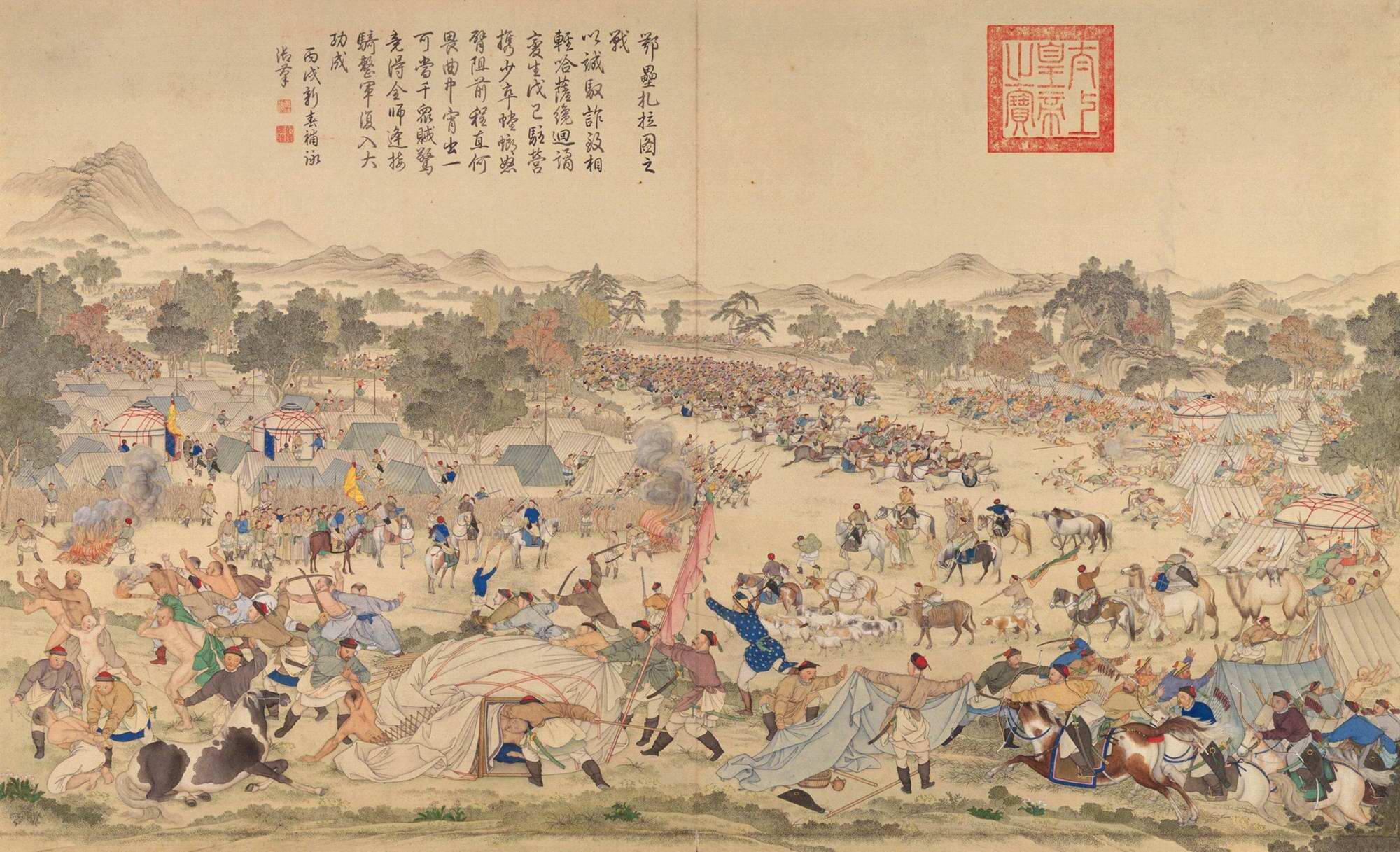

The Qing were the last dynasty in China, during a period in which the world’s great powers were increasingly concentrated in Europe. Qing emperors ruled over a multicultural and growing population; these rulers established the borders of modern China. But the dates that define this dynasty are not firm: Qing leaders proclaimed the state before 1644 and it lasted until 1912; the dates in between are less certain.
| 📅 Dates | 🧾 Event | 📝 Notes |
|---|---|---|
| 1616 | Nurhaci's creation of the Later Jin State. | Nurhaci reorganised and united Jurchen (Manchu) tribes. He also consolidated the Eight Banners military divisions. |
| 1636 | Hong Taiji adopts the Qing name. | Succeeding his father, Nurhaci, he set the Ming Dynasty overthrow in motion. |
| 1644 | The Qing seize control of Beijing | The Battle of Shanhai Pass gave Qing forces access to the capital city. This seizure marks the Qing Dynasty beginning. |
| 1662-1683 | The Ming resistance is finally defeated. | The final resistance group on Mainland China fell in 1662. The last Ming stronghold, in Taiwan, fell in 1683. |
| 1661-1799 | The Kangxi, Yongzheng and Qianlong reigns. | These three successive leaders oversaw the Kang-Qian Flourishing Age, the height of Qing rule. |
| 1839-1842 1856-1860 | The First and Second Opium Wars | British rule resisted Qing's mandate against opium. |
| 1850-1871 | The Taiping Rebellion | Alternate dates: Beginning: 1851, with the Jintian Uprising. Major hostilities' end: 1864 (with the fall of Nanjing) |
| ~1861-1895 | The Self-Strengthening Movement | Initiatives to strengthen and modernise the Qing military and economy. |
| 1894-1895 | The First Sino-Japanese War | This conflict ended with the Treaty of Shimonoseki signing. |
| 1899-1901 | The Boxer conflict and Boxer Protocol | The Boxer Protocol ended the Eight-Nation Alliance interventions. |
| 1911-1912 | The 1911 Revolution | The uprising ended with Emperor Puyi's abdication. |
| 12 February, 1912 | The last emperor’s abdication. | The Empress Dowager Longyu issued the imperial edict on behalf of her six-year-old son, Emperor Puyi. |


The Qing Dynasty Timeline
The historical record firmly establishes the end of the Qing Dynasty: 12 February, 1912. That's the day that Empress Dowager Longyu signed the Imperial Edict of the Abdication of the Qing Emperor. Her adopted son, the six-year-old emperor, was not legally old enough to do so himself. That single official act ended more than 2,000 years of dynastic rule in China.
However, unlike the Ottoman Empire timeline, dates in the Qing Dynasty timeline are not firmly set. For instance, sources cite the year 1644 as the official Qing Dynasty start - the year that Qing forces seized the capital, Beijing1. However, other documents peg the date to 1636, the year that the Qing name became official. That's where we, and the Qing early history, begin.
Beginning the Qing Dynasty History
The Jurchen people were a loose federation of tribes occupying the northeastern regions of modern-day China, an area called Manchuria2. These Manchu ancestors organised across two dynasties.
Jin Dynasty (1115–1234)
- Jurchans began unification
- they established military and administrative units
- ruled northern China until the Mongols defeated them
Ming Dynasty (1368-1644)
- Jurchen society broke into three main groups
- the Jianzhou leader, Nurhaci, reunited them
- his son/successor, Hong Taiji, changed the group's name to Manchu
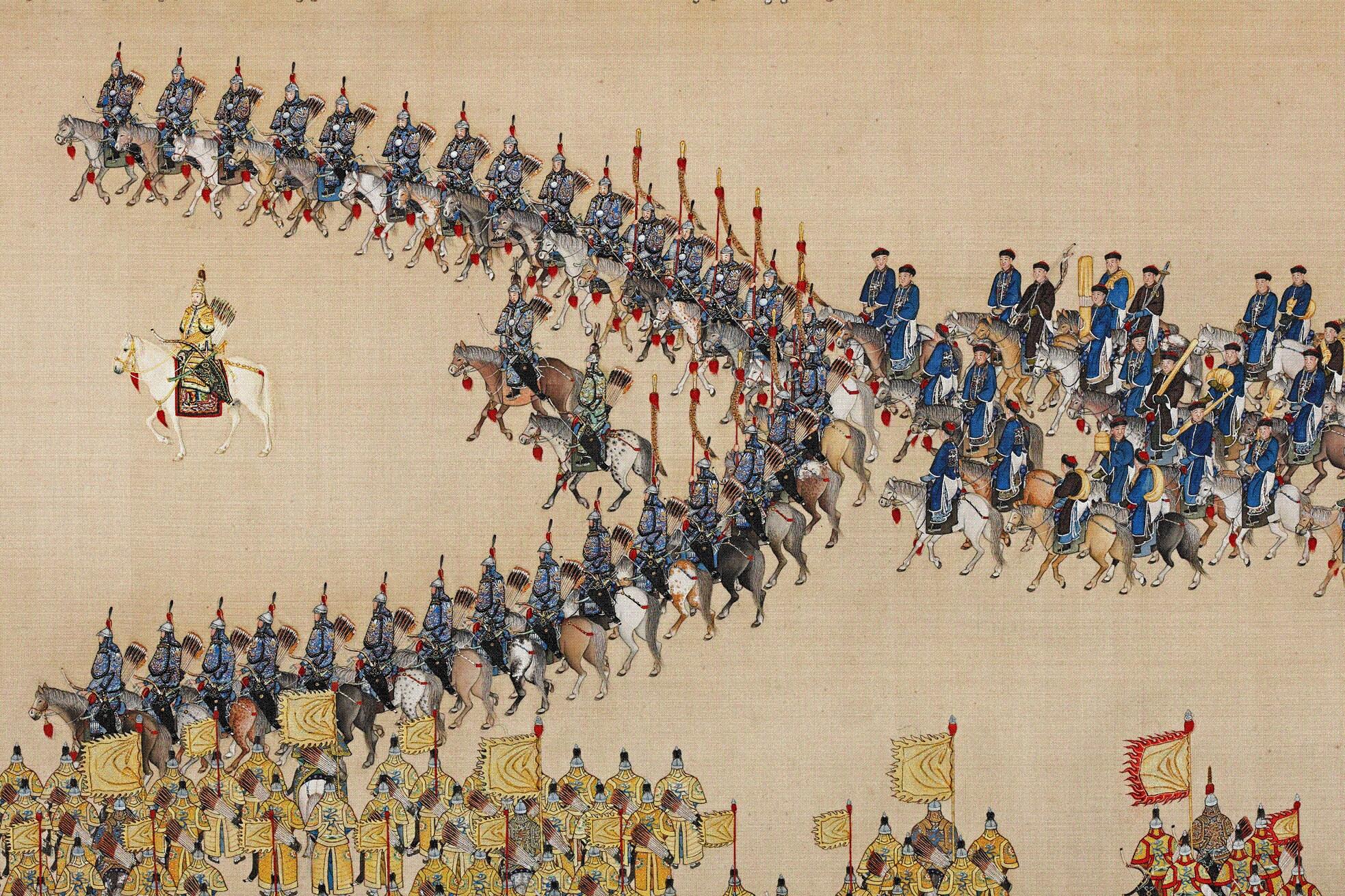
After reuniting the scattered tribes, Nurhaci consolidated the Eight Banner military system under his rule. His son, who assumed power after his death, declared the Qing Dynasty in 1636, after victorious battles over the Mongol Empire and Korean people. His declaration remained local for the nonce.
Red, yellow, white and blue banners identified the various Jurchen tribes, effectively forming an military caste system. These fighters were known as 'the bannermen'.
The now-powerful Manchu army directed its might towards Beijing, the seat of the still-ruling Ming emperor. Reaching the capital meant crossing the Shanhai Pass, the last Ming outpost protecting the country's northern plains. Hong Taiji died before that battle; his sons and brothers pushed on to Beijing.
How the Qing Seized Control of China
Things weren't so rosy in China during the late Ming Dynasty. A series of natural disasters, coupled with economic mismanagement, provoked resentment and uprisings, with the imperial palace their direct target3.
Peasant revolts and military uprisings are two different types of rebellion, though. While common people could do little to overthrow the emperor, military general Wu Sangui had many strategies to deploy.
Rebel leader Li Zecheng seized the capital's administrative reins.
General Wu Sangui opened the Shanhai pass, inviting the Manchu fighters in.
The Manchu warriors joined Wu Sangui's troops to defeat the rebel forces and retake the capital. This military alliance paved the way for Qing rule. To make the transition smoother, the new emperor kept many aspects of the Ming establishment, including key government figures and keeping Beijing as the capital.
Despite these monumental advances, Qing rule would not be absolute until decades later. Ming Dynasty loyalists and other groups did everything possible to resist the new leaders. Stability would not settle across the region until 1683, when the Kangxi emperor ascended to the throne.
The Qing Golden Era: Rule Under Kangxi, Yongzheng and Qianlong
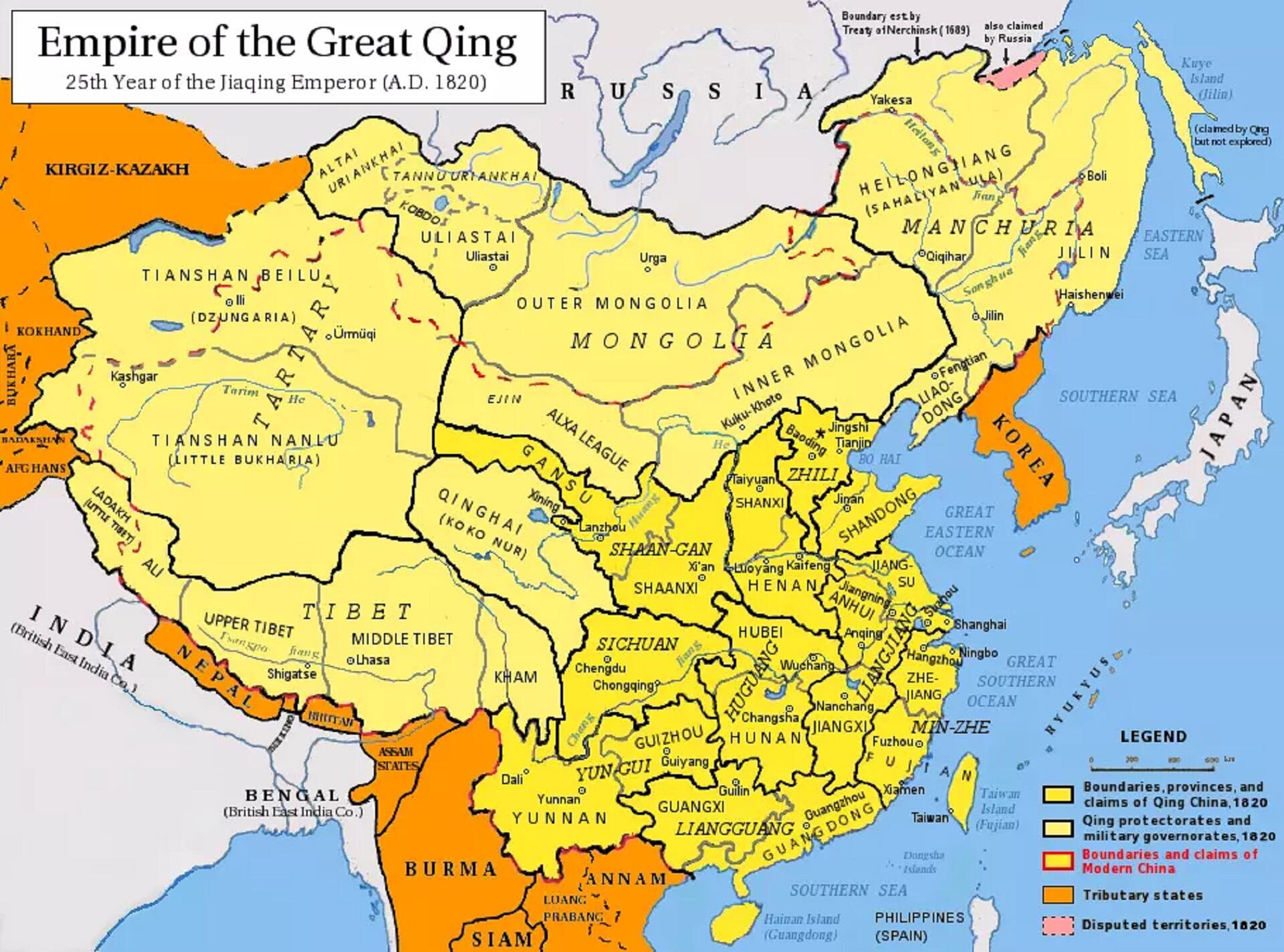
Today, China is a vast country; that's thanks to Qing Dynasty unification. In fact, Qing China was larger than today's Middle Kingdom. It stretched to the Russian Empire's borders, to include Mongolia, vast swaths of territory in the Northeast, and lands across the Tibetan Plateau, as well as Taiwan.
The Qing Golden Age stretched from 1683 to 1799. It was a period of high prosperity, territorial expansion, and socio-political stability.
Also called the Golden Age of Three Emperors4, the country tripled its population during this time. Increased agricultural output, coupled with political stability and growing economic strength, paved the way to a harmonious, productive society.
With peace blanketing the land, cultural expression had room to thrive. Literary and educational works such as Dream of the Red Chamber and the Kangxi Dictionary date from this period. Porcelain production, a part of China's massive industrial growth, doubled as works of art. Naturally, the empire was a great patron of all these initiatives.
Kangxi, Youngzheng, and Qianlong were the three emperors who oversaw territorial expansion, economic prosperity, and political stability. They melded their Manchu imperial traditions with established political and cultural systems to form the most stable era of dynastic rule in Chinese history.
Kangxi 1661–1722
- Qing Dynasty's 3rd emperor
- oversaw territorial expansion
- a champion of literature
- China's longest-serving emperor
Youngzheng 1723–1735
- succeeded Kangxi
- spearheaded government reform
- fought corruption
- formed the Grand Council
- the most autocratic leader
Qianlong 1735–1796
- succeeded Youngzheng
- favoured military rule
- a patron of art
- wrote prolifically
- compiled the largest collection of Chinese history books
Like all the the greatest empires ever, the Qing Dynasty was plagued with corruption, constant warfare, and a society growing stagnant. Though quite industrial, China nevertheless suffered from foreign pressure and competition. These factors, coupled with constant military action, brought about the end of the High Qing Era.
Foreign Pressure and the Opium Wars
During the Qing Golden Age, China became the wealthiest country in the world. It had commodities - grain, rice, and tea, as well as silk, porcelain, and art. In Europe, goods from China were called chinoiserie; they were highly prized and much sought-after.
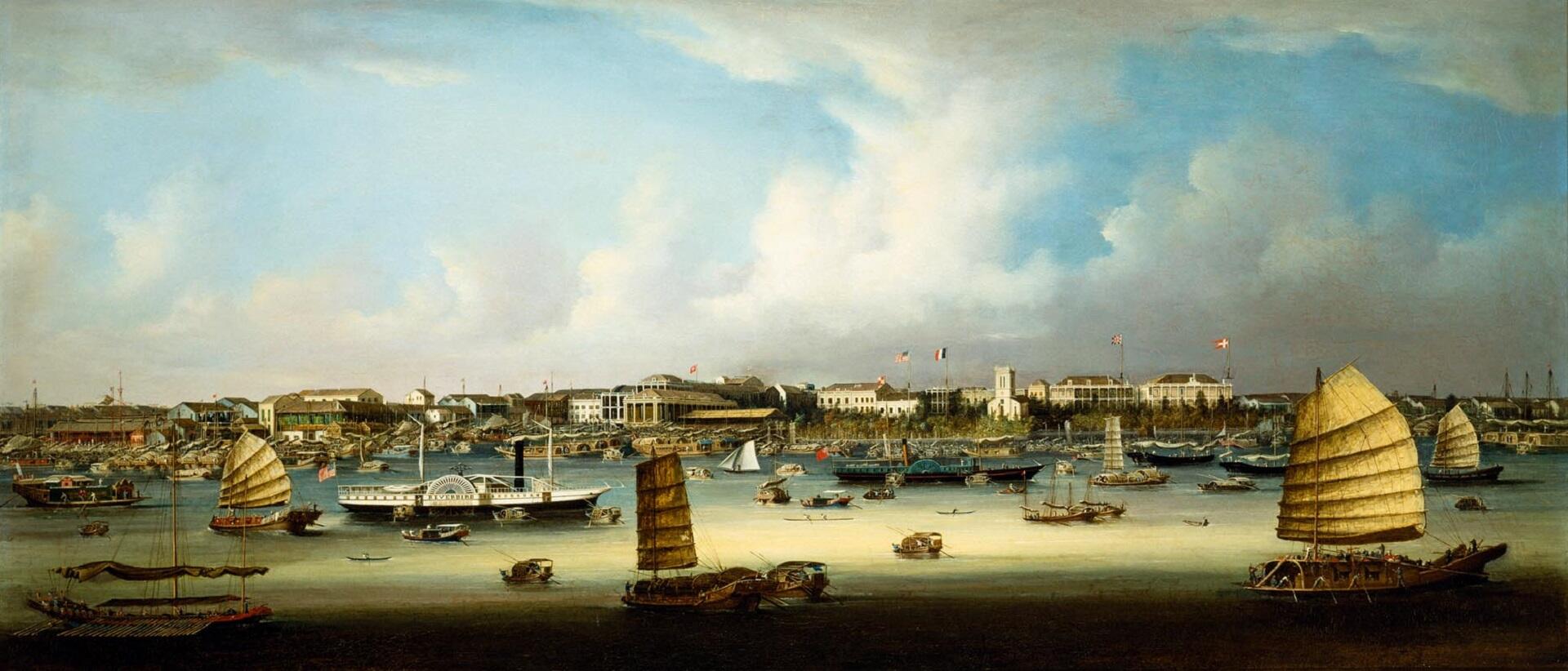
A system of foreign trade control during Qing China to protect the country from external political and commercial threats.
Naturally, other world powers couldn't merely look on as China gathered so much wealth. the British Empire was in full global expansion mode during that time, and it had an insatiable thirst for Chinese tea. The Chinese had no similar craving for anything western, so Chinese merchants insisted on silver as payment from every western buyer, even for their tea.
Those trade terms put the Britain's finances in a bind. Having just captured India, its dominant trade group began piping opium from India into China. There, they could sell the drug for silver, which they funnelled back to the empire for tea purchases.
First Opium War (1839-1842): British forces battled Qing officers seizing opium at the Canton port. Second Opium War (1856–1860): forced the legalisation of opium.
The Qing government had banned opium in 1729 but battled smugglers and complicit Chinese drug peddlers for nearly 100 years. By the 1830s, such a large population was addicted that the emperor had to tackle the problem at the source; still, the drug incursions didn't stop.
Doing everything possible to protect Chinese society and integrity, Qing leaders gave into ever more insistent foreign demands. The British gained the right to trade on Chinese soil through the Treaty of Nanjing, and gained access to five Chinese ports. The Dutch settled in Macau and, soon, other foreign entities came pouring in.
Rebellion and the Late Qing Crisis
As the Roman Empire demonstrated, unrest is a common feature of late-stage decline, no matter how good life might have once been. The population had grown unmanageably large and millions were drug-addicted.
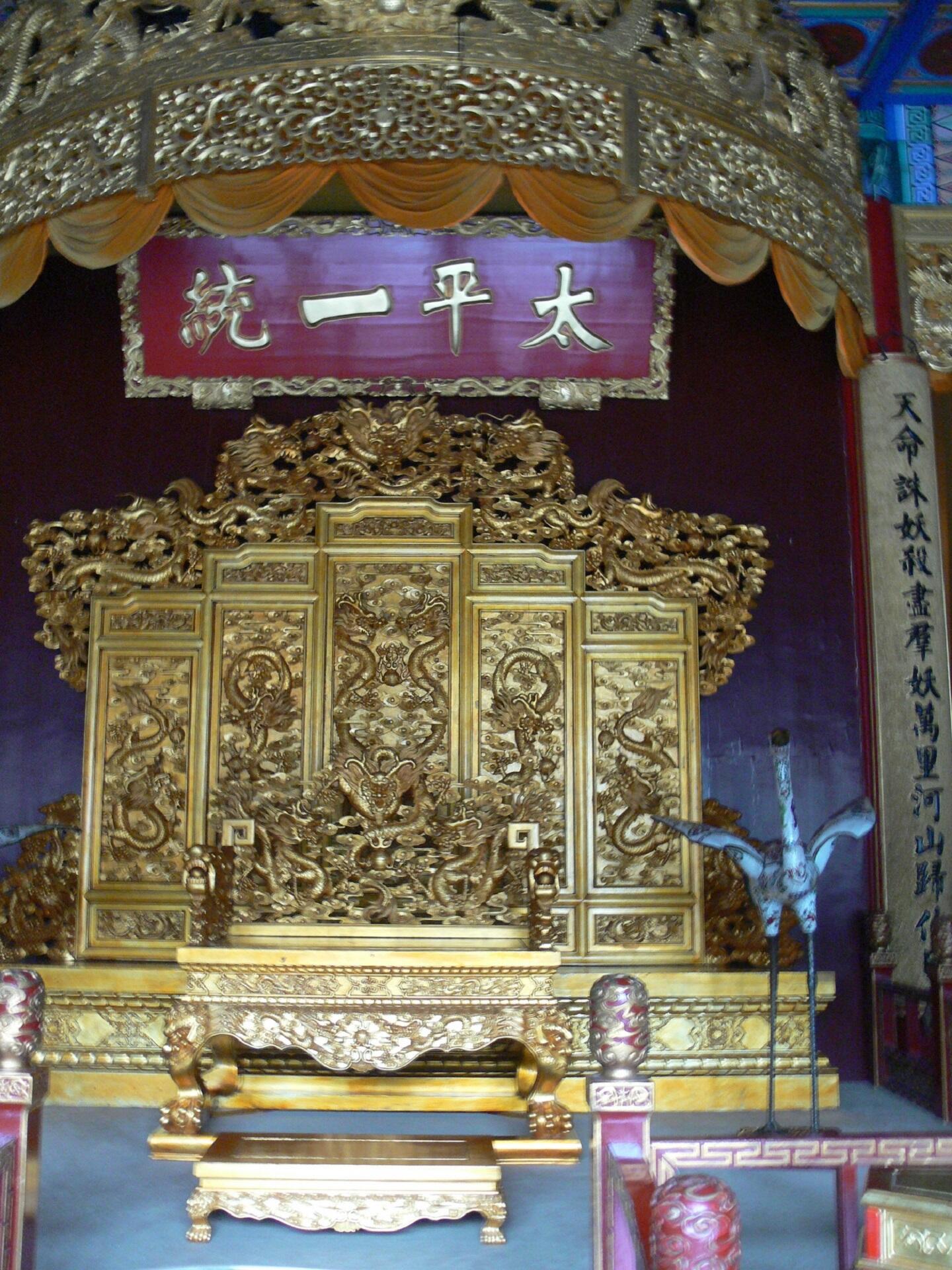
Corruption made it hard for individuals to prosper; administrators were more interested in self-dealing than managing empire or citizen affairs. Foreigners were taking over ever more lands and businesses, siphoning off local prosperity. Conditions were ripe for rebellion.
The Taiping Rebellion erupted in 18505. The Taiping Heavenly Kingdom, a Western-influenced Christian group, took on the Qing empire, demanding gender equality, land redistribution, and the end to foot-binding and the opium trade.
The uprising lasted for 14 years, devastating 17 provinces and killing millions. The Qing forces won, but only just; putting this rebellion down left the empire weakened.
Local governments and military leaders saw their chance to seize power for themselves, causing yet more unrest. The empire’s weakness, coupled with decentralised governments and continuing foreign pressure left China with little to repel war from outside.
The Boxer Rebellion
The empire was ill-prepared to fight the first Sino-Japanese War (1894-1895). Suing for peace cost the Qing House millions in reparations, along with Taiwan and other lands. Across northern China, a group called the Boxers were fed up with foreign Christian influence and the empire’s inability to do anything about it.
They took it upon themselves to battle foreigners and any Chinese who acted like them. After some resistance – mainly due to pressure from westerners on the imperial palace, the Qing court began supporting the Boxer movement.
By the time the Boxers rose up, foreigners were reaping substantial benefits and riches from life in China. After the initial shock of Chinese pushback, representatives from the eight nations occupying Chinese lands banded together. They called on their countries’ militaries to invade Beijing and rescue them.
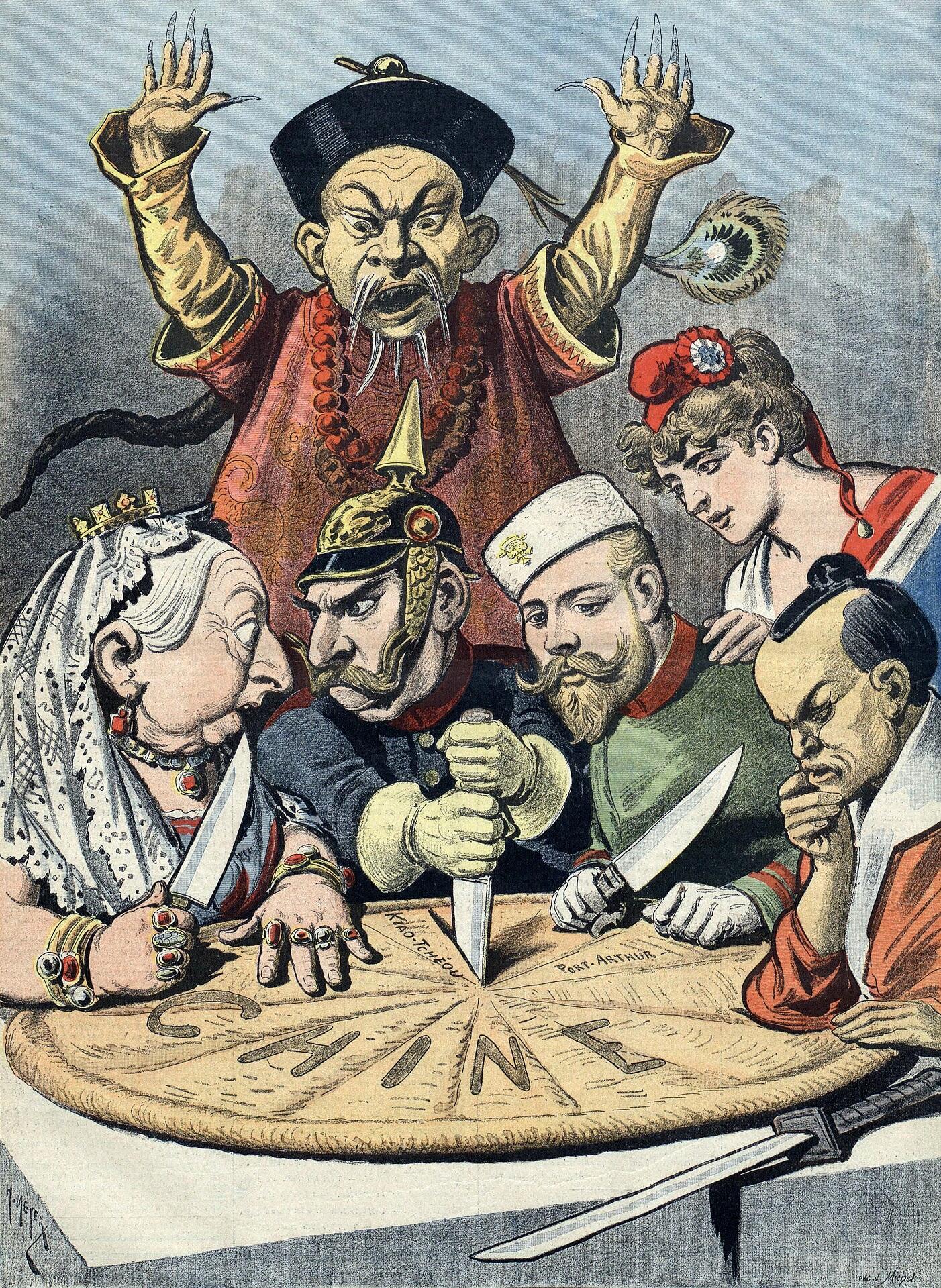
Troops from the Eight-Nation Alliance began their Beijing occupation in August 1900. They defeated Qing forces and put down the Boxers. The Empress Dowager Cixi, the regent administering on behalf of her young son – the emperor, fled to Xi’an with other government officials. Their decampment left the Chinese capital and countryside open to foreigner brutality.
The Last Dynasty in China: Why Did it Fall?
In the end, the Qing refusal to cede any power, and its concessions to foreigners, led to the dynasty’s downfall. From the first Opium War on, conservative forces began formulating alternate government policies. By October 1911, when Qing leaders attempted yet more reforms, the people had had enough.
Every good history teacher will tell you that empires fall for a number of reasons; it’s never a single fault. This table summarises them all, and points to their causes.
| 🔄 Cause | 🔎 Effect |
|---|---|
| Fiscal and administrative pressures | More of the population was left under-served over time. |
| Disagreement over the pace and direction of reform. | Reforms did not reach far enough or benefit enough of the population, or favoured one segment over another. |
| The limited effectiveness of late constitutional changes | As people's stake in governance grew, they demanded more legal rights. |
| Military defeats | These defeats cost the empire much of its treasure and resources. |
| Loss of confidence in the imperial government | Unable to protect the empire, people stopped supporting it. |
| Revolutionary nationalism | Popular uprisings demanded more democratic governance. |
| Regional military power | Local militaries wrested control over their domains from the empire. |
| Foreign intervention and imposed treaties. | Foreign governments far out-gunned and out-manoeuvred Chinese imperial representatives. |
The end of Dynastic China
One by one, provinces seceded from the empire, forming their own governments. Several regional leaders emerged, who then negotiated with imperial representatives to end the monarchy. In February 1912, the child emperor Puyi abdicated, which allowed the establishment of the Republic of China.
Still, turmoil continued as rival factions vied for power over the whole nation. For 37 years, through several republican governments, civil war raged, until Mao Zedong emerged victorious. His rival, Sun Yatsen, fled to Taiwan, which Japan had surrendered at the end of the 2nd World War. On 1 October 1949, Chairman Mao declared the establishment of the People’s Republic of China.
References
- Fercility. “The Qing Dynasty — China’s Last Dynasty.” 2019, https://www.chinahighlights.com/travelguide/china-history/the-qing-dynasty.htm. Accessed 20 Aug. 2026.
- dhwty. “How the Jurchen Tribes Conquered China.” 8 May 2020, https://www.ancient-origins.net/ancient-places-asia/jurchen-tribes-0013681. Accessed 20 Aug. 2026.
- Libre, Texts . “2.6: Silver and the Ming Dynasty.” Humanities LibreTexts, 7 July 2022, https://human.libretexts.org/Bookshelves/History/World_History/Modern_World_History%3A_New_Perspectives_(OERI)/02%3A_Global_Interactions_-_1450-1650/2.06%3A_Silver_and_the_Ming_Dynasty. Accessed 20 Aug. 2026.
- Xu, Baofang. “Golden Age of Three Emperors (康乾盛世).” Contextual Dictionary of Chinese Cultural Knowledge, 2025, pp. 565–566, https://doi.org/10.1007/978-981-99-5009-6_11188. Accessed 20 Aug. 2026.
- The Editors of Encyclopedia Britannica. “Taiping Rebellion | Causes, Effects, & Facts.” Encyclopedia Britannica, 15 Feb. 2019, https://www.britannica.com/event/Taiping-Rebellion. Accessed 20 Aug. 2026.
Summarise with AI:
Did you like this article? Leave a rating!

 Loading...