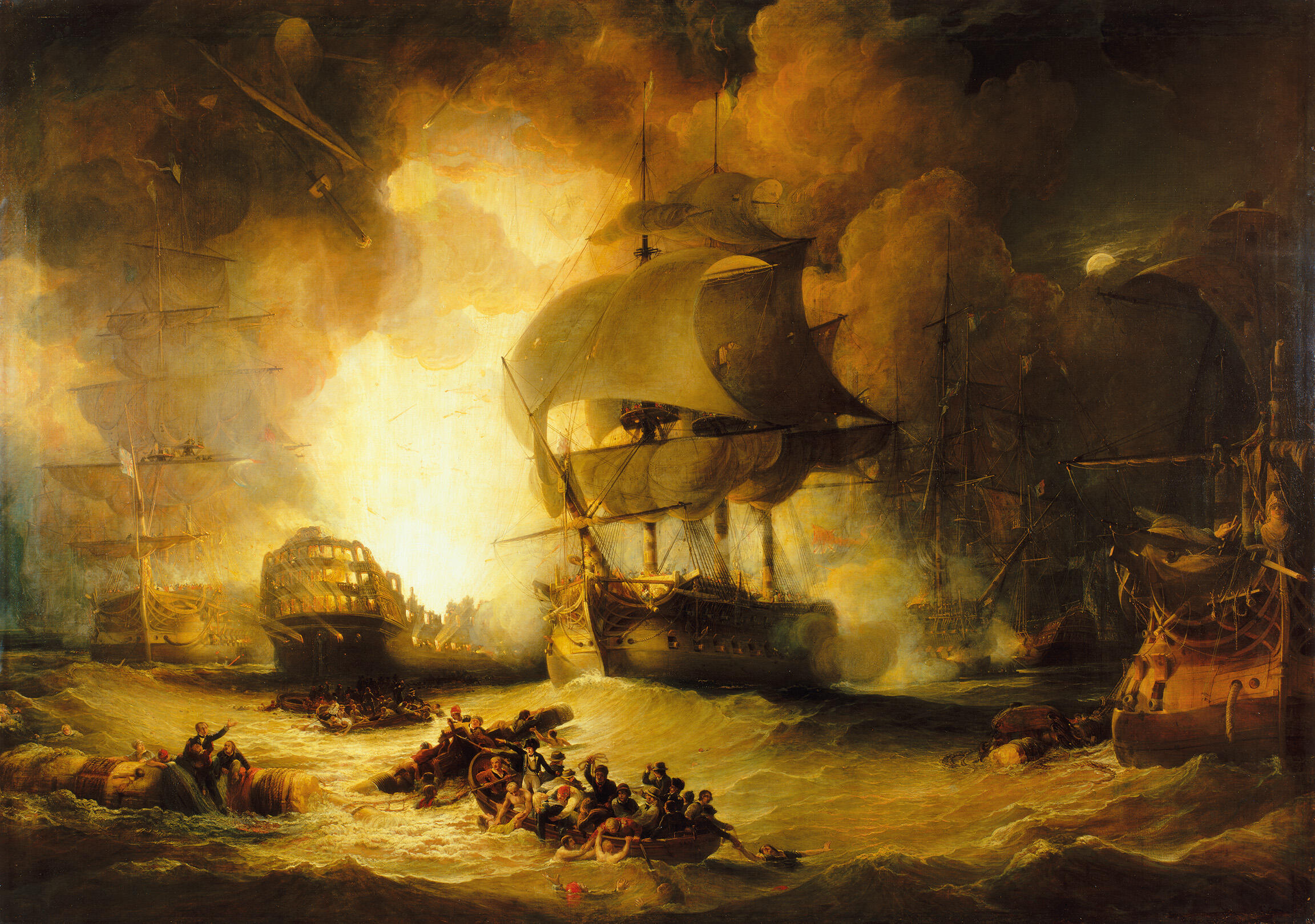

If you spend ten minutes looking through history, you’ll certainly notice that this word ‘empire’ comes up an awful lot: the Roman Empire, the British Empire, etc. But what exactly do we mean when we say this? This article endeavours to answer questions of empire and outline the 10 largest empires in history.
| 👑 Empire | 📅 Years it ruled | 🧩 Empire size |
|---|---|---|
| British Empire | 16th–20th century | around 35.5 million km² The largest empire in history overall. |
| Mongol Empire, including the Yuan Dynasty | 13th–14th century 1271–1368 | around 24 million km² The largest contiguous land empire in history. |
| Russian Empire | 1721–1917 CE | around 22.8 million km² |
| Qing Dynasty | 1644–1912 CE | around 14.7 million km² |
| Spanish Empire | 15th–19th century | around 13.7 million km² Primarily a seagoing empire |
| French Colonial Empire | 19th–20th century | around 13 million km² |
| Umayyad Caliphate | 661–750 CE | around 11.1 million km² |
| Portuguese Empire | 15th–20th century | around 10.4 million km² Primarily a seagoing empire. |
| Ottoman Empire | 1453-1923 CE | around 5.2 million km² |
| Roman Empire | 27 BCE-476 CE | around 5 million km² The most impactful empire in history. |


What Is an Empire?
Let’s think about what actually makes an empire. It’s not about how much land it covers or how many people are subject to its rule.
A number of individual nations that are all controlled by the government or ruler of one country.
Two conditions must exist to make an empire. Conquest, typically over many foes, is the essential ingredient. The second is almost absurd in its simplicity: the conquering ruler declares himself emperor. Such was the case with Napoleon Bonaparte, who proclaimed his status before engaging in conquest.
Despite concise definitions dictionaries offer, scholars and historians contest the term1. They apply the term inconsistently and its standard definition applies to concepts outside of conquering and ruling territories. For instance, industry magnates rule over their business empire.
People often mistake large, wealthy countries with many allies for empires. The key distinction is that those countries don't rule over their allies. If they ever do, we might apply the 'empire' label to them.
How Can We Measure the Size of an Empire?
The table in this article’s introduction lists two metrics typically used to measure empires: their approximate territory size and their duration. Standard measures further distinguish between ‘largest globally’ (British) and ‘largest contiguous’ (Mongol). Science also ranks them by population, though that’s an imprecise measure because records are unreliable the further in history we look.
Empires may also be measured by the size of its economy, specifically, its economic output. Finally, power projection gives researchers an idea of the empire’s magnitude. The Roman Empire rules this metric.
This article prioritises peak land area as the distinctive measure.
The Largest Empires in History
As more evidence comes to light about past civilisations, historians and archaeologists label more societies empires. Even those that left few written records and had minimal reach, such as the Norte Chico civilisation in Peru, is given the ‘empire’ title2. This is another reason that the term is so contested.
This chart focuses on the largest empires from 1000 CE (of the current era) to the modern period. Land area remains our target metric, but factors such as influence and impact determine their inclusion on our list, too.
| 👑 Empire | 📐 Territory size | 📅 Approximate peak date | 📝 Notes |
|---|---|---|---|
| British Empire | ~ 35.5 million km² | early 1920s | By most metrics, it was the largest empire in history overall. |
| Mongol Empire | ~ 24 million km² | 1279 - 1394 | It was the largest contiguous land empire ever. |
| Russian Empire | ~ 22.8 million km² | 1866 - 1867 | It was its largest in that period, and also at the height of its power. |
| Qing Dynasty | ~ 14.7 million km² | 1683 - 1799 | This period, the High Qing era, was also its most prosperous and most culturally advanced. |
| Spanish Empire | ~ 13.7 million km² | 1790 | The Spanish Empire reached peak military and political power in 1559. Its Golden Age of peak influence was 1580–1640. |
| French Colonial Empire | ~ 13.5 million km² | 1936 | The first French Colonial Empire covered 10 million km² and saw its peak in 1680. |
| Portuguese Empire | ~ 10.4 million km² | 1525 | The seagoing empire held territories as far away as Macao, Hormuz, and Malacca. |
| Ottoman Empire | ~ 5.2 million km² | 1683 - 1699 | This empire Golden Age lasted from 1520 to 1566, when it exerted peak power. |
| Roman Empire | ~ 5 million km² | 117 | The Romans made the most lasting impact on the world. |
| Dano-Norwegian Empire | ~ 2.7 million km² | 1800 | Renowned for maritime dominance. The Danish East India Company competed with the British Empire to bring tea to Britain. It was the first empire to banish the slave trade. Today, it maintains its global shipping power through Maersk |
Which Was the Largest Empire Ever?
By any metric, that title goes to the British Empire. It wasn't only the largest by territory at its peak, it also ruled the over most people: around 25% of the global population (estimated). It became the wealthiest empire in history in the late 1700s, and the largest economy by nominal GDP (gross domestic product) less than a century later.
The First Industrial Revolution (1760-1840) made Britain the 'workshop of the world'. Technological advances drove people to the country for work, which drove up domestic costs. Military engagements drained state coffers almost as quickly as industry could fill them.
Despite the pull on the country's finances, London became the world's top financial centre; adding to the empire's power. Today, London remains a financial powerhouse, though its status is significantly diminished.
Which Was the Largest Contiguous Land Empire?
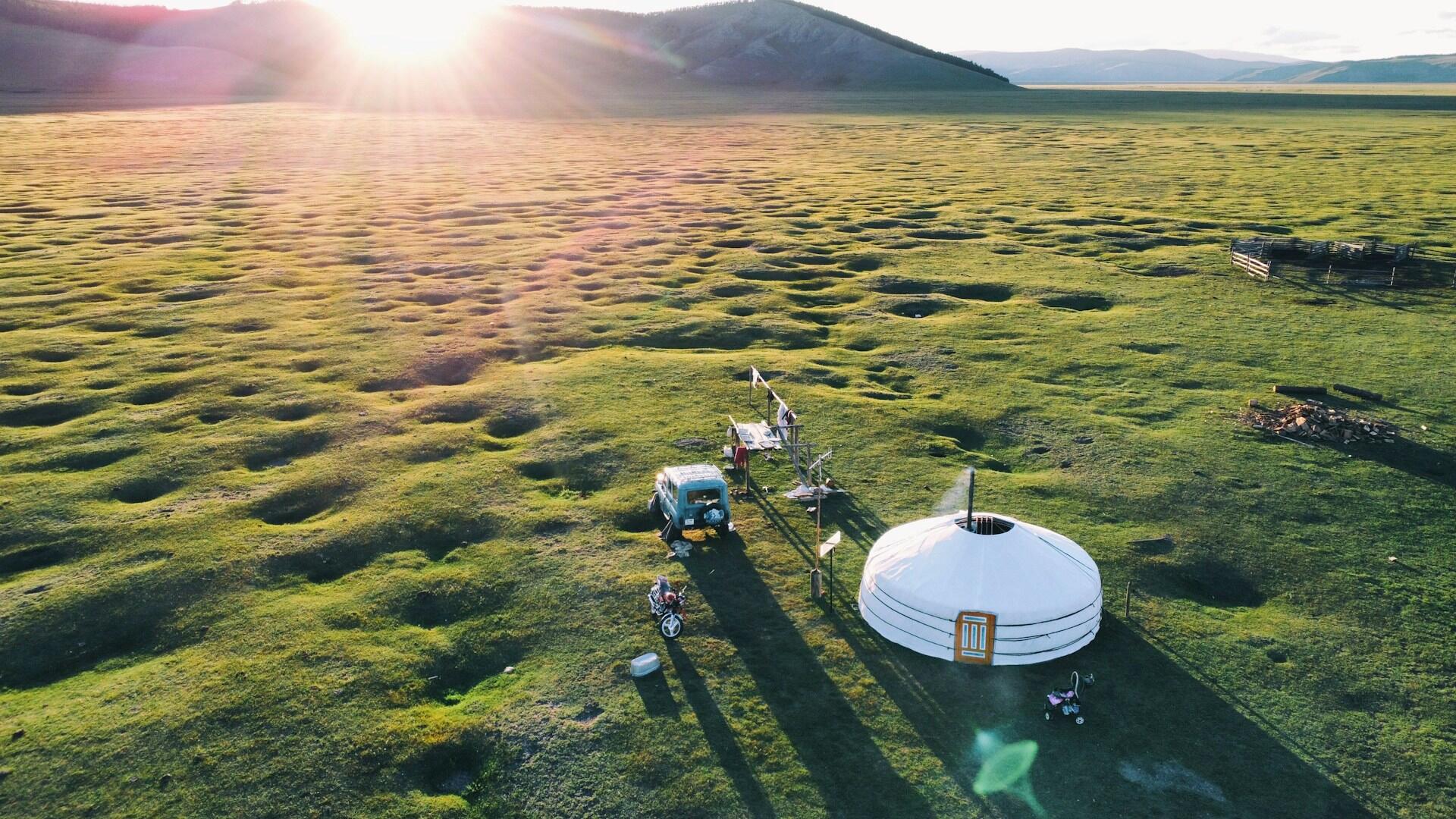
This is a crucial empire size comparison metric. Most empires - British, Spanish, Portuguese and others - crossed waters to reach new territories. By contrast, the Mongols rode their horses in every direction, battled whoever held those lands, and claimed those riches for themselves.
Contiguous: a land empire; all the empire's lands touch without crossing water.
Thalassocracy: a maritime empire; territories lie beyond bodies of water, requiring a navy to reach them.
Like other imperial powers, The Mongol Empire struggled with leadership and succession. One notable instance was the contest between Kublai Khan and Ariq Böke, his cousin. Their rivalry provoked a four-year civil war, which Kublai Khan won. As he was living in China, he administered the Mongol government from there while also leading the Yuan Dynasty.
Which Empire Ruled the Greatest Share of the Population?
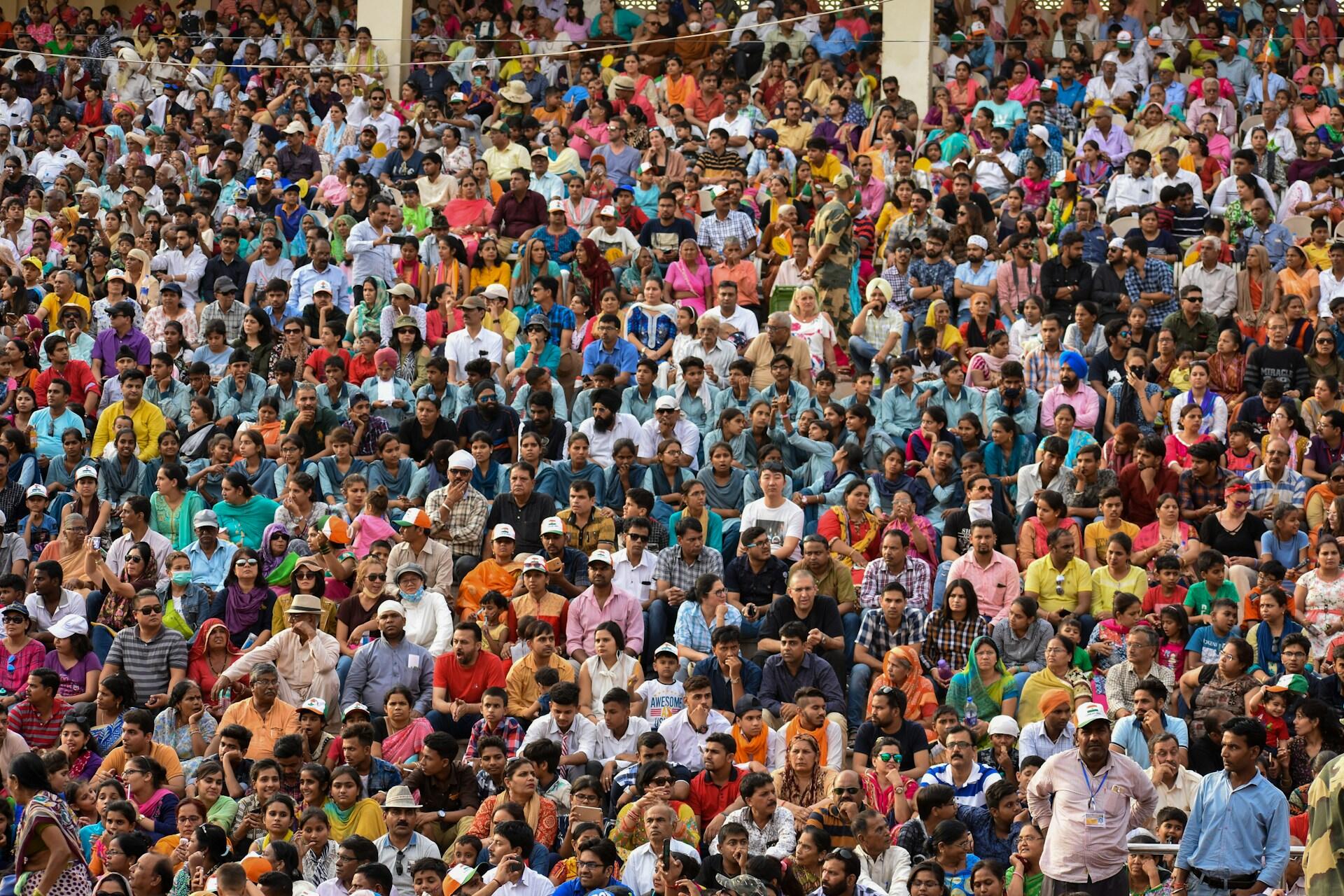
This is a tricky question, even if we only consider the empires that ruled from 1000 CE onwards. Censuses weren't standardised for most of humans' statistical history. And reasons for taking censuses varied3, with certain populations disregarded because they didn't fit a specific profile.
For instance, The Romans were famous for conducting censuses every five years. However, they only counted their citizens; migrant workers and non-citizens were not included. This was one reason for Rome's economic troubles.
Often, historians must rely on estimated population counts for specific periods. If census records are available, they must nevertheless consider other indicators for clues about true population numbers.
But these numbers are estimates, often framed as 'high-count' and 'low-count'. The British Empire,
considered the largest overall, is said to account for a population that totalled 25% of global count. That is not a concrete fact; that statistic can only be estimated.
Which Empire Lasted the Longest?
This question is also tricky because, as you read above, the ‘empire’ label is often attached long after the empire crumbled. Here again, the British Empire makes our point: no one is sure exactly when it began and ended4.
Setting such an empire’s beginning and end dates retroactively is typically more speculative than factual, even though plenty of research goes into setting them. Furthermore, determining an empire’s duration depends on who makes the determination. For instance, most records show that the Ottoman Empire lasted for 623 years (1299 – 1922); a sizeable year count.
1299: chosen because the Islamic and Christian calendars changed centuries at the same time. 1302: chosen because the Battle of Bapheus boosted the Ottomans from ‘tribe’ status to a legitimate state.
For these and other reasons, nobody can definitively conclude which empire ruled the longest. At best, the historical record presents approximate duration based on a number of factors. With this reasoning, we can count the Ottoman Empire as one of the longer-lasting in history.
Which Empire Made the Most Lasting Impact?
This question is both easier and more complicated to address. Straight off, we can say that the Roman Empire had – and still has – the most obvious impact.
- The Roman language: Latin devolved into five modern languages; the Romance languages. Latin remains the language of law and medicine.
- Religion: Christianity and the Catholic faith first gained legal status during the Roman Empire.
- Government: many of today’s government systems, including roles of senators and leaders, come from Roman structures.
- Military: most of the world’s military structures – ranks, divisions, capabilities, and promotion systems – trace back to the Roman army.
- Infrastructure: Roman roads, viaducts, and aquaducts served as inspiration for today’s built environment.
We may consider the British Empire impactful because the English language is now the world’s lingua franca; it’s spoken everywhere. We can also credit it with the parliamentary system of government, which operates across the European Union, Oceania, parts of Africa, and in Asia.
But then, the question arises: impactful for whom? Actions Imperial Russia took were most impactful to the Russian Federation today, as well as the territories it controlled at the height of its power. However, that influence didn’t move far beyond those borders, even as they impact the modern world.
Why Do Lists of the Largest Empires in History Disagree?
Throughout this article, you’ve read about the challenges in defining empire and quantifying them.
These factors and others make measuring empires an arduous task. Furthermore, we must ask, “Who’s doing the measuring”? Invariably and despite the best efforts, bias creeps into statistical analysis. It’s perfectly natural for British historians to claim that their empire was the biggest richest, and most impactful. A Russian historian likely wouldn’t come to the same conclusions.
China's Qing Dynasty – and dynastic China, in general, might be the rare exception. The Chinese have maintained written records since at least 1250 BCE. By the time of the Qing Dynasty (1644-1912), civil service, record-keeping, and imperial operations were well-entrenched.
However, Qing China suffers from the same statistical loopholes every other empire does. China’s territory was neither defined nor unified, as it is today. Past censuses counted relevant populations, not the entire population. So, nobody can claim any Qing Dynasty statistic as definitive, either. Save for perhaps its start and end dates.
References
- Griffiths, R.D. On the limits of empire. Int Polit 62, 1300–1320 (2025). https://doi.org/10.1057/s41311-025-00675-z. Accessed 28 Aug. 2026
- Paul, James . “Empires in World History.” Archive.Globalpolicy.Org, Oct. 2005, https://archive.globalpolicy.org/component/content/article/155-history/25992-empires-in-world-history.html. Accessed 28 Aug. 2026.
- Editors, Brittanica . “Census | Facts, Definition, Methods, & History.” Encyclopedia Britannica, 16 Aug. 2026, https://www.britannica.com/science/census. Accessed 28 Aug. 2026.
- Brain, Jessica. “Timeline of the British Empire - Historic UK.” Historic UK, 8 Feb. 2019, https://www.historic-uk.com/HistoryUK/HistoryofBritain/Timeline-Of-The-British-Empire/. Accessed 28 Aug. 2026.
Summarise with AI:
Did you like this article? Leave a rating!

 Loading...