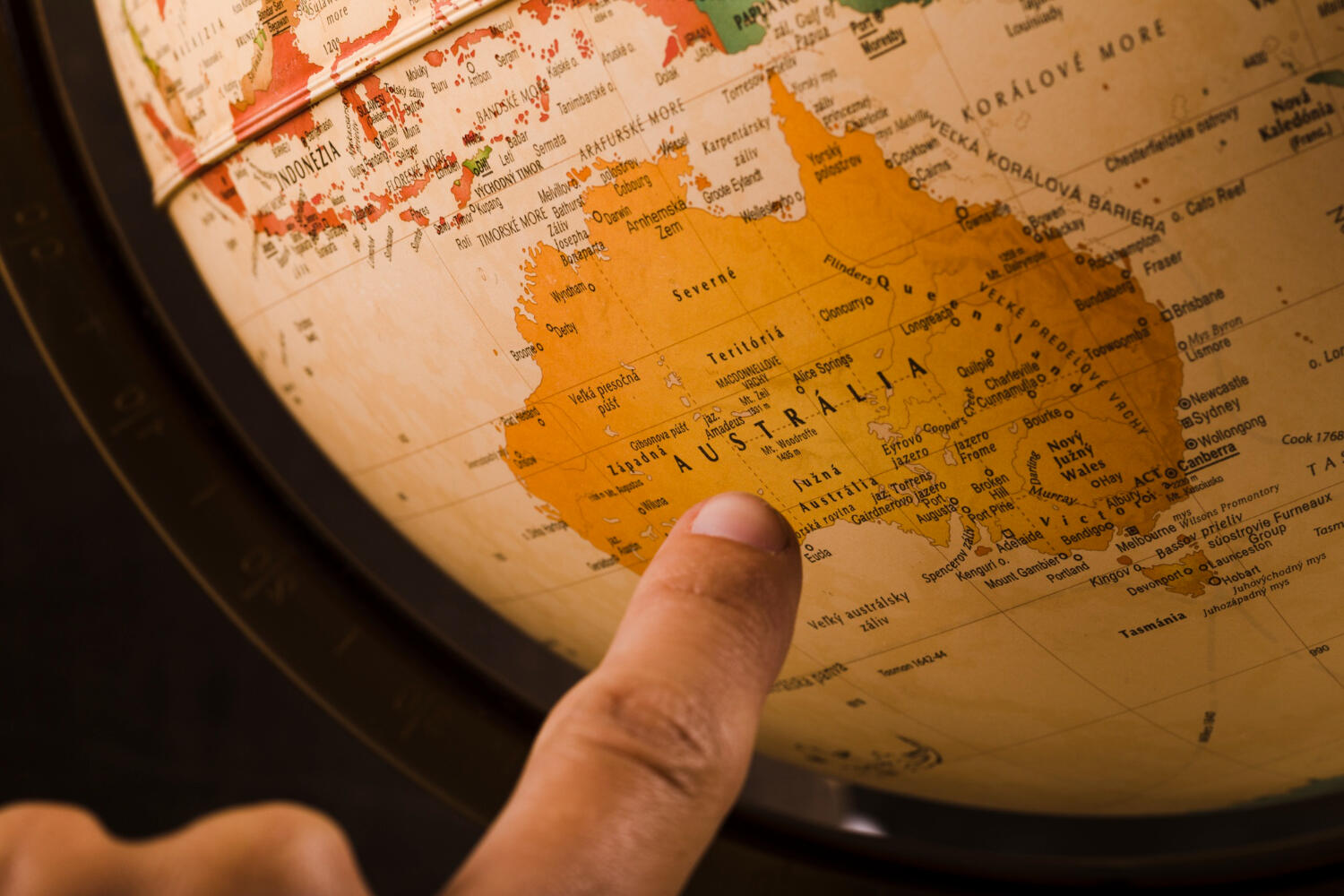

Australia is home to one of the oldest continuous language families in the world. For tens of thousands of years, First Nations people have been developing hundreds of language traditions within their communities across the continent. After colonisation, many languages became threatened. Today, many people are working hard to keep traditional Indigenous languages alive.


History of Native Australian Languages
The anthropological history of ancient Australia, leading up to European contact in the 17th century, is woefully under-researched. However, the amount of information recorded and remembered through oral histories within clans and language groups could offer key insights.
Be that as it may, the available information from a Western research perspective still has much to be discovered.
What is known on a broad scale is that Aboriginal languages developed over thousands of years. Written records, and therefore the knowledge of how ancient languages worked in Australia, only date back about 6,000 years, long after the oldest recorded evidence of human civilisation in Australia (~50,000 to 60,000 years).
Dive deeper into the history of Indigenous Australians.
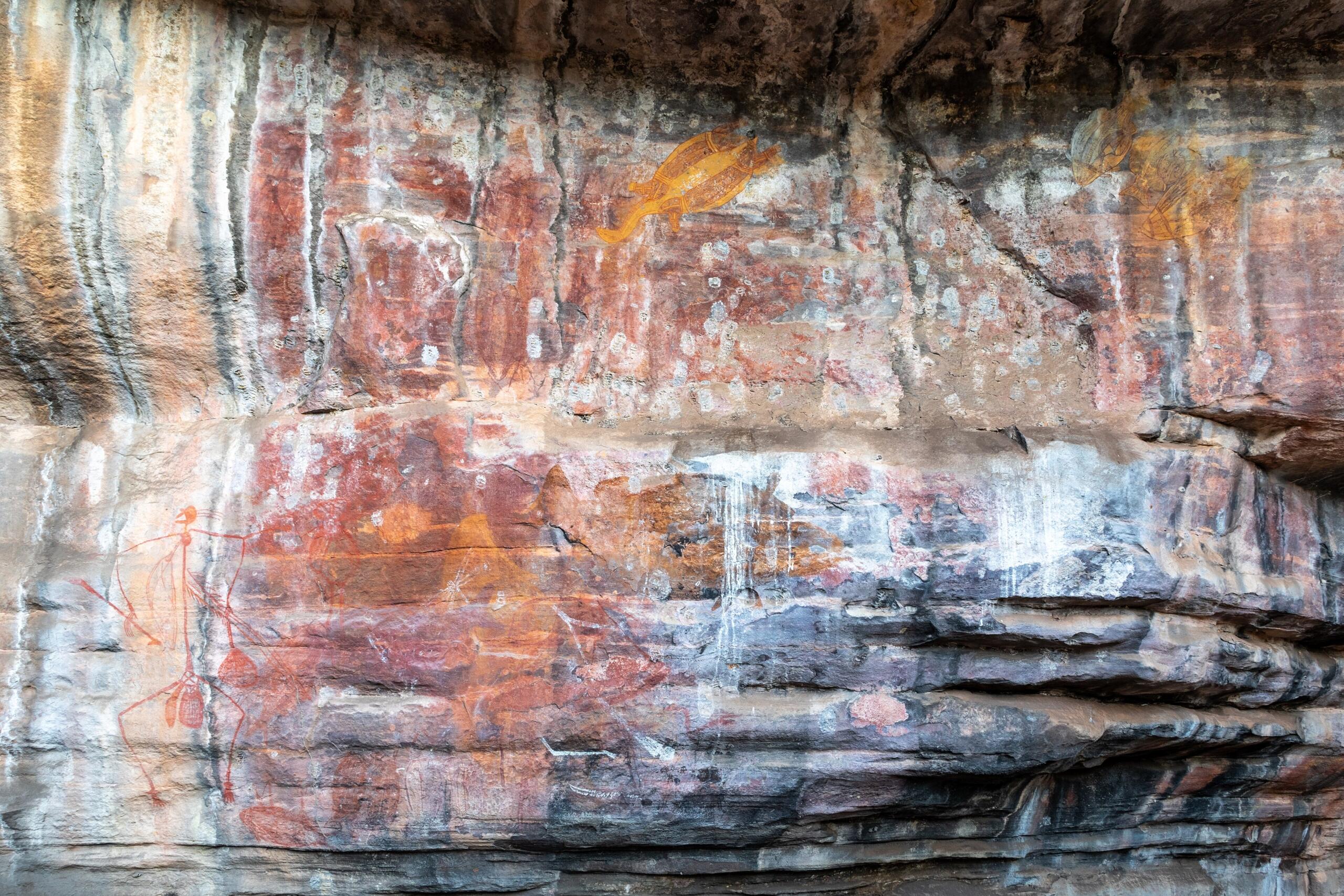
Linguists believe Indigenous Australian languages may have started diversifying in those early years as people spread across the land, as evidenced by the wide variety of known languages. Each group of Aboriginal people formed its own language or dialect over time, influenced by the local environment and cultural practices.
In some areas, neighbouring groups could understand each other even though their dialects were different. In other regions, the languages were entirely different and mutually unintelligible.
active languages across the country
languages actively taught to children
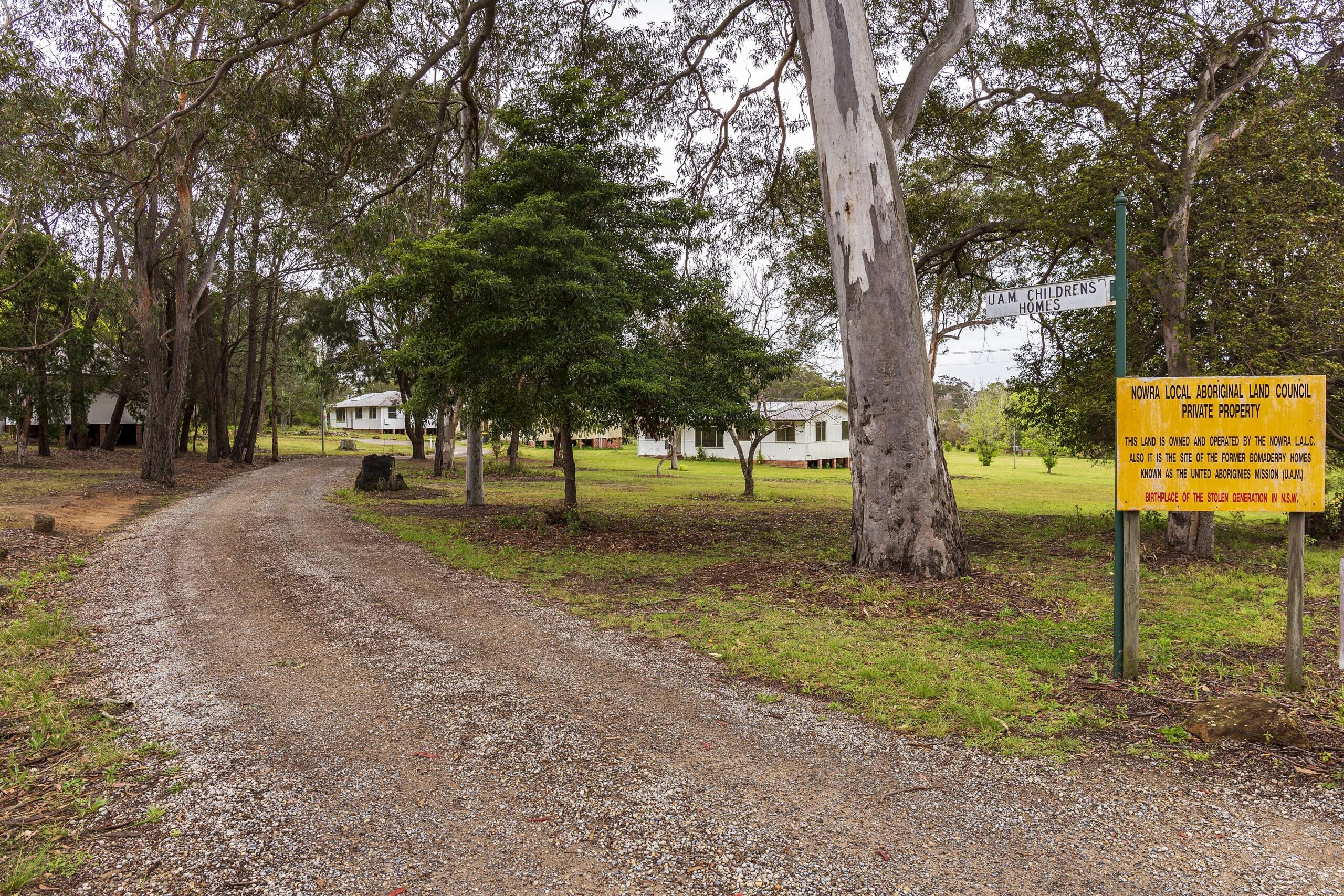
With the arrival of Europeans and colonisation in 1788, many Aboriginal languages were sadly threatened as groups were destroyed and speakers suppressed.
Colonisation led to widespread displacement, death, and restrictions on cultural practices, which discouraged or forbade First Nations people from speaking their languages.
By the 20th century, about 100 languages were either extinct (no remaining native speakers) or on the brink of extinction. Today, reconciliation and conservation efforts have begun to revive some of the languages. While only a handful, about 12, are regularly taught across the country, advocates are working to increase the number of languages being taught to children and adult learners.
Language is part of our songlines, stories, spirituality, law, culture, identity and connection. Language transfers important knowledge passed down from our Ancestors and Elders that guides us.
Lynnice Church, Ngunnawal
The increase of intra-continental trade, cattle ranching, inter-cultural marriages, and the mixing of different clans through forced removal and relocation or through voluntary movement to different cities also caused many more dialects and pidgin languages to evolve over the years.
Timeline of Aboriginal Language History
Language paints a picture of the history of a people, place, and culture. Indigenous Australian languages show a long and fascinating progression of people, their social customs, and their relationship with Country over thousands of years.
More research must be done to fill in the knowledge gaps, but researchers generally agree on these major milestones:
50,000+ years ago
First People Migrate to the Land
Research suggests groups migrated from Sunda (modern-day Bali, Borneo, Java, Sumatra and the Malay Peninsula) to Sahul (modern-day Torres Strait Islands, Papua New Guinea, Australia, and Tasmania) via two different routes. The first areas to be settled were the areas that are now New Guinea, the Torres Strait Islands, and the Northern coast of Australia.
8,000 years ago
Formation of the Torres Strait
The supercontinent Sahul was broken up into the modern-day islands due to rising oceans. Papua New Guinea, the Torres Strait Islands, and Tasmania were separated from the Australian mainland, causing languages on each landmass to isolate and evolve on their own.
Pre-1788
Language Develops as Clans Grow and Spread
Each clan that broke off from its main group experienced natural language evolution that suited its particular mob’s needs, preferences, activities, culture, and relationship to land. About 250 known languages developed, with hundreds of dialects among them.
1788
Colonisation Begins
British colonisation disrupts natural language use, causing many languages to become endangered.
19th and 20th centuries
The Lost Generations
Displacement and assimilation policies forcibly erase many languages from generations of First Nations people. Over 100 languages were lost by the mid-20th century.
Late 20th century
New Policies Seek to Rebuild
With the 1976 Referendum, the age of shifting policies meant the beginning of reviving Aboriginal cultures and languages.
2000s to Present
Dedicated Revival Efforts
First Nations leaders practice self-determination and self-management to begin the long process of bringing sleeping local languages back to their people. Supportive communities, organisations, and national programmes aim to assist the process.
Aboriginal Language Groups
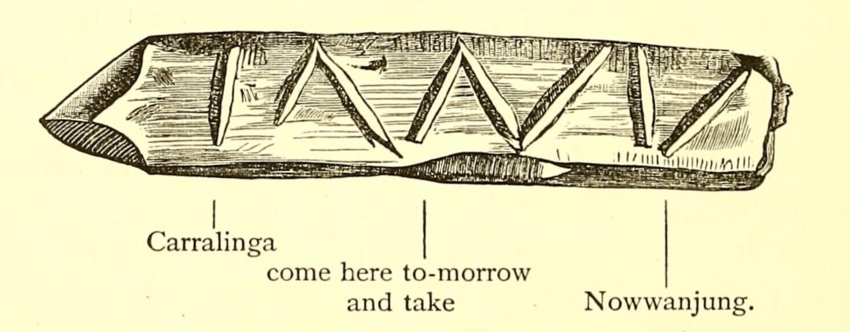
As the first people to arrive in Australia (then a supercontinent called Sahul) grew and spread, their languages naturally changed. However, what’s interesting to note is that linguists theorise that most Australian languages are part of the Pama-Nyungan family. Non-Pama-Nyungan languages are clustered around the northwest coast, thought to have evolved in response to new arrivals and trade with the nearby islands.
The larger language family by an immense margin is the Pama-Nyungan group. It covers most of the entire continent, meaning the languages all across these areas likely share a common root and may have many words in common with one another.
Learn more about Aboriginal naming conventions.
known through history
known through history
The non-Pama-Nyungan group features distinct languages, with many being highly different from one another.
Neither group appears to have much in common with languages found in Papua New Guinea, the Torres Strait Islands, or even Tasmania. This is an interesting phenomenon, since all these places were once settled by people who came from the same place.
The Indigenous Australian language with the most speakers today is actually Yumplatok, a creole language that incorporates English and Indigenous terms, in the Torres Strait Islands.
Beyond this broad classification, languages are often grouped by region.
Some examples of regional groups include:
Overall, theories about the evolution of language groups in mainland Australia are incomplete and need more research.
How Many Aboriginal Languages Are There?
In the years before colonisation, it’s believed there were about 250-300 active Aboriginal languages across Australia, with over 600 local dialects.
Throughout all of Australia’s pre-colonial history, it’s thought there may have been about 400 languages, with hundreds of other dialects as well. Since there is no long written record, it’s difficult to find evidence of language progression.
Today, only about 12 (perhaps 15) languages are regularly taught to students. It’s estimated that there are around 120 Aboriginal and Torres Strait Islander languages remaining in use. Languages with fluent speakers who use them daily are even rarer.
Find out more about Indigenous history with these books.
Rather than think of languages that are no longer spoken as lost or extinct, many First Nations people instead call them “sleeping languages.” Bringing them back to the community reawakens them; they are not dead, lost, or forgotten.
Top 7 Aboriginal Australian Languages by Number of Speakers
Although the number of speakers has greatly declined from pre-colonial numbers, there are still several First Nations languages with hundreds or thousands of speakers each.
This Australian Aboriginal languages list shows the top 7 Aboriginal and Torres Strait Islander languages with the most speakers according to the 2021 census.
| Language | Region | Number of Speakers |
|---|---|---|
| Yumplatok | Torres Strait | 7,596 |
| Kriol | Northern Territory and Western Australia | 7,403 |
| Djambarrpuyngu | Northern Territory | 3,839 |
| Pitjantjatjara | Central | 3,399 |
| Warlpiri | Northern Territory | 2,592 |
| Murrinh Patha | Northern Territory | 2,063 |
| Tiwi | Northern Territory | 2,053 |
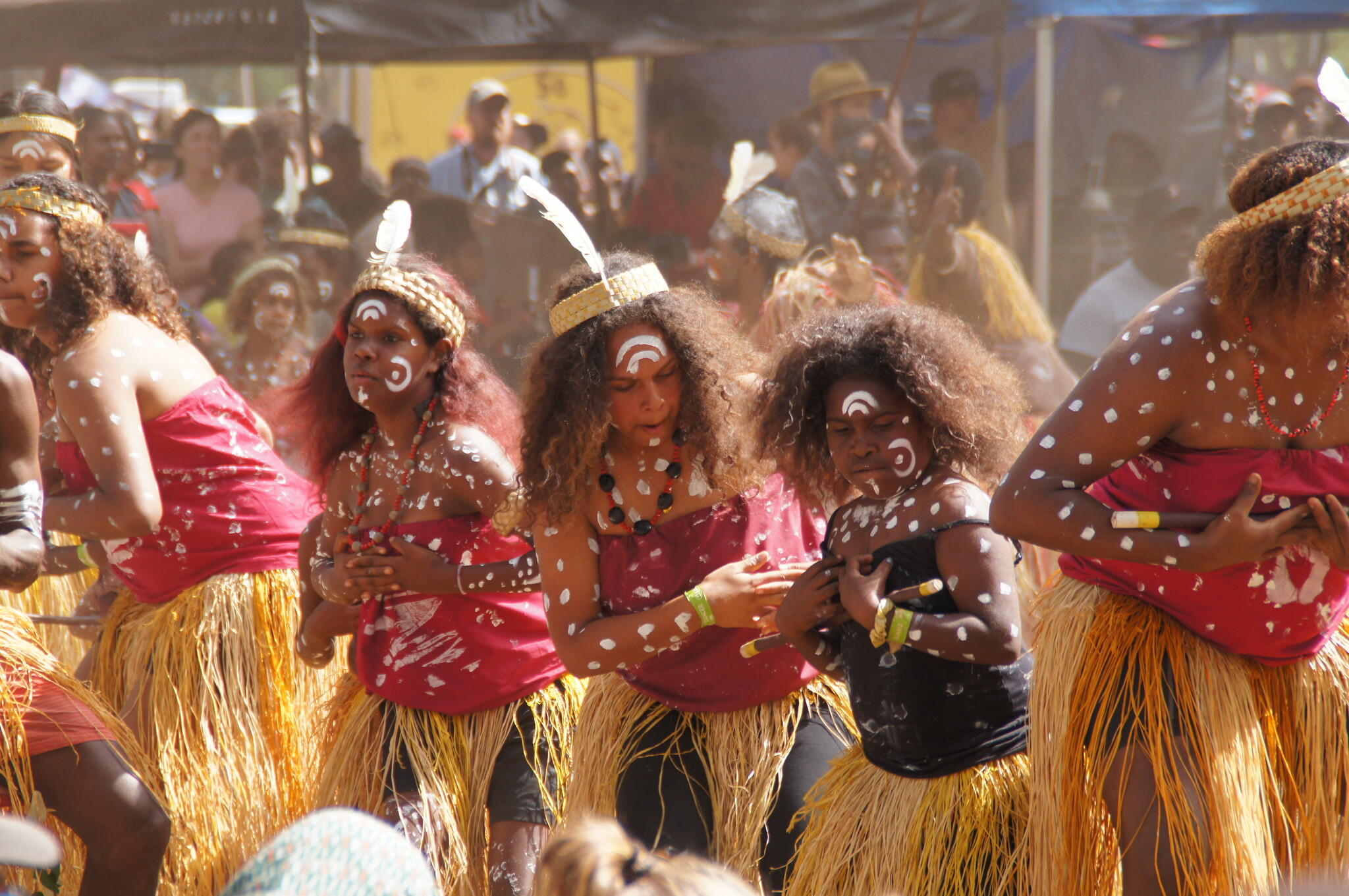
Preserving Indigenous Australian Languages
Language is one of the most important defining features for any group of people on earth. For First Nations people, particularly, is also carries ancestral knowledge about land, culture, law, and identity.
Having language forcefully taken away for generations carries greater weight than just the removal of vocabulary, and reawakening the sleeping languages is an important part of self-determination and healing.
Since the late 1990s, Australia has taken efforts to help Aboriginal communities revive and preserve their languages and knowledge.
Discover the tools and technology invented by Indigenous Australians.
Some of the initiatives and tools being used in this endeavour include:
- Community-led programs: Local Aboriginal communities run language classes and cultural programs to teach younger generations.
- School-based education: Some schools include Aboriginal languages in their curriculum, especially in regions like the Northern Territory and Western Australia.
- Digital tools: Apps, online dictionaries, and recorded materials make it easier to learn and document languages.
- National support: Organisations such as the Australian Institute of Aboriginal and Torres Strait Islander Studies (AIATSIS) support research and preservation projects.
- Language revival projects: Communities are rebuilding languages using historical records, recordings, and oral histories.
The efforts being made to reawaken languages and knowledge are important for restoring identity and strengthening culture. For people with First Nations ancestry, keeping the languages alive is one vital aspect of honouring the ancestors and their relationship with Country on a personal lineage level, as well as overcoming the many years of imposed hardship from colonisation.
For non-Indigenous Australians, learning about Aboriginal languages and history promotes respect, understanding, integration, and reconciliation.
Learn more about First Nations cultures.
Everyone can appreciate the importance of their language for its practical abilities, like communication, as well as its cultural importance. For those who have a highly personal language in their ancestry, the preciousness and significance are much more apparent. Indigenous Australian languages tell many stories through their patterns and existence, from ancient times, through not-so-distant struggles, to modern-day regrowth.
References
- Aboriginal and Torres Strait Islander languages spoken. (n.d.). Australian Bureau of Statistics. https://www.abs.gov.au/statistics/measuring-what-matters/measuring-what-matters-themes-and-indicators/cohesive/aboriginal-and-torres-strait-islander-languages-spoken
- Aboriginal languages in NT. (n.d.). Northern Territory Government of Australia. https://nt.gov.au/community/interpreting-and-translating-services/aboriginal-interpreter-service/aboriginal-languages-in-nt
- Aboriginal Languages :: WAITOC. (n.d.). https://www.waitoc.com/culture/aboriginal-languages
- Bassi, M. (2025, December 15). Modern humans reached Australia around 60,000 years ago via two routes, genetic analysis suggests. Smithsonian Magazine. https://www.smithsonianmag.com/smart-news/modern-humans-reached-australia-around-60000-years-ago-via-two-routes-genetic-analysis-suggests-180987821/
- Colling, T. (2025, July 7). NT elders fear Aboriginal languages are being lost, as communities band together to help save them. ABC News. https://www.abc.net.au/news/2025-07-08/nt-elders-fear-loss-of-indigenous-languages-call-on-young-people/105387960
- Languages alive. (n.d.). AIATSIS. https://aiatsis.gov.au/explore/languages-alive
- Ms Amelia Turner. (n.d.). Resource Guide: Languages. In Resource Guide (pp. 1–15). https://www.narragunnawali.org.au/storage/media/professional-learning/Languages%20Resource%20Guide-b74b73f56f.pdf
- Reed, S. D. a. a. D. |. A. R. B. L. R. R. T. Z. a. a. M. M. W. H. L. R. S. W. H. a. L. (2026, April 28). Reviving Australia’s first languages. Australian Geographic. https://www.australiangeographic.com.au/history-culture/2026/04/reviving-australias-first-languages/
- Turpin, M. (n.d.). Aboriginal languages. https://www.clc.org.au/wp-content/uploads/2021/03/Aboriginal-languages-by-Myfany-Turpin.pdf
Summarise with AI:
Did you like this article? Leave a rating!

 Loading...