
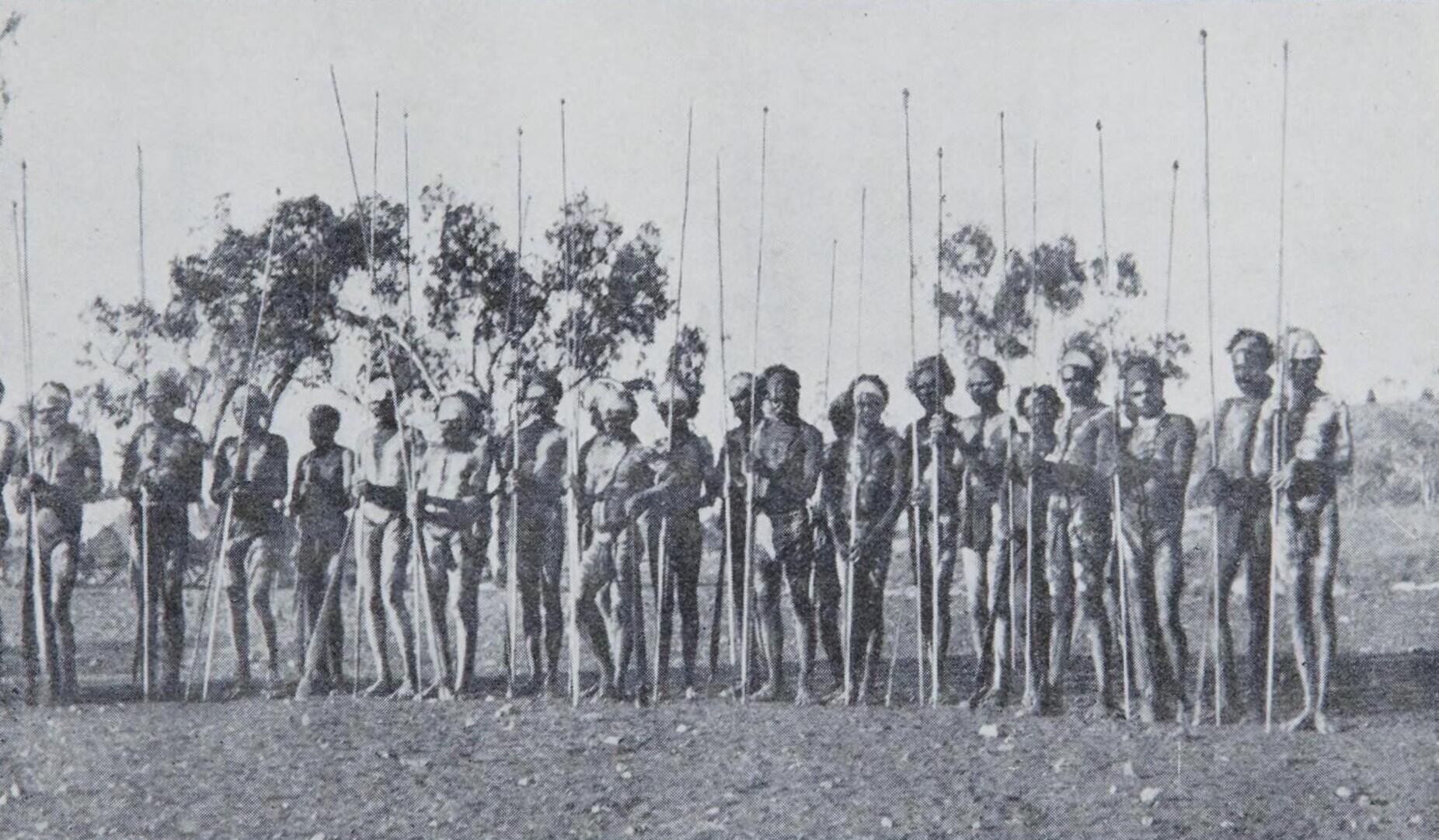

Indigenous people have been living in the land now known as Australia for over 50,000 years. Today, they represent one of the longest continuous cultures in the world. In all that time, the First Nations people developed effective tools and technologies using the natural resources available. Find out what inventions can be found in Australian Aboriginal history.


Aboriginal Hunting Tools
Many clans traditionally relied on hunting to provide much of their food and other resources, such as leather, sinew, and bones. They invented tools that were lightweight and effective, suited for specific animals and landscapes. Generally, men were responsible for hunting.
Learn more about First Nations history from 65,000 years ago to today.
Spears
The spear was and is one of the most important hunting tools among First Nations people. The oldest spears found in Australia were found in the Riwi Cave in Western Australia. They feature kangaroo bone parts and are dated as being at least 35,000 years old.
Spears were often made of wood hardened by fire, and sometimes featured sharpened bone or stone tips, while others had a pronged tip suitable for spear fishing. Some spears were barbed using materials like bone or echidna quills.
Hunters could throw the spear by hand or with the help of a woomera, a wooden spear-throwing tool that allowed for a more powerful throw.
Boomerangs
Not all boomerangs were designed to return.
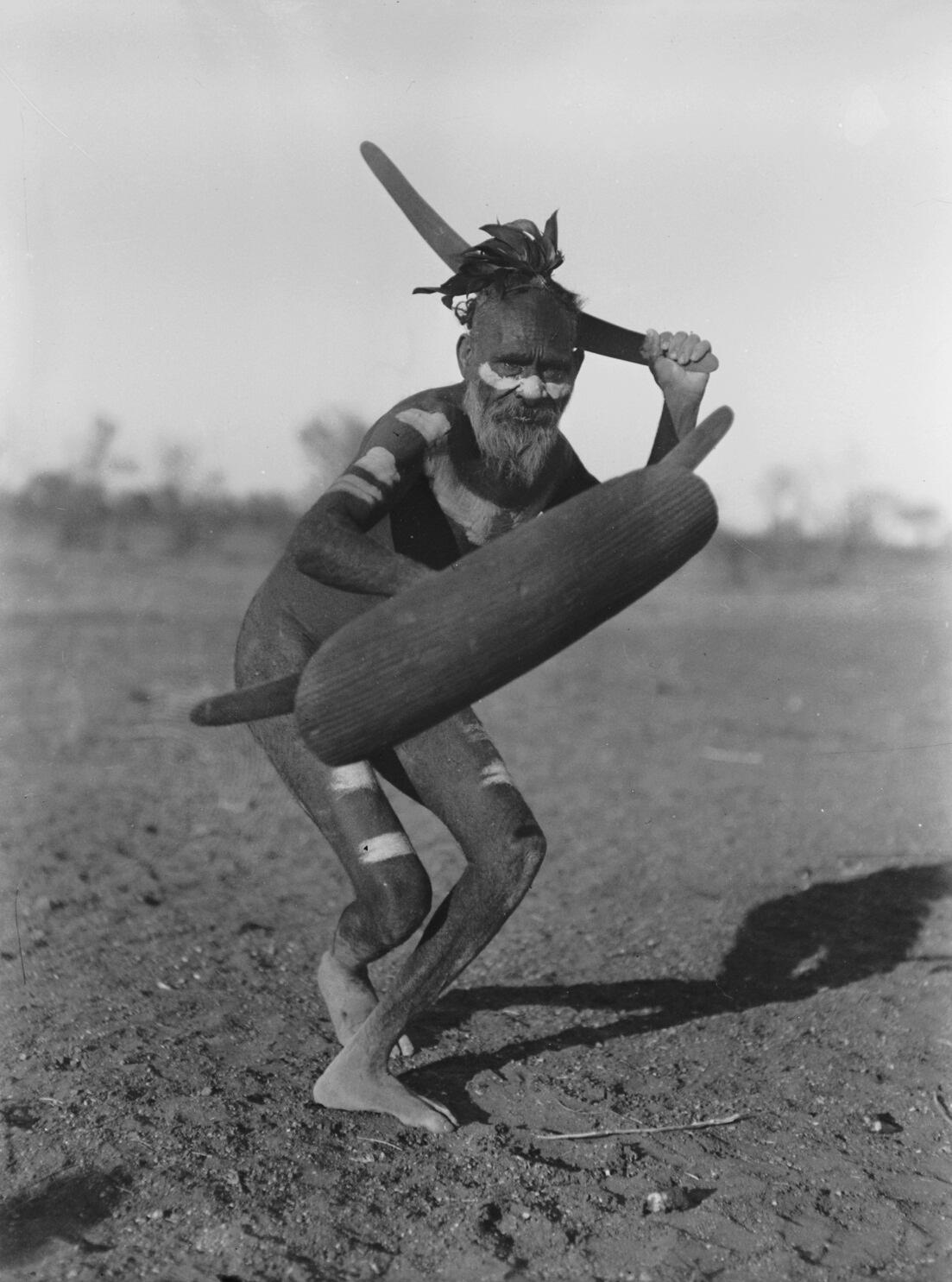
Many hunting boomerangs were created as projectile tools for striking animals such as kangaroos and birds, or even enemies.
Returning boomerangs could be used to scare flocks of birds into getting captured in a net.
Boomerangs were usually carved out of tree roots or branches that already had a natural bend.
They would be heated over a fire to promote the right twist needed to fly through the air in the desired manner.
Nets
Nets made from rope fashioned from natural fibres and grasses, like the bark of the Stringybark Tree, were used for catching fish, birds, kangaroos, and other animals. Nets were used as traps, strung up in strategic places where animals were known to travel.
No, the tools First Nations people historically used were made of effective and easy-to-source materials like wood, plant fibres, animal parts, and stone. They had no need to look for other types of materials, plus inventing the equipment needed to work with metal was not possible with frequent travel.
Aboriginal Weapons
Naturally, weapons were important for protection against animals and in conflict. Many weapons were used practically and ceremonially, as they carried symbolic meaning.
Spears and boomerangs could be used for hunting or fighting, as needed.
Clubs
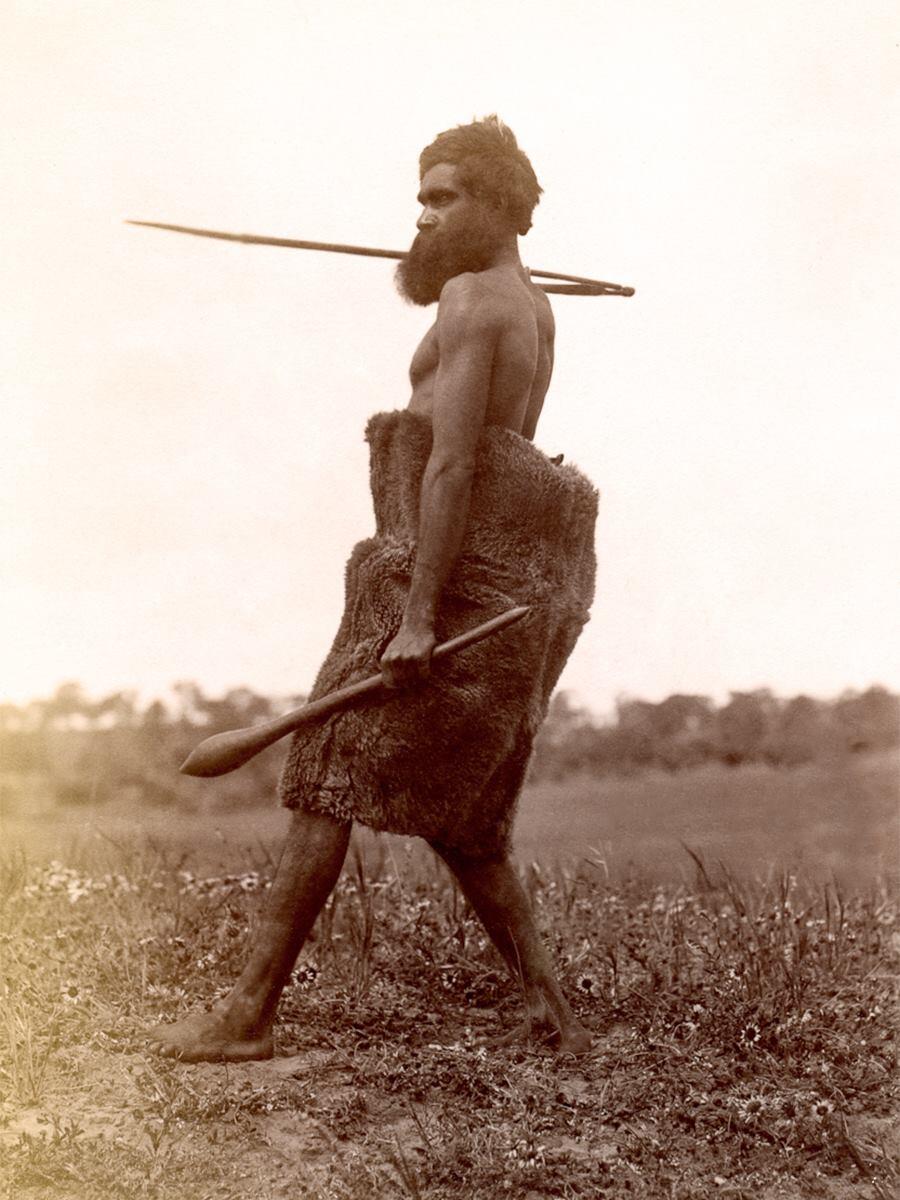
Clubs were usually fashioned in several different shapes, but generally were made of a thinner handle-end and a bulbous hitting-end.
Sizes could range from small throwing clubs to large, two-handed clubs.
One particular type of club, called murrawirrie, used by the Wangkangurru and Dieri people, resembled a large boomerang.
They were usually made of different types of wood.
Shields
Used for defence, shields were fashioned out of a single piece of wood or bark. Wide shields protected against thrown spears, while narrow ones were effective against clubs. The face of the shield could be painted with patterns and symbols that represented clan, identity, ancestors, or ceremonial themes.
Indigenous Australian Technology
First Nations tools and technology pre-colonisation are great examples of sophisticated inventions. They demonstrated a deep knowledge of the materials used, as well as physics and other sciences.
Beyond hunting and fighting tools, there were many items used for various situations in daily life.
Learn more about First Nations' important cultural foundations.
Wood and Stone Tools
Miru, also called Wommera, are spear-throwing tools fashioned out of branches that allow the thrower to increase power, distance, and accuracy.
Tools made of stone are among the oldest artefacts found in Australia. Various clans made blades, scrapers, and axes with chipped and chiselled stones. Stone tools were made by using a hammer stone to chip or flake stones into usable shapes.
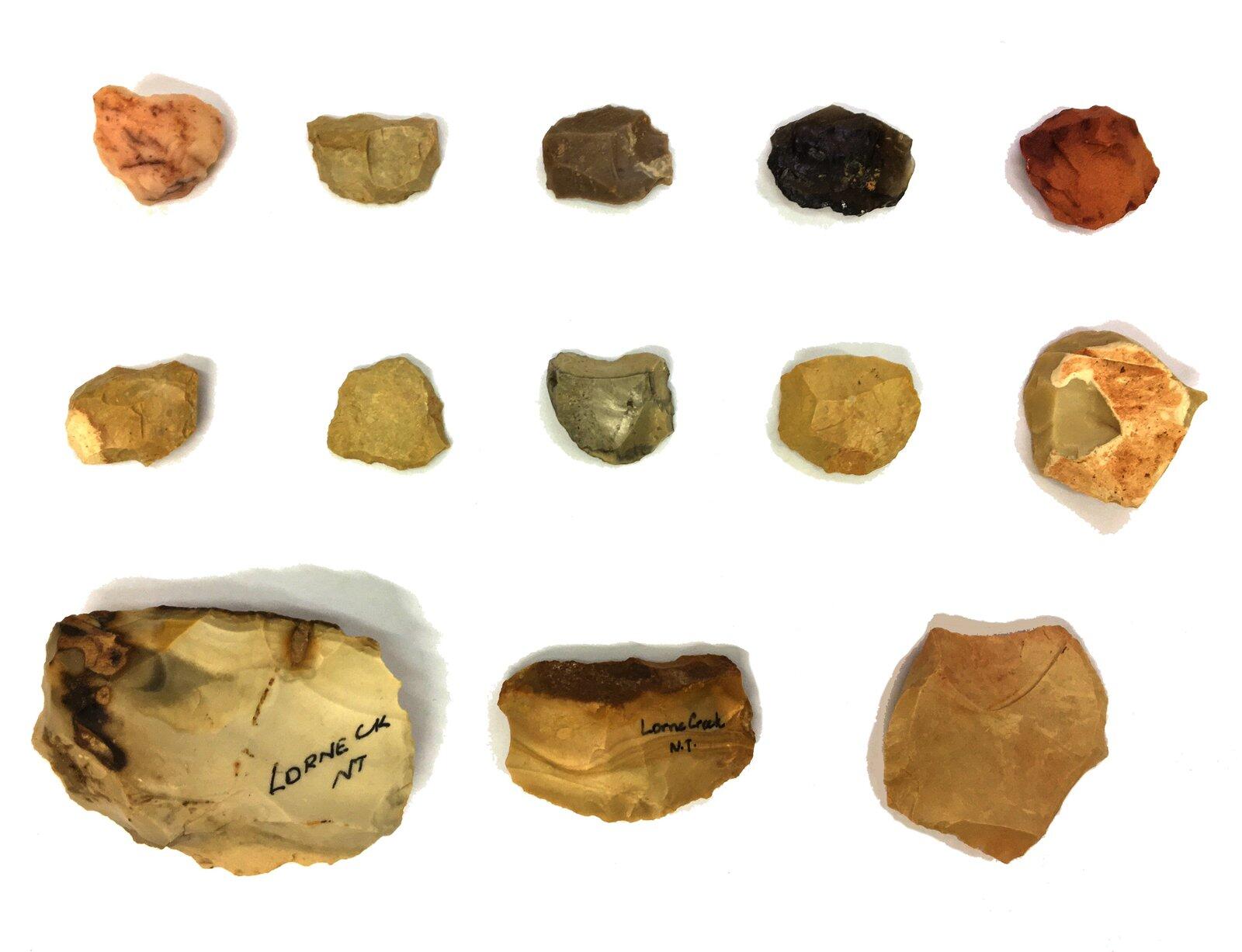
Fashioned stone tools could be used to cut wood, prepare food, and fabricate hunted animals, among other things.
Grinding stones were used for crushing seeds into flour or processing ochre.
Fire
While virtually every civilisation across the world discovered how to create fire, Indigenous Australian used fire as a vital resource in connection with Land. First Nations people used controlled burning to manage the land, called ‘firestick farming’. The practice encouraged new growth and enriched the soil.
Indigenous Australians have a unique and interesting naming system.
Just because the First Nations people didn’t have scholars and colleges the same way Europeans expected to see doesn’t mean there weren’t experts in the very important science of astronomy. Indigenous clans had a thorough understanding of tracking the stars to watch the progression of the year.
Gathering, Foraging, and Cooking
Women in many clans used digging sticks to unearth roots, grubs and burrowing animals. They were more than just any stick; they were fashioned with very hard wood, sharpened on each end, and preserved with emu oil.
Coolamons are dishes fashioned out of wood or bark used for holding food and water. They were also useful as gathering baskets.
Of course, woven baskets made with bark or plant fibres were also common.
Earth ovens were often used for cooking. Food could be placed in pits filled with heated stones, then covered to cook slowly.
Housing, Clothing, Transportation, and Other Uses
Shelters were constructed in different ways depending on the climate and the clan, but many were made of sticks, branches, bark, and grass assembled with cordage or rope. They were easy to build and take down, which suited a mobile lifestyle.
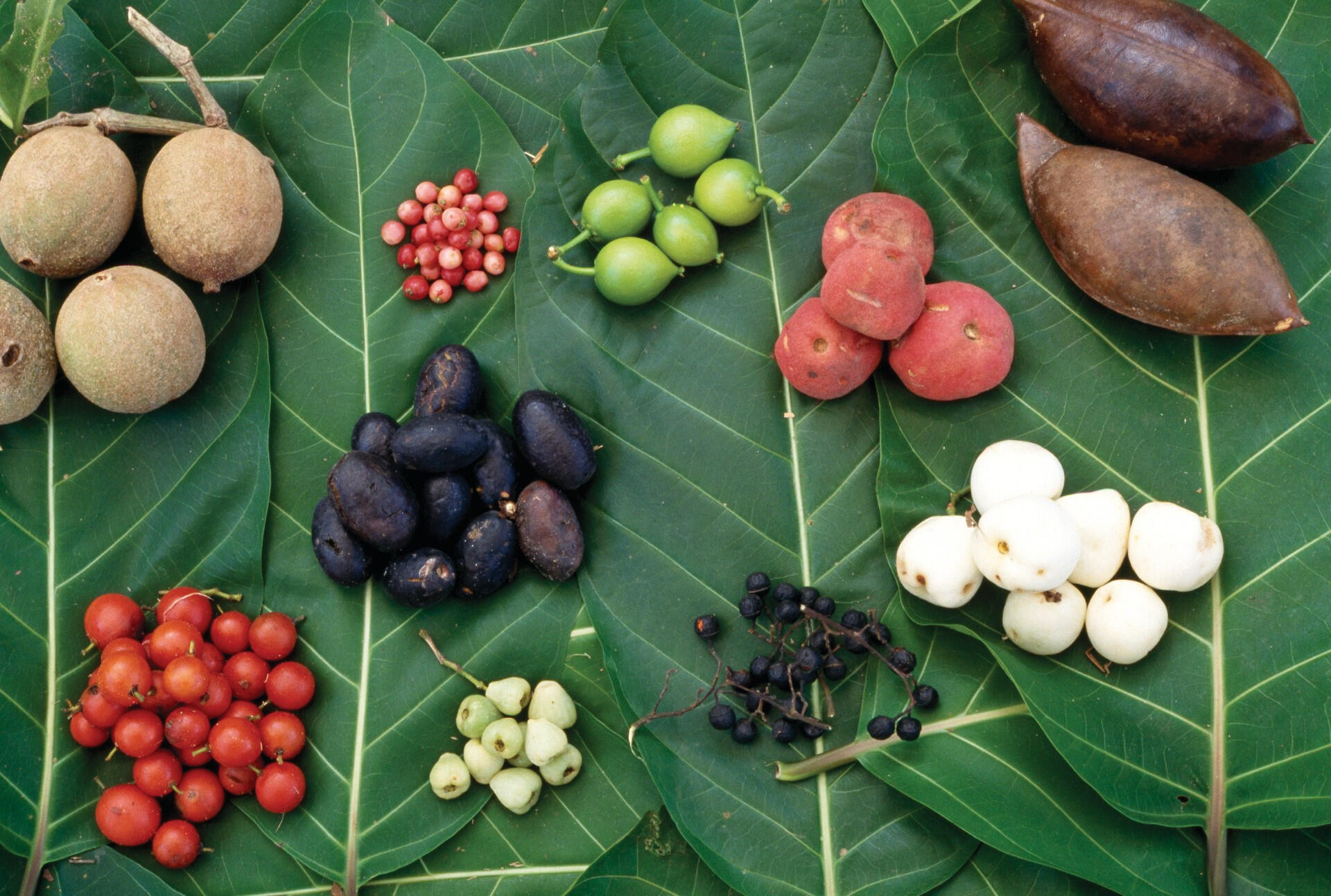
Animal parts were used to make water skins, bone needles, bone spikes on weapons, clothes, and cordage. Clothing was often made of plant fibres woven together. Gum made of spinifex grass resin was as effective as superglue and used for repairs, waterproofing, and assembling things together.
Although Indigenous Australian languages were primarily oral, certain ideas could be written down on message sticks. These sticks were painted and carved to convey certain information, acting like passports, invitations, and announcements.
Canoes were a common mode of transportation. They could be made of bark carved from a live tree without killing the tree.
Want to learn more about Aboriginal Australian history? Discover some of the best history books about Indigenous Australians.
Art and Music
Using stone tools to create petroglyphs (rock carvings), wood carvings, and beeswax carvings was and is a common art form.
Paints were made of ochre, white pipe clay, and charcoal. Brushes made of chewed sticks, frayed bark, plant fibres, and/or human hair.
The didgeridoo, made of hollowed wood, is the most famous First Nations instrument, and is used in ceremonies.
Science Innovations
Those in charge have long overlooked discoveries and inventions made by First Nations people. Now, more people are coming together to raise awareness about the incredible innovations and knowledge that have long been part of Indigenous wisdom, especially in scientific fields.
Here are just a few of the advanced discoveries and techniques used by First Nations people:
- Gum resins are thermoplastic adhesive polymers: when the resin is heated, it can harden into a waterproof substance that’s as strong as concrete or superglue.
- Detoxifying poisonous seeds, like cycad, is anaerobic fermentation: several varieties of seeds with toxic substances in them could be made edible by soaking and/or burning them.
- Burning certain plants and animal parts made quicklime: quicklime has been an important discovery in many cultures; it can be used as an agent to strengthen the effect of medicinal plants and as a cooling, anti-microbial paint.
Agriculture Tools and Methods
For many years, traditional Indigenous societies were described (by European researchers) as purely hunter-gatherer. In modern times, this view is being replaced with the knowledge that First Nations people used agricultural methods; they just didn’t look like methods used in Europe or other parts of the world.
In some regions, clans cultivated native grains, harvesting, processing, and storing the seeds. This required tracking seasons and planting and harvesting cycles.
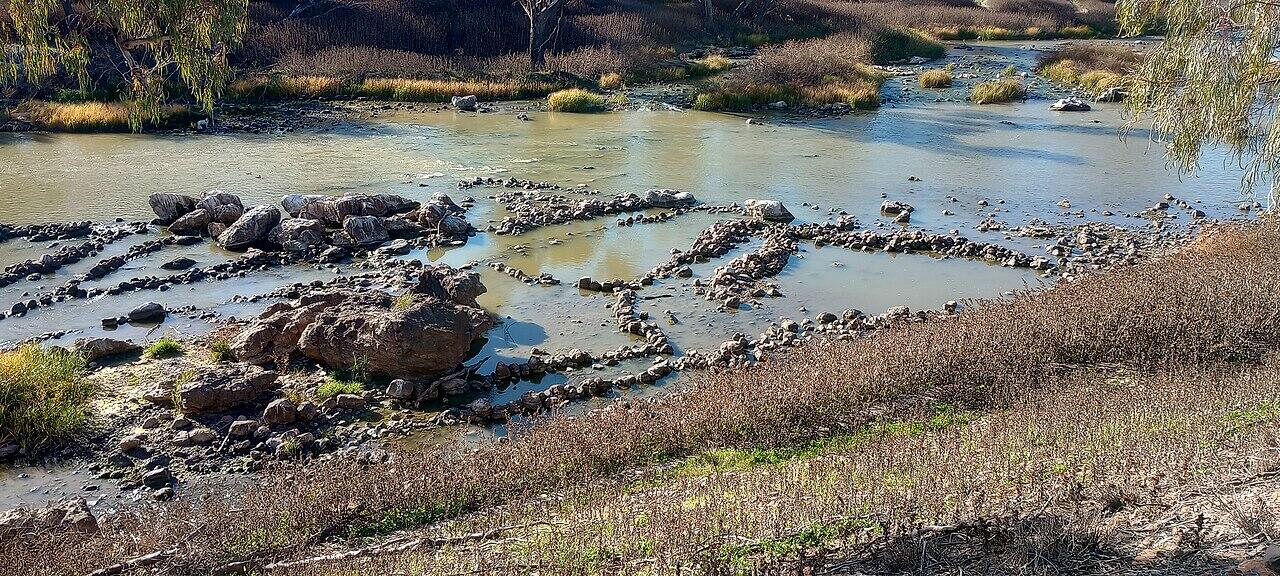
Advanced fish and eel traps made of stone were built in rivers and coastal areas. Some of these types of traps are still used today, like the ones found in Budj Bim in Victoria.
Find out more about Indigenous Australian languages.
Words for Aboriginal Tools
Each of the 250+ clans (and 600+ dialects) across the continent could have its own words for each tool item in the full array of Aboriginal technology. It’s impossible to list each option in this limited space. Here are just some Indigenous words for specific tools:
| Tool | Name |
|---|---|
| Barbs | Mukulpa |
| Spear-throwing tool | Miru, Wommera |
| Spearheads | Wata |
| Boomerang | Kali / boomerang |
| Digging Stick | Wana |
| Shelter | Wiltja |
| Windbreaks | Yuu |
| Throwing Club | Nulla nulla |
The achievements of First Nations people in terms of technology and innovation have been downplayed. New research is being conducted to re-learn what advancements were made pre-colonisation. Much of this traditional knowledge could be applied to modern practices, creating more effective methods of living in harmony with Land.
References
- “Aboriginal Inventions: 10 Enduring Innovations.” Australian Geographic, https://www.australiangeographic.com.au/history-culture/2015/03/aboriginal-australian-inventions/.
- “Australian Aboriginal Tools Estimated at 35,000 Years Old.” Voice of America, 9 Apr. 2021, https://www.voanews.com/a/east-asia-pacific_australian-aboriginal-tools-estimated-35000-years-old/6204346.html.
- Bush Foods & Tools | Uluṟu-Kata Tjuṯa National Park | Parks Australia. https://uluru.gov.au/discover/culture/bush-foods-and-tools/.
- “Indigenous Innovation: The Future Is Indigenous .” Indigenous Business Australia (IBA), 11 Feb. 2026, https://www.iba.gov.au/2026/02/indigenous-innovation-the-future-is-indigenous/.
- Tools & Technology. https://www.deadlystory.com/page/culture/Life_Lore/Science/Tools_Technology/.
- WOODEN TOOLS AND WEAPONS – Aboriginal Culture | INTRODUCTION TO AUSTRALIA’S ABORIGINAL CULTURE. https://www.aboriginalculture.com.au/wooden-tools-and-weapons/.
Summarise with AI:
Did you like this article? Leave a rating!

 Loading...
Yall this is pek