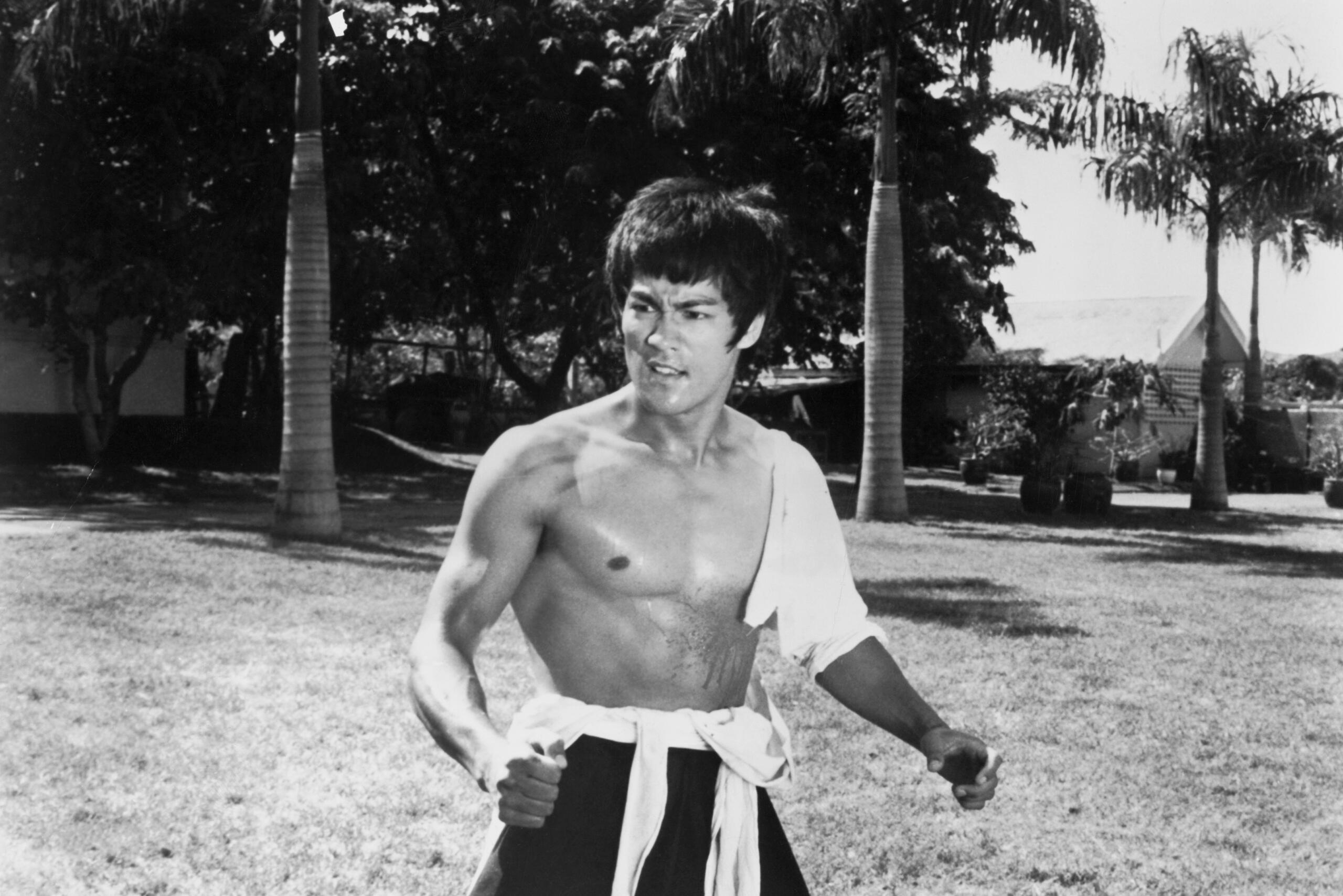

Language learners know that watching films in their target language can help advance their studies1. Watching China-made films helps tune your ear to Mandarin and introduces everyday phrases your textbooks might not teach you. Besides, you can learn about Chinese history and culture while immersing yourself in the stories that thrill Chinese moviegoers. These are the titles that give you the best doses of fighting action and Mandarin language.
| Year | Film | Starring | Style / genre | Why watch it |
|---|---|---|---|---|
| 1966 | Come Drink with Me | Cheng Pei-pei, Yueh Hua, Chan Hung-lit | Wuxia | A stylish, influential Shaw Brothers classic with a memorable female lead |
| 1972 | Fist of Fury | Bruce Lee, Nora Miao, Chikara Hashimoto | Kung fu | Bruce Lee at his most intense, with iconic fight scenes and screen presence |
| 1982 | Shaolin Temple | Jet Li, Ding Lan, Yu Hai | Kung fu | Jet Li’s breakout film, packed with traditional martial arts choreography |
| 1988 | Yellow River Fighter | Yu Chenghui, Chao Chi-kang, Hu Jianqiang | Wuxia | A lesser-known gem featuring impressive swordplay and old-school martial arts |
| 1991 | Once Upon a Time in China | Jet Li, Yuen Biao, Jacky Cheung | Kung fu / historical action | Spectacular choreography and one of Jet Li’s defining performances |
| 2000 | Crouching Tiger, Hidden Dragon | Chow Yun-fat, Michelle Yeoh, Zhang Ziyi | Wuxia | Beautifully filmed wuxia combining romance, drama, and breathtaking wirework |
| 2004 | House of Flying Daggers | Takeshi Kaneshiro, Andy Lau, Zhang Ziyi | Wuxia | A visually sumptuous martial arts romance with inventive action sequences |
| 2004 | Kung Fu Hustle | Stephen Chow, Danny Chan, Yuen Wah | Kung fu comedy | A hilarious, wildly imaginative blend of slapstick comedy and kung fu spectacle |
| 2006 | Fearless | Jet Li, Nakamura Shidō II, Sun Li | Kung fu / biographical drama | Powerful fight choreography paired with a more reflective martial arts story |
| 2008 | Ip Man | Donnie Yen, Simon Yam, Lynn Hung | Kung fu / biographical drama | Fast, precise Wing Chun action and one of Donnie Yen’s most iconic roles |
| 2013 | The Grandmaster | Tony Leung, Zhang Ziyi, Chang Chen | Kung fu / arthouse drama | Gorgeous cinematography and a sophisticated, atmospheric take on martial arts |
| 2021 | Raging Fire | Donnie Yen, Nicholas Tse, Qin Lan | Martial arts / action thriller | Hard-hitting modern action with energetic fights and stunt work |


Kung Fu Movies vs. Wuxia Movies
To the untrained eye, all Chinese action movies look the same. They all feature precise, well-choreographed moves, a few poignant moments, and tight storylines. Some may feature the traditional weaponry of ancient China - staves, spears, and 'fire arrows', while others specialise in hand-to-hand combat.
But for those in the know, wǔxiá movies present a different philosophy than kung fu movies do. Wǔxiá represents an entire ethos that warriors of old lived by. Conversely, gōngfu films are more about the skill and techniques of individual fighters. Beyond that fundamental difference, these are the factors that tell the films apart3.
Wǔxiá films
- often epic in scope
- typically feature weapons
- more acrobatics and swordplay
- complex storylines
- incorporate supernatural elements
- an outgrowth of Chinese literature
- Jackie Chan sample film: The Myth
Gōngfu films
- hand-to-hand combat
- often unarmed combatants
- emphasis on physical skill
- typically linear narrative
- often revolve around revenge
- a backlash to wǔxiá films
- Jackie Chan sample film: Fearless Hyena
When it all boils down, the comparison relies on reality versus fantasy. Wǔxiá movies show flying fighters exhibiting supernatural force. No Chinese historical record shows evidence of such, no matter how much training those fighters had.
On the other hand, kung fu films demonstrate fighters' actual skills that they trained their whole lives in. To be sure, those film stars leap and roll about, but those moves are also a part of a fighter's training.
Classic Chinese Martial Arts Movies to Add to Your Watchlist
With that difference made clear, we can gush about all the kung fu movies to enrich your Mandarin learning experience. Does any other Chinese martial arts guide cover top kung fu films from the Mandarin learning angle?
Wuxia Movies to Study Chinese Culture and History
Unfortunately, most kung fu movies produced in Hong Kong studios feature Cantonese dialogue. Re-releases and technology make it easy to add Mandarin voice-overs, but most original editions only add an English-language track.
By contrast, Wuxia movies, filmed on the Chinese mainland, are in Mandarin by default. These films treat you to your target language while introducing all the styles of Chinese fighting.
Crouching Tiger, Hidden Dragon (2000)
This film sees Wudang swordsman Li Mu Bai and his friend, Yu Shu Lien, work together to capture the thief who stole the 400-year-old Green Destiny sword.
This film receives universal praise for its storytelling, cinematography, and fight choreography. Based on Wang Dulu's novel of the same title, critics and fans hail it as the finest Wuxia film of the 21st century.
Come Drink With Me (1966)
The son of a Ming Dynasty governor is kidnapped. The kidnapper demands that his master be released but the governor refuses. He's given five days to meet the kidnapper's demands or his son will be killed. Now, it's up to his sister, Golden Swallow, to infiltrate the kidnapper's lair and rescue her brother.
Former aspiring ballerina Cheng Pei-pei danced on a film set, thinking herself unobserved.
A studio executive caught her graceful dance and thought her moves perfect for Wuxia-style fighting. That's how she became the Queen of the Swords, despite having no martial arts training.
House of Flying Daggers (2004)
During the Tang Dynasty, a band of rebels fights their corrupt government's efforts to plunder and destabilise society. The local officials order the leader of the House of Flying Daggers captured and killed, but nobody knows who leads the group. They try various ways to infiltrate the house, but instead, find themselves entangled in Mei's plight.
Zhang Yimou directed Zhang Ziyi in her breakout role (in the excellent film The Road Home).
They further collaborated to make Hero, the 2002 Wuxia epic, and this film.
More Recent Kung Fu Films
The Cantonese-Mandarin preference mentioned above has long plagued Hong Kong cinema, where most of these films are made. Most Chinese film stars, including martial arts actors, speak both Mandarin and Cantonese. For them, it matters not whether the dialogue is in one language or the other.
However, for Mandarin learners who watch films to boost their listening skills, they must choose their titles carefully. They may either limit themselves to Mandarin-language films exclusively, or select Mandarin dubbing (if the film offers it). These films are either in Mandarin or feature a Mandarin dub.
The Grandmaster (2013)
This film describes aspects of kung fu legend Ip Man's life, incorporating clips from the great man himself. Through flashbacks, we experience his early training as a boy and his introduction to Wing Chun. The film takes us through several battles, describes his poverty, and how he managed to triumph in spite of hardship and enemies.
The train station fight scene is arguably the film's best. It showcases Ip Man's skills and speed while also highlighting the emotional conflict between himself and Gong Er.
Kung Fu Hustle (2004)
It's early 1900s in Shanghai, where gangs rule the city. A poor, hapless wannabe criminal runs low-grade scams to survive while trying to prove he's worthy of gang membership. He tries to intimidate a slumlord but suffers a humiliating defeat. Little does he know that he's a kung fu master waiting to realise his destiny.
Stephen Chow films like Shaolin Soccer, The Mad Monk, and this one put his love of kung fu front and centre. However, he never trained in any discipline as his family couldn't afford lessons.
Fearless (2006)
At the turn of the 20th century, China was overrun with Russians, Japanese, Americans, and Germans. Chinese national pride was non-existent and the culture was eroding. A martial arts master (Jet Li) first retires to the countryside to hide from the humiliation the foreigners mete out. He then returns to civilisation, taking on the foreigners and restoring faith in Chinese culture.
This film is loosely based on the life and exploits of Huò Yuánjiǎ (霍元甲), the Wushu martial arts Grandmaster renowned for helping to re-establish Chinese nationalism.
Ip Man (2008)
Wing Chun (yǒngchūn - 咏春) Grandmaster Ip Man endured his share of suffering during the Japanese occupation of China2. This film centres on Ip Man's life in Fóshān (佛山) during the war.
Initially, Ip Man refused to teach Bruce Lee because of a long-standing rule to not teach kung fu to foreigners (Bruce Lee was born abroad to Chinese parents.)
This rule arose, in part, because of the Japanese occupation.
Raging Fire (2021)
Hong Kong Detective Bong struggles with a difficult past that rears its head on his current case. A former officer, out for revenge for the years he spent in prison thanks to his one-time mentor, pursues him across the city. He wants to destroy the sterling detective and he doesn't care how much violence he must inflict to do so.
Across six minutes, the two protagonists use a variety of weapons and acrobatics to settle their differences. The stained glass from the abandoned church they fight in makes the scene surreal.
Words You'll Hear in Chinese Kung Fu Movies
Obviously, if the dialogue is in Mandarin, you'll hear nothing but Mandarin words. However, you'll hear some repeated throughout the film, and across various other titles. These are the martial arts words you'll hear over and over in these Chinese action movies.
You might recognise the 师 in 'shīfu' from the title you call your teacher: 老师 (lǎo shī - lit. 'old master'). Perhaps you know 武 from the city of Wuhan (武汉), which translates to 'Han warrior'. Everyday Mandarin is full of these delightful calls to history! What a great reason to learn this language.
References
- “How to Watch Foreign Movies to Learn a Language In 2026.” Migaku.Com, 2026, https://migaku.com/blog/language-fun/how-to-watch-foreign-movies-for-language-learning. Accessed 21 July 2026.
- White, David. “The Japanese Occupation of China 1937-45: The Divided Opposition and Its Consequences by David White - Open History Society.” 2017. https://openhistorysociety.org/the-japanese-occupation-of-china-1937-45-events-effects-and-consequences-by-david-white/. Accessed 21 July 2026.
- Hays, Jeffrey. “MARTIAL ARTS FILMS: WUXIA, RUN RUN SHAW AND KUNG FU MOVIES | Facts and Details.” Factsanddetails.Com, 2017, https://factsanddetails.com/china/cat7/sub42/entry-7606.html. Accessed 21 July 2026.
Summarise with AI:
Did you like this article? Leave a rating!

 Loading...