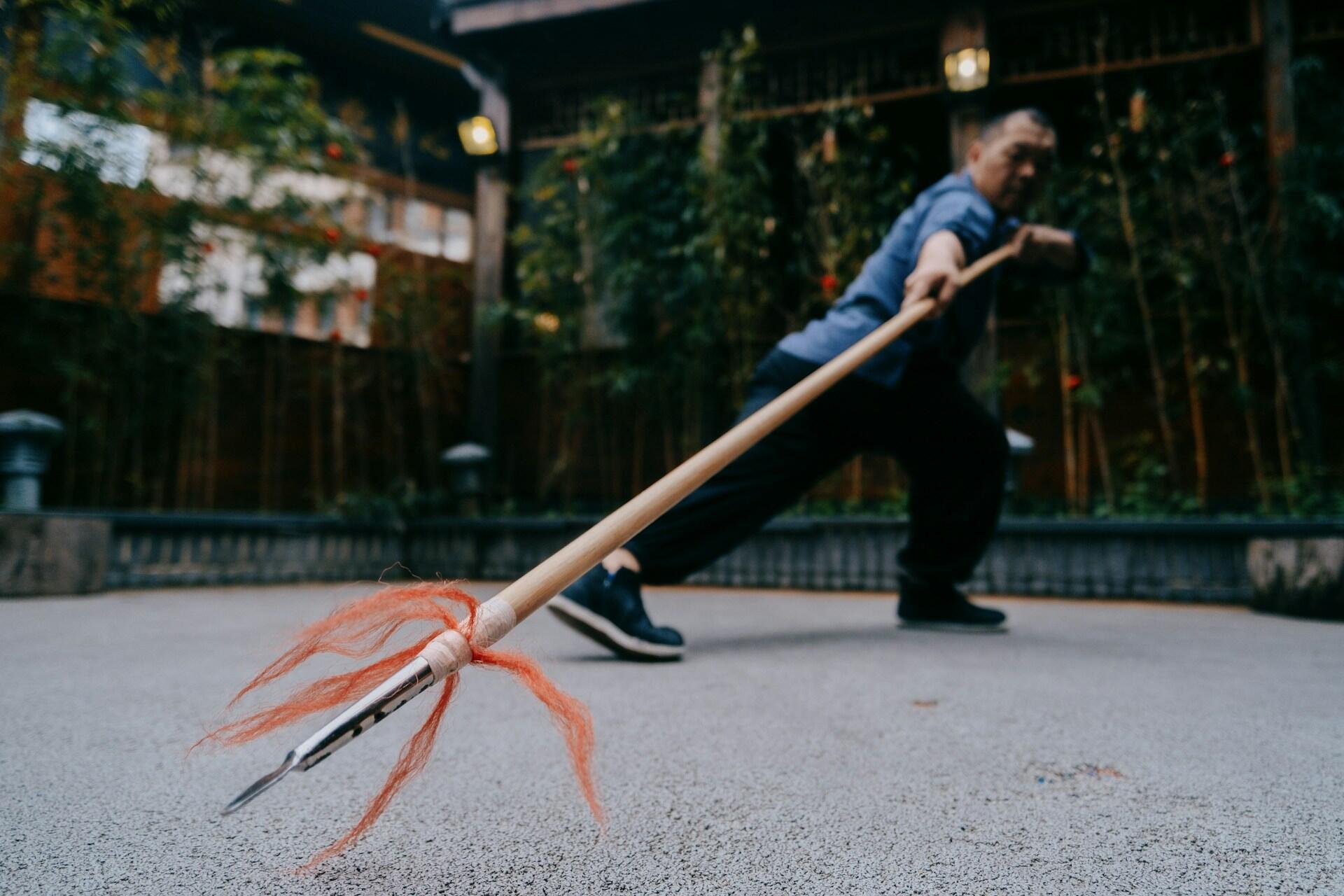

Across China, millions of people practise thousands of kung fu types. However, the Chinese government officially recognises 60 Chinese martial arts styles. Of them, people around the world are familiar with just a handful of them. Here, we discuss the most famous systems you might train in1.


Shaolin Kung Fu (Shàolín Gōngfu - 少林功夫)
All martial arts under heaven come from Shaolin. (天下武功出少林 - tiānxià wǔgōng chū shǎolín)
Chinese folklore saying
Across China, visitors thrill at mystical temples perched high atop mountains. They weren't built there only for spiritual reasons but rather for defence. Such is the case for the Shaolin Monastery, built in the Henan Province mountains around 490 CE (of the current era).
Shaolin monks practised a disciplined series of exercises meant to fortify their bodies and minds. Over time, this discipline became a self-defence strategy and a way to protect their temple grounds. Today, Shàolín kung fu is the most famous and most influential martial art in China. And if the folk saying2 quoted above is any indication, it has been for a very long time.
The monks' beliefs forbade them weaponry.
So, they used their long staves, tools they used every day, to beat and repel aggressors.
Today, the staff is one of Chinese kung fu's 'Big Four' weapons, along with the sword, the spear, and the sabre. 'Big Four weapons' = sì dà bīng qì (四大兵器).
Wing Chun (Yǒngchūnquán - 咏春拳)
To this day, no authority agrees on this fighting style's origins, only that it emerged out of Southern Chinese (nán pài - 南派) martial arts schools. We characterise it by its fast, economic movements, parries and deflections, and a variety of finger pokes and slaps meant to distract opponents.
Bruce Lee and his teacher, Ip Man, exemplified, perfected, and promoted the Wing chun style.
Wing chun is optimal for close-quarters fighting. It favours a narrow, upright stance, with arms kept close to the body - the better to land rapid jabs. Some forms of Wing chun allow for close-range weapons such as daggers, while others teach the 'empty hand' style of fighting.

Tai Chi (Tàijíquán - 太极拳)
At first glance, this discipline's flowing movements hardly look martial, but don't be fooled. One tai chi session will be enough to convince you that every muscle in your body has been seriously underworked.
Tai chi is a prime example of an 'inner' martial art (nèijiā - 内家), one that focuses on energy (qì - 气) and flow. This martial arts discipline ties into greater Chinese philosophies.
The Temple of Heaven complex in Beijing features a circular mound altar.
Its architecture revolves around the number 9.
Nine is the most powerful number of the yin-yang concept.
Tai chi is built on yin-yang philosophy: balance, energy, and mental harmony.
In Tai chi, the number 9 is important, too; it describes the nine major joints in the human body. You might also note that this article lists nine Chinese martial arts styles. That's our little nod to Chinese ancient philosophy and culture.
Wudang Martial Arts (Wǔdāng quán - 武当拳)
As you master the words describing Chinese martial arts, you'll notice that many characters repeat. The first character in this fighting style's name, Wǔ (武), is a perfect example. It means 'soldier', 'warrior' or 'fighter'. However, in this case, that word is deceptive.
Wǔdāng martial arts is an 'inner' style that focuses on harmony, balance, and spiritual development. It emerged from the Wudang Temple, a Taoist refuge, sometime in the mid-1600s. Its name comes from the mountain the temple sits atop of, Wǔdāngshān (武当山). It's one of China's 'Four Sacred Mountains of Taoism'.
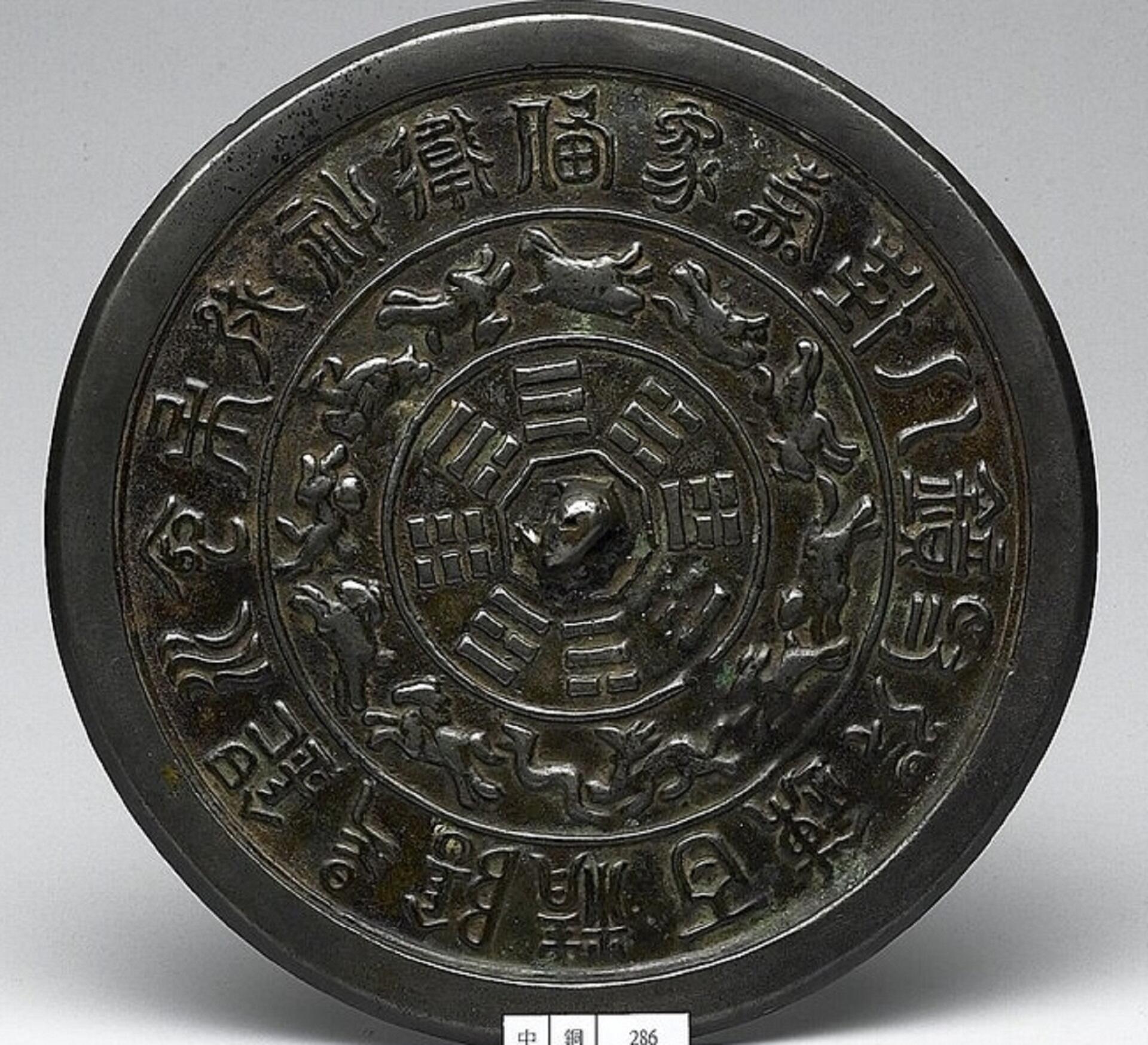
Baguazhang (Bāguàzhǎng - 八卦掌)
This 'inner' kung fu style is one of three styles descended from the Wǔdāng school. It too revolves around a central tenet of Taoism, namely the bāguà diagram (pictured above) it takes its name from. It is distinct in its techniques, characteristics, and outcomes.
Characteristic
- Circle Walking
- entails walking in circles while assuming different palm positions.
- Builds balance, agility, and fluidity of movement.
Technique
- throws
- joint locks
- footwork
- strikes
Outcome
- stress relief
- coordination
- qi balance
- cardiovascular strength
If Chinese mysticism intrigues you, this martial art will be a natural extension of your studies. It draws on the I Ching, the ancient Book of Changes, making physical the natural cycles it outlines and the transformations it proposes.
Bajiquan (Bājíquán - 八极拳)
Did you know that Bajiquan enjoys a political connection? This is a martial art best suited for close-quarters fighting, an explosive strike-from-the-waist style that meets bodyguards' quick response needs. In fact, 'bodyguard style' is another name for this martial art.
Emperor Puyi, the last Qing Dynasty emperor, as well as Mao Zedong and Chiang Kai-shek all had Bājíquán-trained bodyguards.
Established as a discipline in the mid-18th century in southeastern Hebei Province, Bājíquán remained limited to Hui community fighters3. Over time, it spread around the world; today, Taiwan and Japan have active Bājíquán communities. And it's gone even further as a staple of video games and even quick glimpses in films.
Xingyiquan (Xíngyìquán - 形意拳)
Xíngyìquán is another descendant of Wudang martial arts, notable for its aggressive linear movements that serve both as offence and defence. Despite its 'hard' appearance and techniques, Xíngyìquán is an 'inner' martial art, putting 'soft' strength cultivation at the forefront of the fighter's development.
Like the other Wudang schools, Xíngyìquán relies on traditional philosophical concepts. You might be familiar with the Five Elements and the 12 Animals, both of which are fundamental to Chinese astrology.
The Five Elements
It's a fair bet that any compilation of martial arts styles you might run across will touch on these aspects but not go into detail. Unless you're studying xíngyìquán, it's hard to appreciate how each of the five fundamental elements relates to a specific martial art action.
| 🔌 Element | 🧧 In Mandarin | 🔠 Pinyin | 💪 Action |
|---|---|---|---|
| Metal | 劈 | pī | Chopping: like an arm using an axe to chop a log. |
| Water | 鑽 | zuān | Drilling: like two arms windmilling across the body. |
| Wood | 崩 | bēng | Direct forward movement, like an arrow flying. |
| Fire | 炮 | pào | Explosion outward while maintaining a defensive stance. |
| Earth | 橫 | héng | Crossing over into opponents' space while turning over. |
The Twelve Animals
You might be familiar with these animals if you follow the Chinese zodiac. However, zodiac predictions do not relate these animals' martial power. This is a sampling of how the animals relate to xíngyìquán philosophy5.
As with many martial arts styles, variations across the schools exist. Some might assign a different animal name to a similar move, or ignore one animal in favour of another.

Sanda (Sǎndǎ - 散打)
Sanda, also called sànshǒu (散手), is a full-contact combat sport akin to kickboxing. Formerly, the term 'Sǎndǎ' pointed to 'independent' movement sequences, opposed to the more regimented, organised tàolù (套路) martial arts systems.
This sport emerged in the 1920s, in military training centres. Soldiers would arrange matches to test their martial arts skills, only later adding safety gear such as gloves and headgear. To this day, it remains a competitive sport in China and grows in popularity around the world.
In the film Fatal Move, martial artist Wu Jing fights using sǎndǎ style.
Another popular kung fu actor, Donnie Yen, often receives praise for his sǎndǎ-like fighting style. However, by his own admission, he never trained in that discipline. Other martial arts blockbusters may feature Sǎndǎ elements, but few films revolve around this style of fighting. That makes Fatal Move a must-watch film if you're interested in studying this martial art.
Modern Wushu (Wǔshù - 武术)
Unlike traditional (ancient) Chinese martial arts styles, Wǔshù is strictly for competition4. It developed in 1949, forging the best of sǎndǎ and tàolù fighting styles into one officially approved school. cols
Fighters present as either sǎndǎ or tàolù. When overseeing competitions, the International Wushu Federation distinguishes between the two disciplines on these metrics.
Tàolù
- choreographed routines
- emphasis on acrobatics, speed, and flexibility
- floor-level contests
- may feature weapons
Sǎndǎ
- full-contact combat sport
- fists, feet, and throws allowed
- elevated platform contests
- bouts last two minutes (x3 for a full match)
While judges evaluate Tàolù contests on artistic presentation - on difficulty and form, Sǎndǎ match judging focuses on athleticism, precision, and endurance.
Which Chinese Martial Art Should You Learn?
Spoilt for choice as you are, you might wonder which of these kung fu styles to begin your journey with. Your selection is far easier than you might imagine. To decide, follow the same path as actors who demonstrate their skills in films and people practising tai chi in the park.
To decide which kung fu styles to study, turn inward.
Examine your intentions, instead of looking outward, at all the 'labels' you might choose from.
What is your aim in learning? Which aspect of your development do you wish to target? What intention are you pursuing? This table gives you a map towards your Chinese kung fu journey.
| 😑 Aspect | 🎯 Style to choose |
|---|---|
| Inner peace, balance, overall health | Tai chi |
| Self-defence (close range) | Wing Chun |
| Competition and performance | Wushu |
| Sport | Sanda |
| Explosive power in close-range fighting | Bajiquan |
| History, culture, tradition | Shaolin or Wudang |
References
- “Chinese Martial Arts - Basis of Physical and Spiritual Perfection of a Person.” https://www.advantour.com/china/culture/martial-arts.htm. Accessed 23 July 2026.
- 爱诗礼. “The Styles Within the Temple Part 1: All Martial Arts Under Heaven Come from Shaolin?” Maling Shaolin Kung Fu Academy, 5 May 2025, https://shaolin-kungfu.com/all-martial-arts-come-from-shaolin/. Accessed 24 July 2026.
- “Bajiquan | Combatpit Glossary.” Combatpit.Com, 2026, https://www.combatpit.com/martial-arts-terms-glossary/bajiquan. Accessed 24 July 2026.
- GeeksforGeeks. “List of Chinese Martial Arts Styles.” GeeksforGeeks, 18 Mar. 2024, https://www.geeksforgeeks.org/general-knowledge/list-of-chinese-martial-arts-styles/. Accessed 24 July 2026.
- Plum Staff. “Xing Yi Quan.” KaiMen, 27 Nov. 2003, https://www.plumpub.com/kaimen/2003/xing-yi-quan/. Accessed 24 July 2026.
Summarise with AI:
Did you like this article? Leave a rating!

 Loading...