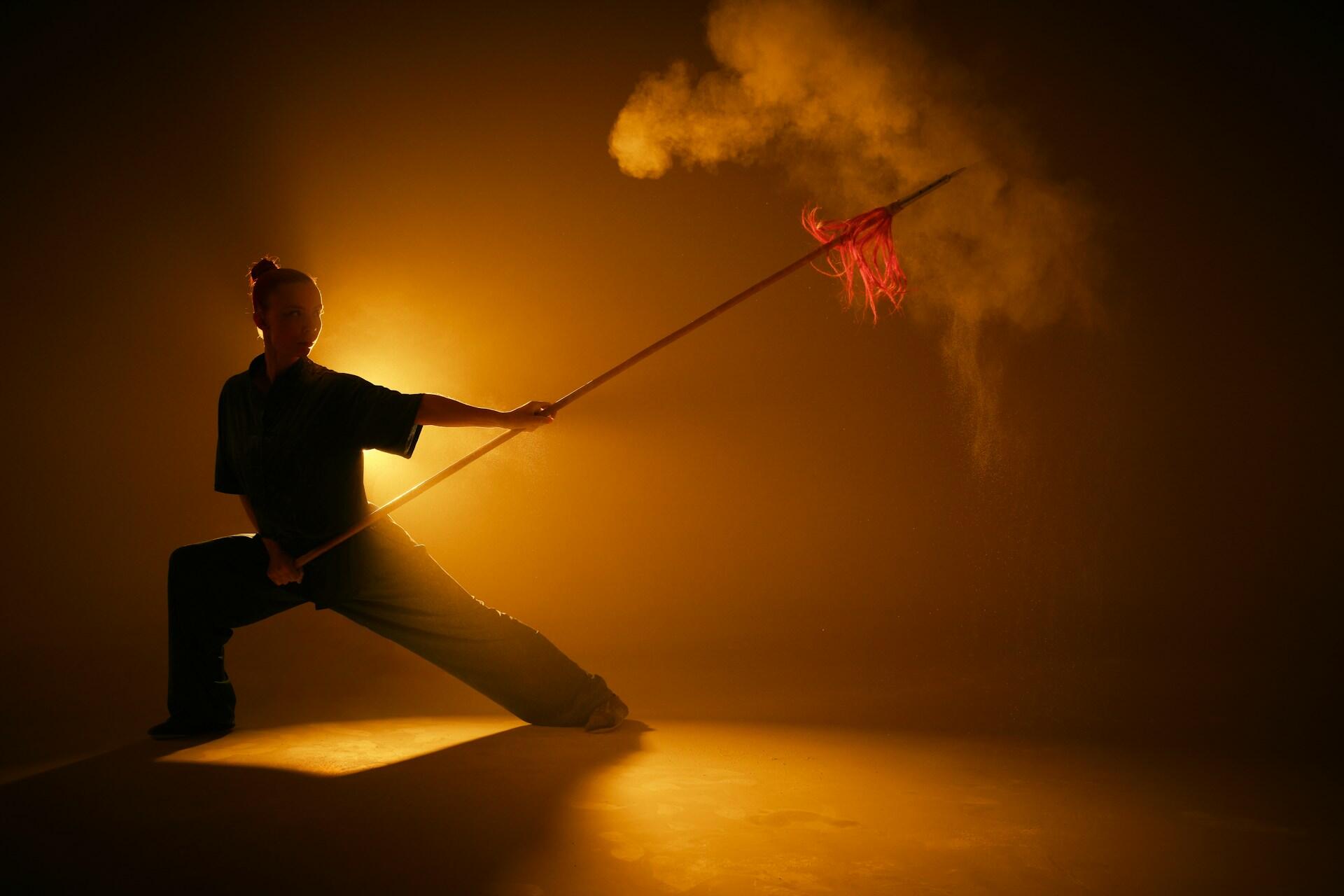

Wrestling (shuāi jiāo - 摔跤) is the oldest documented martial art in China, with records dating around 700 BCE (Before the Current Era)1. However, Shaolin kung fu (少林功夫 - Shàolín gōngfū) is recognised as the oldest style of military fighting. Later Chinese martial arts schools emerged from Shaolin; these are the weapons they fought with.
| 🤺 Weapon group | 🔪Weapon names Mandarin and Pinyin | 📖 Translation/explanation | 🔊 How to pronounce it |
|---|---|---|---|
| Long weapons | 棍 - gùn 枪 - qiāng 长刀 - cháng dāo | Staff Spear Long-handled sabre | |
| Short weapons | 刀 - dāo 剑 - Jiàn 柳叶刀 - liǔyèdāo | Sabre Broadsword Willow-leaf sabre | |
| Flexible weapons | 三节棍 - sān jié gùn 流星锤 - liú xīng chuí 双节棍 - shuāng jié gùn | three-section staff meteor hammer nunchaku | |
| 'Twin' weapons one for each hand | 蝴蝶双刀 - hú dié shuāng dāo 峨嵋刺 - é méi cì 鹿角刀 - lùjiǎodāo | Butterfly swords Emei daggers Deerhorn knives | |
| 'Flying' weapons | 火枪 - huǒ qiāng 诸葛弩 - zhūgě nǔ 箭 - jiàn | fire spear repeating crossbow arrow |


The Four Chinese Martial Arts Weapons
In Mandarin, we call the four fundamental traditional Chinese weapons sì dà bīng qì (四大兵器)2. They are the fundamental weapons various kung fu styles (schools) employ. Each one is tied to Chinese traditional culture and philosophy.
The 'four big' concept is prevalent across many aspects of Chinese culture.
In Buddhist philosophy, 'Sì dà' refers to the four elements: earth, wind, fire, and water. They are distinct (but related) to the Five Elements (wǔ xíng - 五行) that govern Chinese astrology. Across society, it represents the 'Four Great Freedoms': speaking out freely, airing views fully, debating greatly, and writing posters in big characters.
In more concrete terms, the sì dà weapons were the tools of martial fighters of all disciplines. As basic as they are, they are effective in the hands of a trained martial artist.
The Chinese Staff (棍 - Gùn)
This is the 'weapon' of the Shaolin school. As you read in this article's introduction, Shaolin thought permitted no weaponry. Its style of fighting was more inward-turned, training the body and mind for strength and resilience. Gong fu was essential to that training.
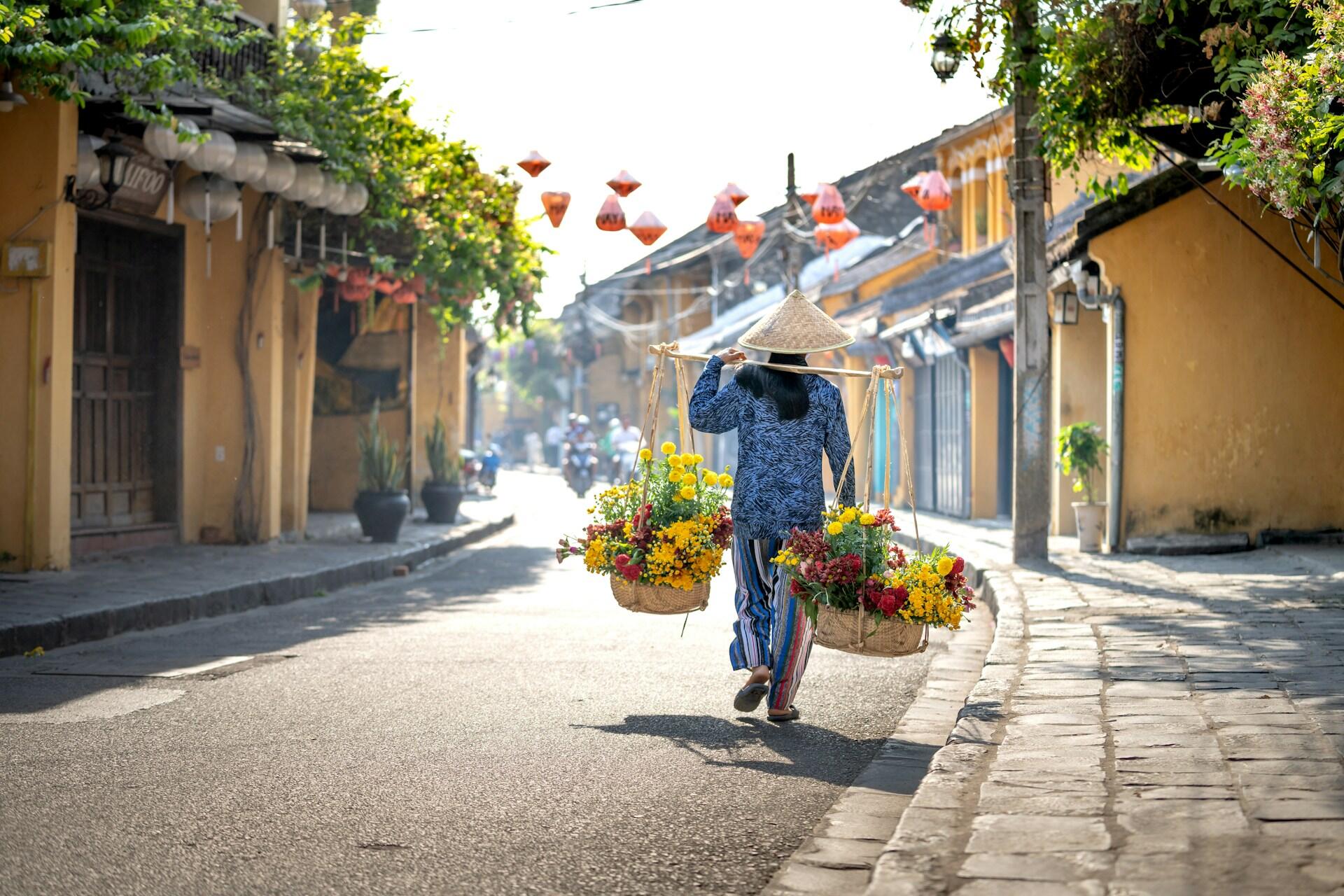
Shaolin monks routinely carried staffs. Those long poles could be laid across the shoulders to carry buckets of rice and water. They're also quite handy to push an opponent away or sweep them off their feet.
No one is quite sure when the staff became integral to Shaolin fighting3. However, we can line dates up to estimate the discipline's evolution from no weapons to combat with a staff.
The Shaolin Stele
Engraved in 728 CE, it makes no mention of using staffs to fight.
Ming Dynasty
Military writings emphasise that Shaolin staff fighters are the most skilled in China.
Written records
12th to 16th century writings mention fighting with a staff.
The Chinese Spear (枪 - Qiāng)
The Chinese spear is called the King of Weapons because it is so versatile and effective. A typical spear is between 2.5 and 6 metres in length, featuring a steel leaf-shaped blade at its business end. The red horsehair tassel is its most distinctive feature.
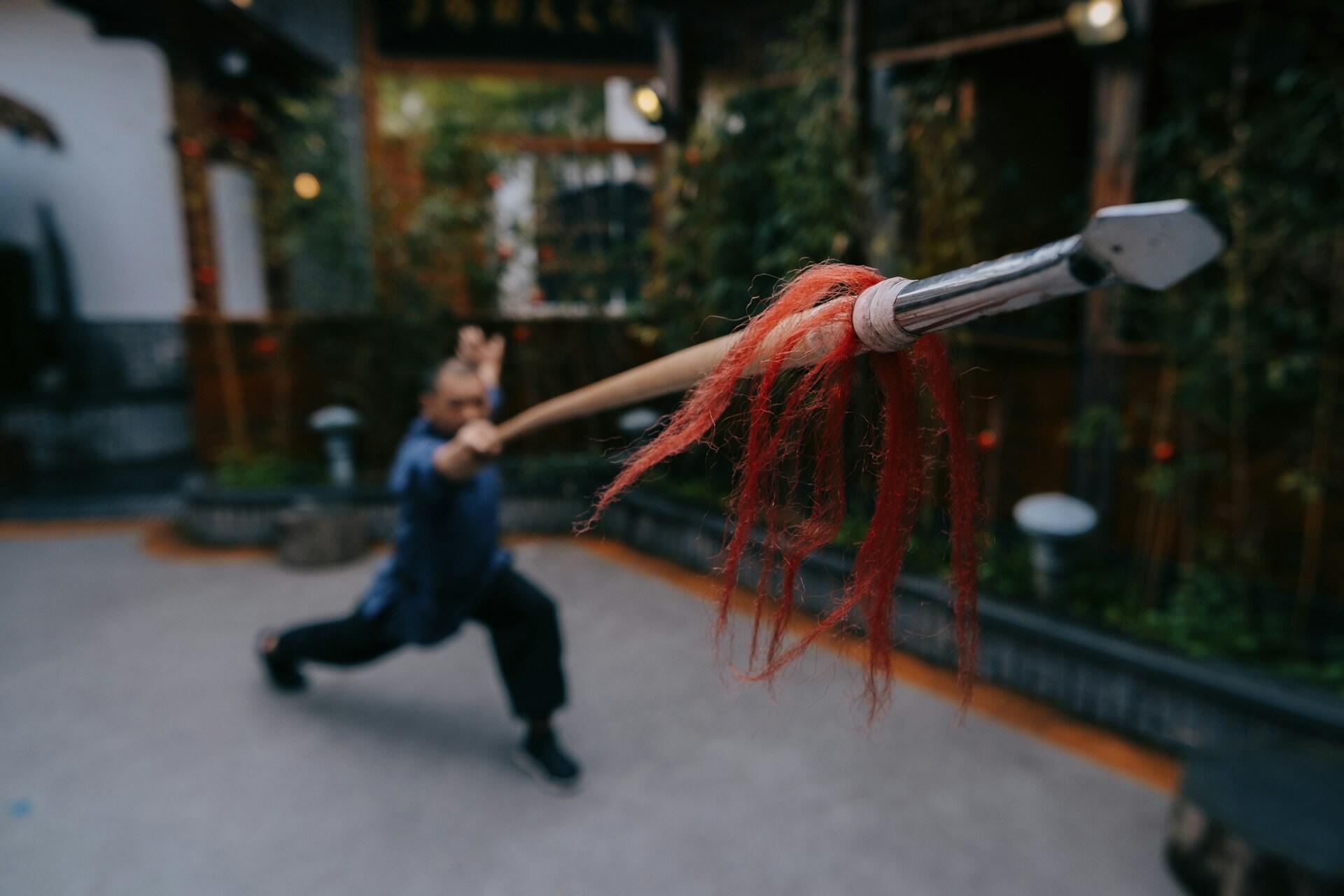
Far more than mere decoration, these tassels served to block opponents' vision as the spear's pointed blade approached. They also kept the enemies' blood from running down the weapon's shaft, which would have made it slippery. Besides the standard construction, four varieties of spear (among many) dominated battlefields4.
The Sabre (刀 - Dāo)
As the Chinese spear is the King of weapons, the sabre is the General. These are single-edged, curved blades with relatively short handles, mainly used for chopping and slashing. Like its 'king' counterpart, it comes in more than one variety.
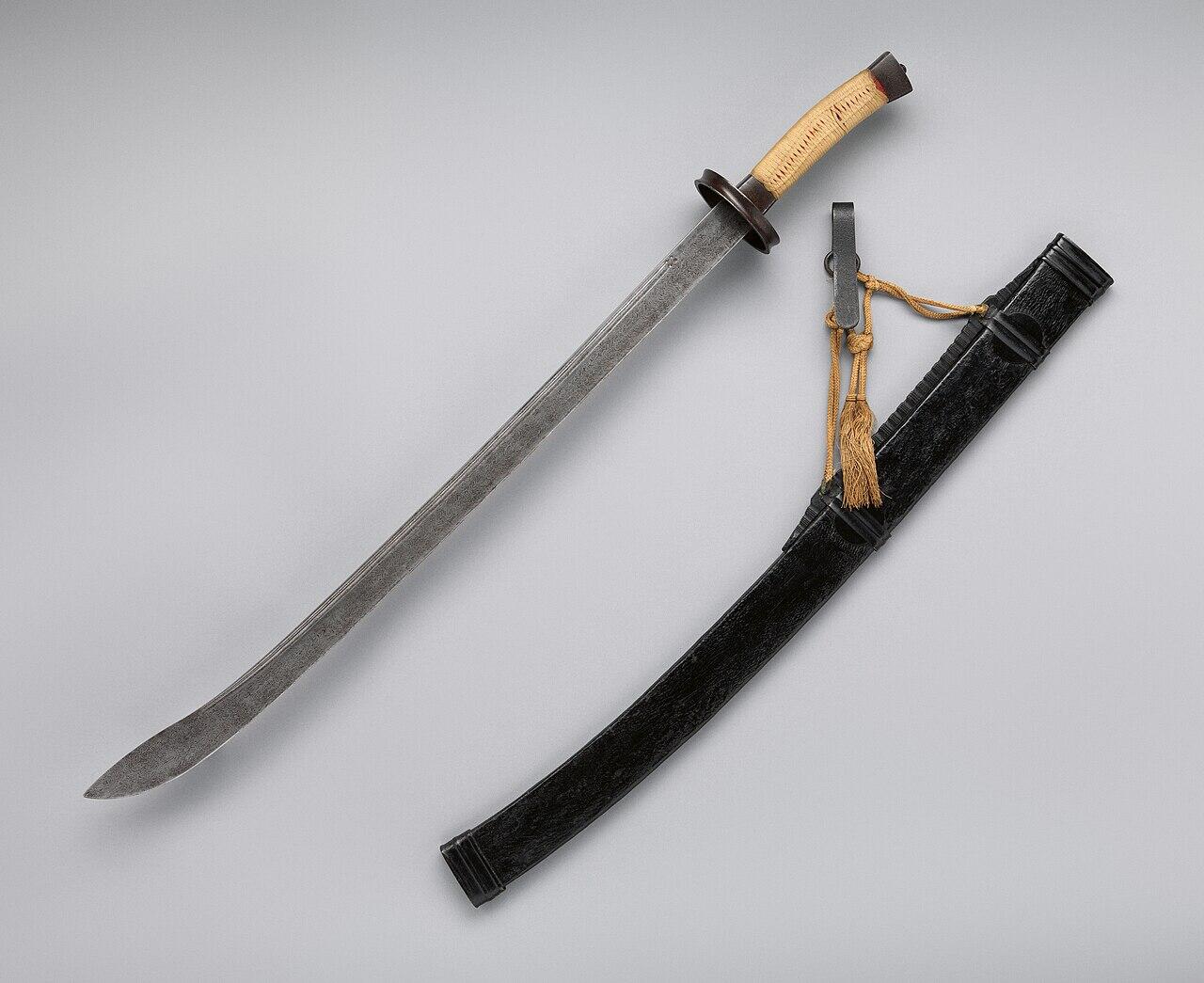
柳叶刀 - liǔyèdāo
- willow-leaf sabre
- moderately curved blade
- best for calvary and foot soldier usage
长刀 - chángdāo
- lit. 'long blade'
- requires two hands to wield
- used on land and marine conflicts
牛尾刀 - niúwěidāo
- ox-tail blade
- features a flared tip
- ideal for cutting opponents
Of the dāo line of weapons, the guān dāo (关刀) is arguably the most significant. General Guan Yu designed the weapon himself: a fighting tool to suit his massive size. The guāndāo weighs an impressive 82 jīn (斤), either 18.26 kg or 48.38 kg, depending on the weight conversion system used.
This military general served under the warlord Liú Bèi (刘备), taking an outsized role in ending the Han Dynasty.
General Guān Yǔ's exploits played a starring role in the 14th-century epic, Romance of the Three Kingdoms. So lyrical was this prose that, centuries after his death (in 220 CE), he became the standard for loyalty and righteousness. Still today, the weapon he designed features in period films and Chinese opera, creating a stunning visual.
The Straight Sword (剑 - Jiàn)
So far, we've met the King and General of Chinese martial arts weapons. Now, to introduce the Gentleman. It's a distinguished-looking, thin, twin-edged blade with a short handle, designed for single-handed use.
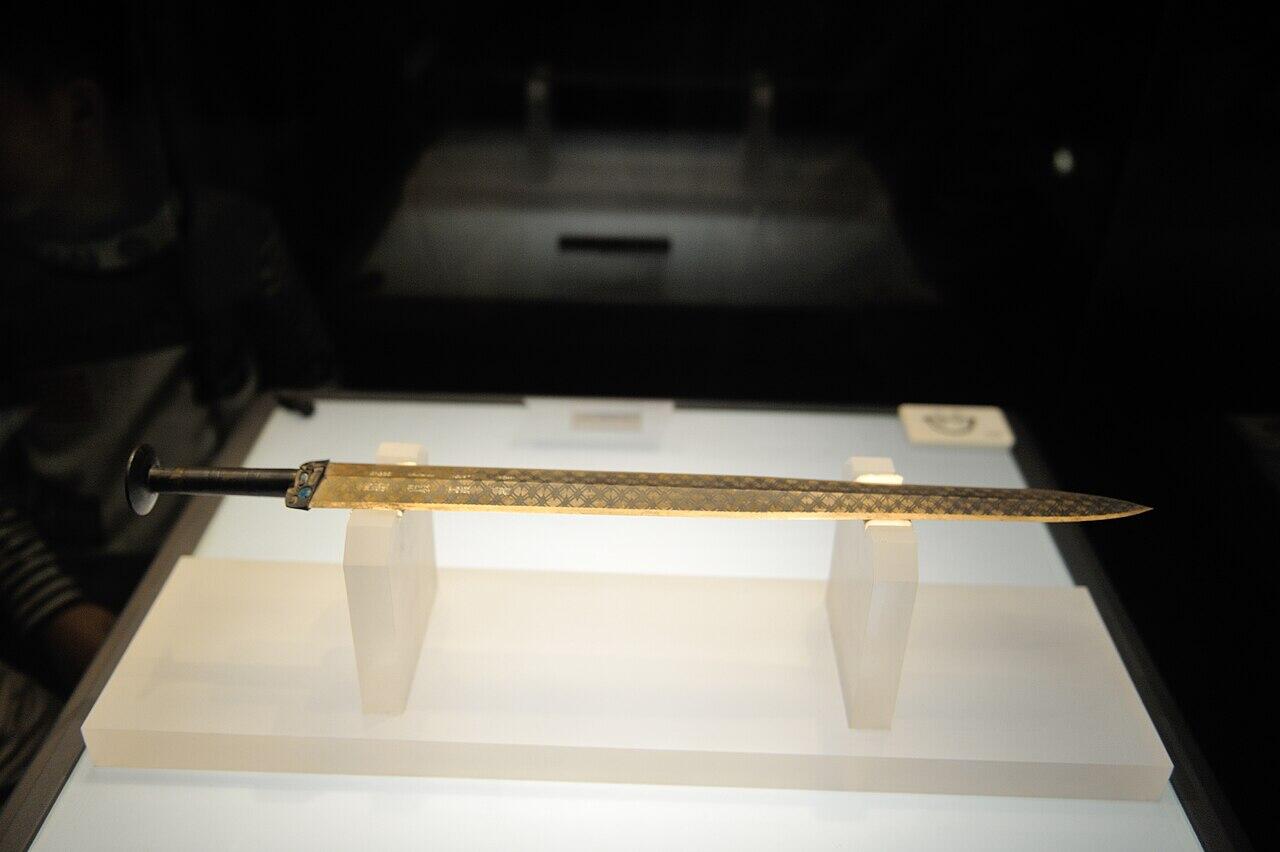
It features a weighted pommel at the handle's end to keep the weapon balanced. The short tassel that grows from the pommel is decorative, not functional. This was the weapon of scholars and the well-to-do who fought.
These weapons are ubiquitous across the Chinese martial arts lexicon, regardless of which school they originated from. However, they're not the only weapons fighters won battles with.
Flexible Kung Fu Weapons
While the sì dà form the foundation of Chinese martial arts weaponry, the categories and classes of arms have expanded over the centuries. No Chinese kung fu guide would be complete without at least touching on these flexible weapons.
Three-section staff (三节棍 - sānjiégùn)
This three-section staff features three short lengths of wood linked with rings, rope, or hide strips. Its overall longer size and flexibility give it more potential and range than a traditional staff. It's great for flailing, making it harder for the enemy to know where the blow will land.
That was this weapon's original name (蟠龙棍 - pán lóng gùn), perhaps evoking the dragon's swishing tail as similar to this weapon's action.
Meteor hammer (流星锤 - liúxīngchuí)
This versatile weapon consists of two weighted metal balls connected by a chain. The fighter may twirl it before throwing it at their opponent, such that the twin balls will wrap around a limb or neck. Or they could hold one of the balls in their hand to strike the enemy close-up5.
The meteor hammer first featured in the historical novel, Romance of the Three Kingdoms. Evidence of actual combat use is sparse, but it features in many Chinese historical dramas.
Nunchaku (双节棍 - shuāngjiégùn)
Most people ascribe nunchakus to the Okinawan style of fighting. However, as the ~1044-written Chinese text quoted above spells out, this weapon is of Chinese origin.
Two sticks connected by metal chain, originated from Xirong ...
from the Essentials from Military Classics (武经总要 - Wǔjīng Zǒngyào)
It is exactly as described: two sticks connected by a short chain. In other words, the nunchakus we're familiar with today. This weapon is great for dazzling opponents before striking a punishing blow. In Chinese cinema, martial arts legend Bruce Lee gets the credit for raising the nunchaku profile.
Ancient Chinese Weapons Used on the Battlefield
Unlike in the film clip above, Chinese warriors didn't fight epic battles with just a few hand-to-hand weapons. They used bows and arrows - and, later, crossbows, often tipping their arrows with flames (called 'fire arrows' huǒ jiàn - 火箭). As gunpowder was invented in China, these fighters had a range of projectile weapons at their disposal, too.
Of these weapons, the thundering firearm has to be the most impressive. Typically fired from elevations - say, a canyon ridge or the Great Wall, it also featured a shield for ground-level combat. If need be, the gunner could attach an axe so its handle could act like a rest to stabilise the weapon.
Chinese Weapons in Kung Fu Films
When we think of Chinese kung fu films, names like Ip Man, Bruce Lee, and Jackie Chan dominate. But let's drill down to what makes those films remarkable. It's the fighters' speed, the weapons they use, and the choreography they execute their scenes to that take our breath away.
Gravity-defying moves, coupled with balletic grace and Beijing Opera elements, make cinematic martial arts chivalry unforgettable.
All the top Chinese martial arts films incorporate breathtaking wǔ xiá scenes. Think of 2000's Crouching Tiger, Hidden Dragon; specifically, the bamboo forest fight scene below. Then, in 2013, The Grandmaster delivered a rain-soaked fight in an alley; a spectacular visual treat.
Going further back into Chinese cinema history, Bruce Lee classics like The Way of the Dragon and Fist of Fury emerge. The sheer physicality of these scenes, combined with exacting choreography, make these classic kung fu films unforgettable.
And who could forget The Legend of Drunken Master? Widely touted as Jackie Chan's finest film, the stunts vied with the choreography for the most praise. And then, there's Jet Li with his Shaolin Temple, Fist of Legend, and Hero. For just a sampling of the best of Chinese martial arts cinema, this list is rather impressive, no?
References
- MetalAllen. “History of Chinese Martial Arts.” En.Chinaculture.Org, https://en.chinaculture.org/chineseway/2012-08/07/content_438086.htm. Accessed 18 July 2026.
- Scrima, Master Nick. “Si Da Bing Qi (四大兵器) – Four Major Weapons - Master Nick Scrima’s Chinese Martial Arts Center.” Master Nick Scrima’s Chinese Martial Arts Center, 20 May 2025, https://www.kungfutoday.com/si-da-bing-qi-%E5%9B%9B%E5%A4%A7%E5%85%B5%E5%99%A8-four-major-weapons/. Accessed 18 July 2026.
- Modagi. “History and Evolution of Shaolin Temple Staff Fighting (Part 2).” The Splintered Staff, 12 Sept. 2016, https://splinteredstaff.wordpress.com/2016/09/12/history-and-evolution-of-shaolin-temple-staff-fighting-part-2/. Accessed 18 July 2026.
- “Qiāng (槍) Spear.” Academyofdefence.Com, https://academyofdefence.com/spear/. Accessed 18 July 2026.
- Dojo Directory. “Liu Xing Chui (or Meteor Hammer) – Dojo Directory.” Dojodirectory.Net, 4 Feb. 2024, https://dojodirectory.net/weapons/liu-xing-chui-or-meteor-hammer/. Accessed 19 July 2026.
Summarise with AI:
Did you like this article? Leave a rating!

 Loading...